

Dental Implants Cost UK: NHS Eligibility vs Private Prices
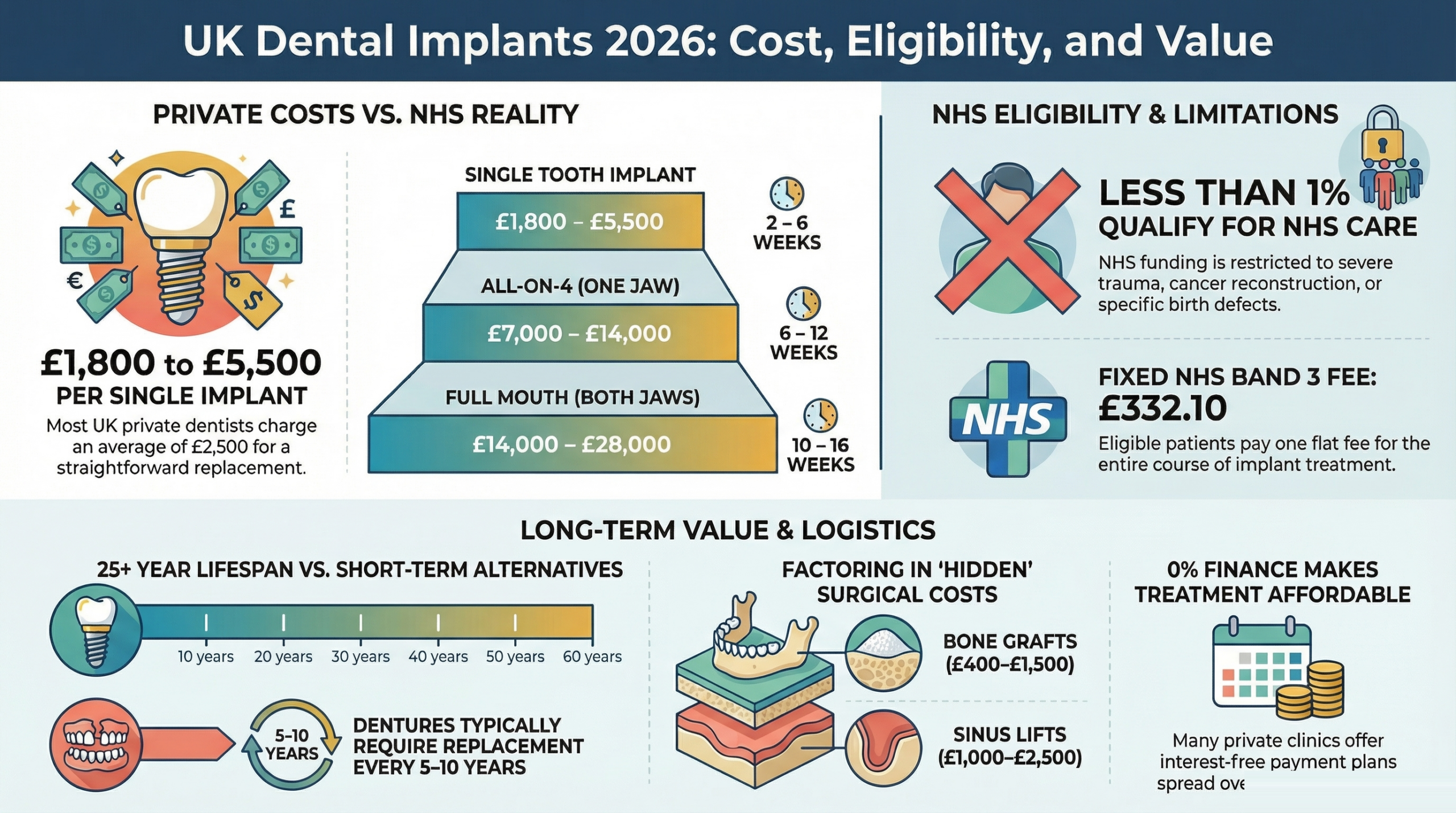
If you are considering dental implants, cost is probably your biggest concern. A single implant in the UK can range from £1,800 to £5,500, whilst a full mouth reconstruction using All-on-4 technology runs £14,000 to £28,000. But plenty of finance options exist to make them affordable.
This guide breaks down exactly what you will pay on the NHS versus private practice, reveals what affects the final bill, and shows you how to explore treatment plans that fit your budget.
How Much Do Dental Implants Cost in the UK?
Dental implant costs vary widely depending on what you need. A single dental implant typically costs £1,800 to £5,500. Most UK dentists charge around £2,500 for a straightforward single tooth replacement.
If you need to replace multiple teeth, the cost jumps significantly. An implant-retained bridge covering three teeth runs £3,500 to £8,000. This is cheaper per tooth than single implants because some of the infrastructure is shared.
For those who have lost all or most of their teeth, All-on-4 implants offer a full arch solution. One jaw costs £7,000 to £14,000. If you want a complete full mouth reconstruction (both upper and lower jaws), expect £14,000 to £28,000.
Hidden costs add up quickly. A CT scan costs £100 to £250. Bone grafting – needed if your jaw has deteriorated – runs £400 to £1,500. A sinus lift, required in some cases, costs £1,000 to £2,500.
| Treatment | NHS Cost | NHS Availability | Private Cost | Private Wait |
|---|---|---|---|---|
| Single tooth implant | N/A | Not available | £1,800 – £5,500 | 2-6 weeks |
| Implant bridge (3 teeth) | N/A | Not available | £3,500 – £8,000 | 4-8 weeks |
| All-on-4 (one jaw) | N/A | Not available | £7,000 – £14,000 | 6-12 weeks |
| Full mouth (both jaws) | N/A | Not available | £14,000 – £28,000 | 10-16 weeks |
| Bone graft (additional) | Possible (rare) | Trauma only | £400 – £1,500 | Included |
| CT scan | Possible (rare) | Trauma only | £100 – £250 | Included |
Our guide to NHS vs private dentist costs compares NHS and private dentist costs side by side, with real UK prices for every common treatment.
Watch: Dental Implants Cost UK – NHS Eligibility and Private Pricing
This cinematic overview walks you through the full cost of dental implants in the UK, from single implants at 1,800 to 5,500 pounds to All-on-4 options, who qualifies for NHS funding, and how to compare private providers by region.
Can You Get Dental Implants on the NHS?
The short answer: almost certainly not. Less than 1% of people qualify for NHS dental implants. NHS England only funds implants in extremely limited circumstances: severe facial trauma, cancer patients requiring jaw reconstruction, or birth defects affecting tooth development.
If you do qualify, you will not pay per implant. Instead, you will pay the standard NHS Band 3 charge: £332.10 (as of 2026). This covers the entire course of treatment, however many appointments it takes.
The NHS route has serious limitations. You must be referred by your hospital consultant (your dentist cannot refer you directly). Waiting lists stretch 12 to 24 months. You get no choice of implant brand or technique. And the treatment must be medically necessary – not for cosmetic reasons or comfort.
For most people, private treatment is the only option. Private dentists can offer premium implants, faster treatment, and a wider range of solutions. You pay for this choice and speed, but you get certainty about timing and outcome.
Key dental care facts at a glance – The Best of Health 2026
What Affects the Price of Private Dental Implants?
Several factors push private implant costs higher or lower. Understanding these helps you choose wisely.
Implant brand makes a huge difference. Premium brands like Straumann or Zimmer cost £800 to £1,200 per implant body alone. Budget brands cost £300 to £600. Your dentist’s fee for the surgical placement adds £500 to £1,500 on top.
Bone health drives additional costs. If your jaw has shrunk (common after tooth loss), bone grafting becomes essential. This adds £400 to £1,500. Sinus lift surgery – necessary if you are replacing upper back teeth and your sinuses are too low – costs £1,000 to £2,500.
Location matters. London and the South East charge 20-30% more than the Midlands or North. Rural practices often undercut city prices.
Dentist experience and qualifications affect price. A general dentist might charge £1,800 for a single implant. A specialist implant surgeon charges £3,500 or more. You pay for their training, success rates, and the guarantee they provide.
Materials differ too. Titanium implants (the standard) cost less than zirconia implants, which some patients prefer for allergies or aesthetic reasons. Zirconia adds £400 to £800 per tooth.
For more detail, read our guide on dental crowns and bridges cost – it compares NHS and private prices for dental crowns and bridges, the materials available, and what to expect.
How Do Dental Implants Compare with Dentures and Bridges?
Implants are expensive upfront, but they last far longer than alternatives. Understanding the long-term comparison helps justify the cost.
Dentures cost £300 to £1,500 per set but need replacing every 5 to 10 years. They require daily cleaning, adjustment appointments, and adhesive. Many over-50s find them uncomfortable or report difficulty eating hard foods. A full set of dentures over 30 years will cost £2,000 to £5,000 in total.
Fixed bridges (spanning three teeth) cost £1,500 to £3,000 but last only 10 to 15 years. They require grinding down two healthy teeth to act as anchors – irreversible damage. When a bridge fails, you often need implants anyway.
Dental implants cost £1,800 to £5,500 per tooth but last 25+ years with proper care. They feel and function like natural teeth. You brush and floss them normally. No daily hassle, no removal, no adhesive. A single implant placed at age 55 will likely last the rest of your life.
For over-50s, implants usually make financial sense if you are in reasonable health and can afford the upfront cost. The comfort, durability, and oral health benefits outweigh cheaper short-term alternatives.
Our guide to dentures cost UK compares NHS Band 3 and private denture prices, the different types available, and what affects the cost.
What Finance Options Are Available for Dental Implants?
Private dental implants are expensive, but you do not have to pay in full upfront. Several financing paths exist.
Dental finance plans offer 0% interest over 12 to 60 months. Providers like Denplan, Lending Clinic, and PayPlan let you spread the cost. A £3,000 implant becomes £250 per month over 12 months (or £50 monthly over 60 months). Credit checks apply, but approval rates are high for over-50s with stable income.
Dental loans from specialist lenders charge interest (typically 5-10% APR) but offer larger amounts. A £10,000 All-on-4 treatment costs around £200 per month over five years.
Dental insurance rarely covers implants in the UK. Most policies exclude “cosmetic” or “elective” work. A few premium plans reimburse up to 50% of implant costs, but premiums are high (£50 to £100+ monthly), and waiting periods apply. Generally not worth it unless you are certain you need implants soon.
Dental tourism (Poland, Hungary, Spain) offers implants at 30-50% less. A £2,500 UK implant costs £1,200 to £1,700 abroad. The risks: lower-quality care, no recourse if something goes wrong, travel costs, and follow-up difficulty. Only consider reputable clinics with British reviews.
Many dentists offer in-house payment plans with no interest. Ask about this directly – some practices waive interest if you commit to treatment.
What Questions Should You Ask Before Getting Dental Implants?
Before booking treatment, ask your dentist these questions to avoid surprises.
About costs: What is your fee for placing one implant? Does this include the crown, or do I pay separately for the crown and abutment? What is the total for my specific treatment plan? Are there hidden costs – CT scans, assessments, modifications? Do you offer 0% finance?
About the implant itself: Which implant brand do you use, and why? Are you placing a titanium or zirconia implant? Do you offer a warranty, and for how long?
About your dentist: How many implants have you placed? Are you a general dentist or a specialist? What is your success rate? Can you provide references or before-and-after photos?
About aftercare: How long is the implant supposed to last? What maintenance will I need? Do you charge for follow-up appointments in the first year? What happens if the implant fails?
About bone and sinus issues: Do I need a bone graft or sinus lift? If so, what is the extra cost and timeline?
Do not rush. Get quotes from at least three dentists. Cheaper is not always better – experienced dentists produce better outcomes.
For more detail, read our guide on root canal cost UK – it compares NHS and private root canal prices, explains what is included, and helps you decide which route suits you.
Frequently Asked Questions
Why do most UK dentists not offer dental implants through the NHS?
The NHS only funds dental implants in exceptional cases such as severe facial trauma, tooth loss following cancer treatment, or rare congenital conditions affecting tooth development. For most adults seeking implants for normal tooth loss, you will need to go private.
If I get a dental implant privately, will I need to pay separately for the crown on top?
Usually yes – a single dental implant (the titanium post) costs £1,800-£2,500 privately, but the crown that sits on top typically costs an additional £300-£1,000, depending on materials and your dentist’s fees.
Are there payment plans available for private dental implants?
Many private dental practices offer interest-free payment plans or finance options for implants, allowing you to spread the cost over several months or years. Ask your dentist about their finance options when getting a treatment plan.
What happens if something goes wrong with my private dental implant – will the dentist fix it for free?
This varies by practice – some offer a warranty on implants for the first one to two years, while others charge for repairs or adjustments. Always ask about the implant warranty and aftercare costs before agreeing to treatment.
Key Takeaways
- Dental implants cost £1,800 to £5,500 per tooth in the UK; All-on-4 full arches cost £7,000 to £14,000 per jaw.
- Less than 1% of people qualify for NHS dental implants (trauma, cancer, birth defects only). If you do qualify, you pay just £332.10 under Band 3.
- Additional costs for bone grafting (£400 to £1,500) and sinus lifts (£1,000 to £2,500) are common and should be factored into your budget.
- 0% finance plans and dental loans make implants affordable over 12 to 60 months.
- Implants last 25+ years compared to 5-10 years for dentures or 10-15 years for bridges, making them the best long-term value for over-50s.
- Always ask your dentist about brand, success rates, warranties, and aftercare costs before committing.
Explore more: Read our guide on NHS vs private dentist costs 2026 to compare dental treatment across the board. You might also want to review dentures cost UK NHS vs private or check whether private dental insurance for over 50s could help offset future costs.
This article is for information only. Always consult your dentist, GP or a qualified healthcare professional before making decisions about dental treatment.