
Dentures Cost UK: NHS Band 3 vs Private Prices Compared
If you are facing tooth loss and wondering about dentures cost in the UK, you are not alone. Many people aged 50 and over are choosing dentures to restore their smile and ability to eat properly. Whether you opt for NHS treatment or go private makes a significant difference to what you will pay. This guide compares the exact costs of NHS dentures against private options, including specific prices for every type, so you can make an informed decision about your dental future.
How Much Do Dentures Cost in the UK?
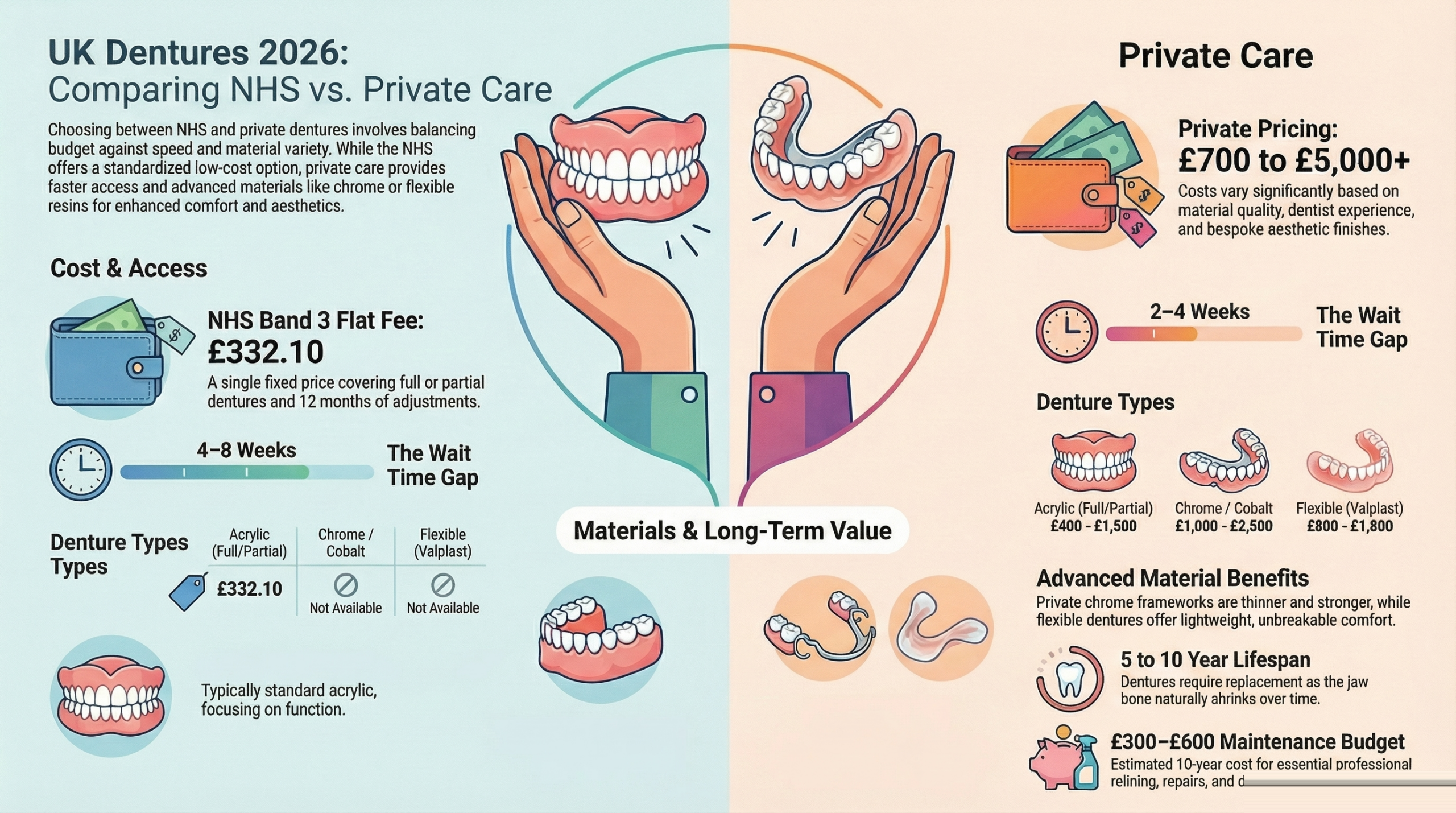
The cost of dentures in the UK varies dramatically depending on whether you choose the NHS or a private dentist. Here is the headline figure: NHS dentures cost £332.10 under Band 3 treatment, regardless of whether you are having full dentures or partial dentures fitted. This single payment covers all appointments, impressions, adjustments, and follow-up care for up to 12 months.
Private dentures, by contrast, range from £700 to £5,000 or more, depending on the type of denture, the materials used, and the dentist’s experience.
| Denture Type | NHS Cost | Private Cost | Private Wait | NHS Wait |
|---|---|---|---|---|
| Full dentures (acrylic) | £332.10 | £700 – £1,500 | 2-4 weeks | 4-8 weeks |
| Partial dentures (acrylic) | £332.10 | £400 – £1,500 | 2-4 weeks | 4-8 weeks |
| Full dentures (chrome/cobalt) | Not available | £1,000 – £2,500 | 4-6 weeks | – |
| Flexible dentures (Valplast) | Not available | £800 – £1,800 | 3-5 weeks | – |
| Immediate dentures | Not available | £800 – £2,000 | Same day – 2 weeks | – |
| Implant-retained dentures | Limited on NHS | £4,000 – £14,000 | 3-6 months | 12+ months |
The NHS option is dramatically cheaper. However, private dentures often offer faster appointments, a wider choice of materials, and potentially better aesthetics and comfort.
Watch: NHS vs Private Dentures – Mapping Your Perfect Fit
Before diving into the detail, watch this short cinematic overview comparing NHS and private denture options in the UK. It covers costs, materials, waiting times, and how to decide which route suits your needs and budget.
Our guide to NHS vs private dentist costs compares NHS and private dentist costs side by side, with real UK prices for every common treatment.
What Types of Dentures Are Available and How Do Prices Compare?
Dentures come in several materials and styles, and the type you choose affects both cost and how they look and feel in your mouth.
Acrylic dentures
Acrylic is the most common material for both NHS and private dentures. NHS dentures are made of acrylic resin, which is durable and affordable. Private acrylic dentures cost £700 to £1,500 and may use higher-quality acrylic with better colour matching and a more natural appearance than standard NHS dentures.
Chrome and cobalt dentures
Chrome dentures are not available on the NHS. They cost £1,000 to £2,500 privately. These dentures use a chrome or cobalt-based framework with acrylic teeth and a gum-coloured base. The metal framework is thinner and stronger than acrylic, so the denture is lighter and more comfortable to wear. They are less likely to break and conduct heat and cold more naturally, which many people prefer.
Flexible dentures (Valplast and similar)
Flexible dentures cost £800 to £1,800 privately. These dentures are made from a flexible thermoplastic nylon rather than rigid acrylic or chrome. They are lightweight, virtually unbreakable, and very comfortable. However, they cannot be adjusted or repaired as easily as acrylic or chrome dentures, so if they need altering, you may need new ones made.
Premium and bespoke dentures
High-end private practices offering premium dentures (BPS, Ivoclar, or bespoke cosmetic designs) charge £2,000 to £5,000 or more. These are often hand-crafted with premium materials, artistic gum contouring, and personalised shade matching. For some people, the improved aesthetics and perfect fit justify the extra cost.
Key dental care facts at a glance – The Best of Health 2026
Our guide to dental implants cost UK covers the full cost of dental implants in the UK, NHS eligibility criteria, and private pricing by region.
What Is the Difference Between NHS and Private Dentures?
Beyond cost, there are real differences in the quality, speed, and experience you receive when choosing NHS versus private dentures.
Materials and appearance
NHS dentures use standard acrylic. The colour and fit are functional and acceptable, but they may not match your natural tooth shade perfectly. Private dentures often use higher-quality acrylic, chrome, or flexible materials that look and feel more natural. If appearance matters to you, private is often worth the extra cost.
Appointment speed and flexibility
NHS dental practices are often busy, and you may wait 4 to 8 weeks for a denture appointment. Some NHS practices have waiting lists that stretch even longer. Private practices typically offer appointments within 2 to 4 weeks, and many offer emergency same-day or next-day appointments if needed.
Fit and adjustment
Both NHS and private dentists follow the same clinical procedure: impressions, try-in appointments, and final fitting. However, private dentists often allow more time per appointment and may offer more frequent adjustments in the early weeks. Some people find private dentures require fewer adjustments overall because the dentist has spent more time getting the fit exactly right.
Ongoing support
NHS dental treatment includes adjustments for 12 months under the Band 3 charge. After 12 months, any adjustments are either charged separately or reclassified as a new course. Private dentists’ aftercare policies vary – some include free adjustments for life, whilst others charge per visit. Always check the warranty and aftercare policy before committing.

For more detail, read our guide on root canal cost UK – it compares NHS and private root canal prices, explains what is included, and helps you decide which route suits you.
How Long Do Dentures Last and What Are the Ongoing Costs?
Dentures are not a one-time cost. They require maintenance, adjustments, and eventually replacement, so you should factor in long-term expenses.
Expected lifespan
Dentures typically last 5 to 10 years depending on how well you care for them and how your mouth changes over time. Acrylic dentures tend to wear out first, especially if you grind your teeth or eat very hard foods. Chrome dentures last longer because the metal framework is more durable.
Relining and adjustments
As your jaw bone shrinks (a natural process called resorption), your dentures need to be relined. Relining involves adding new acrylic to the underside of the denture to restore the fit. Relining costs £150 to £300 privately and is charged under a separate NHS Band. You will typically need a reline every 2 to 3 years.
Repairs and daily maintenance
Dentures can break or crack. Repair costs range from £50 to £150 depending on the damage and the material. Dentures need to be cleaned daily with a denture brush and denture cleaner (not toothpaste, which is too abrasive). Denture cleaner costs around £2 to £5 per pot and lasts several months. If your dentures are loose, denture adhesive costs £3 to £8 per tube and typically lasts 2 to 4 weeks.
Over a 10-year period, maintenance costs add up. Budget an extra £300 to £600 for relining, repairs, and adhesives over the life of your dentures.
What Should You Ask Your Dentist Before Getting Dentures?
Before you commit to dentures, make sure you have asked your dentist the right questions:
- What material will my dentures be made from, and why do you recommend it?
- What is included in the cost, and are there any hidden charges?
- How many appointments will I need, and how long will each one take?
- What is your aftercare policy, and what happens if my dentures do not fit after delivery?
- Can you show me examples of dentures you have made?
- What is the warranty on my dentures?
- Will my dentures look natural, and can you match my natural tooth shade?
- How long will my dentures last, and what will replacement cost?
Find out more in our complete guide to private dental insurance for over 50s, which compares private dental insurance plans for over 50s, what they cover, and when self-funding may be the better option.
Frequently Asked Questions
Do NHS dentures feel and look the same as private dentures?
NHS dentures are functionally similar but typically use standard acrylic materials and a more basic fit. Private dentures often offer superior aesthetics, comfort, and durability using materials like chrome or flexible dentures, and involve more personalised fitting appointments.
If I am unhappy with my NHS dentures, can I get a replacement at no extra cost?
Your NHS Band 3 fee (£326.70) covers the entire denture course of treatment, including adjustments. If minor adjustments are needed soon after fitting, they are usually included, but if you want a complete new set later, you would pay another Band 3 charge.
How long do dentures typically last before they need replacing?
Well-maintained dentures usually last between five and ten years. After that, your mouth shape changes and dentures may become loose or uncomfortable, requiring a new set. This applies to both NHS and private dentures.
Can I get a partial denture on the NHS to replace just a few missing teeth?
Yes, partial dentures also fall under Band 3 treatment (£326.70) on the NHS, the same price whether you need a partial or full denture. The charge covers the entire course of treatment including fitting and essential adjustments.
Key Takeaways
- NHS dentures cost just £332.10 under Band 3 treatment, covering both full and partial dentures with all appointments and adjustments for 12 months.
- Private dentures cost £700 to £5,000+ depending on materials: acrylic (£700 to £1,500), chrome (£1,000 to £2,500), flexible (£800 to £1,800), or premium (£2,000 to £5,000).
- Private dentures are faster to obtain (2 to 4 weeks vs 4 to 8 weeks on the NHS) and often offer better aesthetics and comfort.
- Dentures last 5 to 10 years and require relining (£150 to £300), repairs (£50 to £150), and daily maintenance to keep them functioning well.
- Ask your dentist about materials, warranty, aftercare, and long-term replacement costs before deciding between NHS and private dentures.
- For over-50s, the NHS Band 3 charge offers excellent value if you are willing to wait for appointments.
Explore more: If cost is your main concern, our NHS vs private dentist costs guide breaks down all NHS Band charges. If you are considering alternatives to dentures, read our guide to dental implants cost UK for a more permanent solution. You can also explore dental crown and bridge costs if you have only a few missing teeth.
This article is for information only. Always consult your dentist, GP or a qualified healthcare professional before making decisions about dental treatment.