
Gum Disease Treatment: NHS Options vs Private Periodontal Care
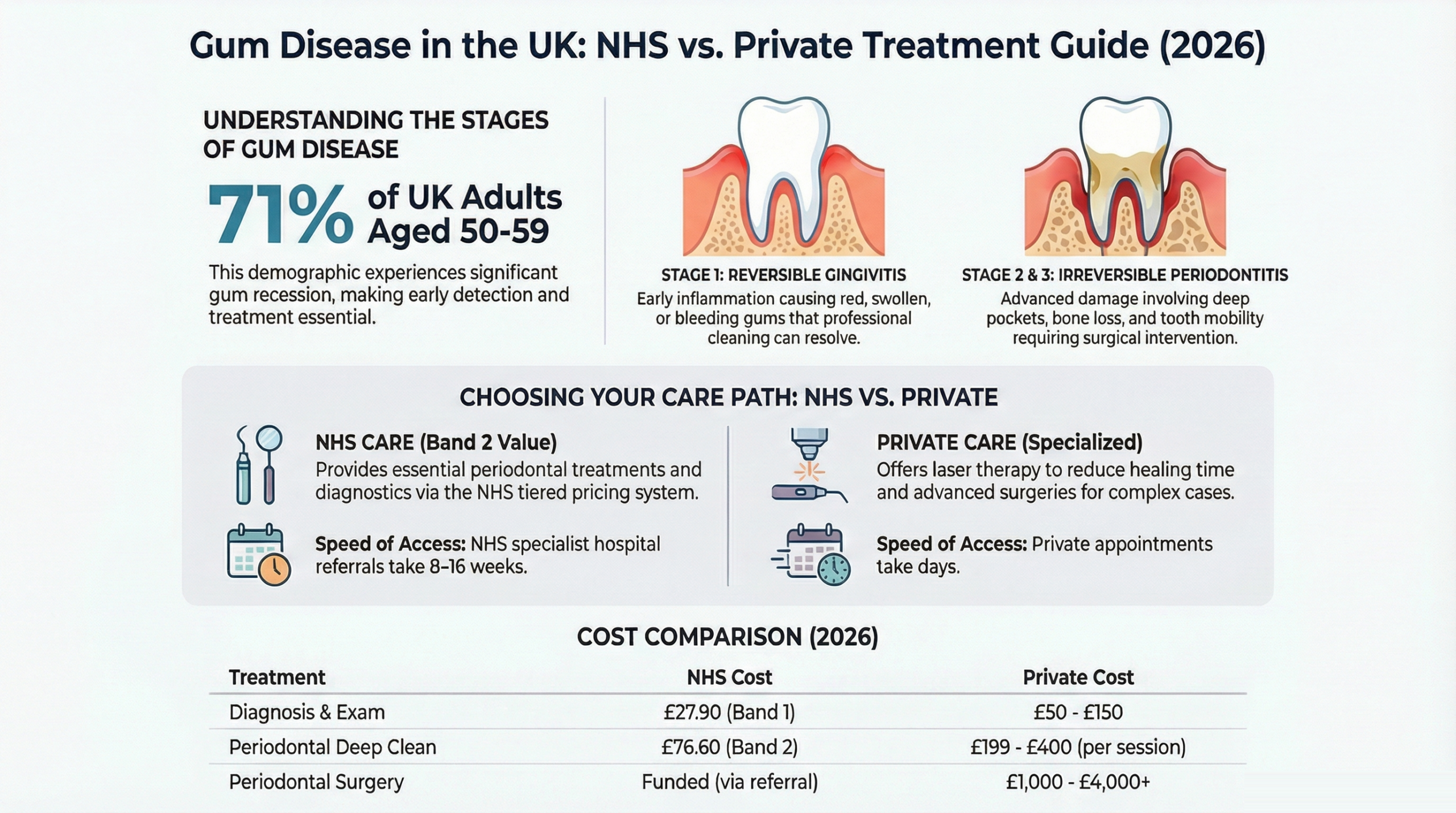
Gum disease affects more than 71% of adults aged 50-59 in the UK, yet many assume it is simply a part of ageing. The good news: effective gum disease treatment UK is available through both the NHS and private providers. This guide compares treatment options, costs, and waiting times so you can make an informed decision. Whether you are dealing with early gingivitis or advanced periodontitis, understanding what the NHS covers under Band 2 treatment and what private specialists offer – from deep cleaning at £199 to surgical grafts at £1,500 per area – will help you choose the right path.
How Much Does Gum Disease Treatment Cost?
Costs for gum disease treatment in the UK vary significantly depending on severity and whether you choose NHS or private care. The NHS operates a three-band system; gum disease falls under Band 2.
| Treatment Type | NHS Cost | Private Cost | What Is Included |
|---|---|---|---|
| Diagnosis and exam | Band 1: £27.90 | £50 – £150 | X-rays, pocket depth measurement, bleeding assessment |
| Hygienist deep clean | Band 2: £76.60 | £80 – £150 per session | Scale and polish, tartar removal above gumline |
| Periodontal deep cleaning | Band 2: £76.60 | £199 – £400 per session | Root planing, subgingival scaling, typically 2-4 sessions |
| Laser-assisted treatment | Not typically available | £300 – £800 | Laser disinfection, reduced bleeding and recovery time |
| Periodontal surgery | Hospital referral, funded | £1,000 – £4,000+ | Flap surgery, bone regeneration, advanced cases |
| Gum graft | Hospital referral, may be funded | £500 – £1,500 per area | Tissue transplant for receded gums, aesthetic and protective |
The NHS Band 2 treatment at £76.60 covers basic deep cleaning and scaling. Most private deep cleaning requires 2-4 sessions, pushing total costs to £400 – £1,600. For advanced cases with bone loss, private surgery ranges £1,000 – £4,000 or more.
Watch: The Escalation Pathway – Tracking and Treating Gum Disease
This short video explains how gum disease progresses, what the NHS offers at each stage, and when private periodontal treatment might be worth considering to protect your teeth long-term.
Our guide to NHS vs private dentist costs compares NHS and private dentist costs side by side, with real UK prices for every common treatment.
What Are the Stages of Gum Disease?
Stage 1: Gingivitis (early gum inflammation)
Gingivitis is reversible and affects only the soft tissue. Warning signs include red or swollen gums, bleeding when brushing or flossing, and persistent bad breath. At this stage, improved oral hygiene and a professional clean often resolve the issue entirely.
Stage 2: Periodontitis (advanced gum disease)
Once bacteria spread below the gumline and damage the periodontal ligament and bone, the condition becomes periodontitis. This is irreversible but manageable. Symptoms include deepening periodontal pockets (4mm or deeper), gum recession, tooth mobility, and pus discharge. Periodontitis requires deep cleaning and, in severe cases, surgical intervention.
Stage 3: Advanced periodontitis
Significant bone loss and loose teeth characterise advanced disease. This may lead to tooth loss without treatment. At this stage, private periodontal surgery, bone grafting, or gum grafts are often recommended.
Why over-50s are at higher risk: Natural bone resorption with age, reduced saliva production, and years of bacterial accumulation increase periodontitis risk. 71% of adults aged 50-59 experience some degree of gum recession, making early detection crucial.
Key dental care facts at a glance – The Best of Health 2026
Find out more in our complete guide to find an NHS dentist, which shows you how to find an NHS dentist near you, what to do if no one is accepting patients, and your rights.
What Gum Disease Treatment Is Available on the NHS?
Band 2 includes examination, X-rays, and professional cleaning (scaling and root planing). Your dentist will assess the depth of periodontal pockets, measure bleeding indices, and remove tartar and plaque both above and below the gumline. A course of treatment typically involves 1-2 visits under the same Band 2 charge.
If your NHS dentist identifies advanced periodontitis, they can refer you to a hospital dental service. Hospital periodontal treatment is funded by the NHS and may include periodontal surgery, bone grafting, or soft tissue grafts. However, NHS waiting times for secondary care can range from 8 to 16 weeks.
The NHS focuses on disease control and does not typically offer cosmetic or elective advanced treatments such as laser periodontal therapy or aesthetic gum grafting.

For more detail, read our guide on root canal cost UK – it compares NHS and private root canal prices, explains what is included, and helps you decide which route suits you.
When Should You Consider Private Periodontal Treatment?
Private periodontists are specialists trained in advanced gum disease management. They often have additional qualifications and experience with complex cases, bone regeneration, and soft tissue grafting.
Private clinics frequently offer laser-assisted periodontal therapy, which uses targeted laser light to disinfect periodontal pockets and promote healing. Laser treatment costs £300 – £800 and can reduce bleeding, swelling, and recovery time. It is rarely available on the NHS.
Private appointments are available within days or weeks, whereas NHS referral waiting times can exceed three months. If your gum disease is causing pain or you wish to proceed quickly, private care eliminates delays.
A course of private deep cleaning (£199 – £400 per session across 3-4 sessions) costs £600 – £1,600 total. For many over-50s with mild-to-moderate periodontitis, this is a one-time investment that prevents tooth loss and more costly restorative work.
What Questions Should You Ask About Gum Disease Treatment?
- What stage is my gum disease, and what does my treatment plan include?
- How many appointments are included in the Band 2 charge?
- Will I need to be referred to hospital secondary care?
- Are you a specialist periodontist with recognised credentials?
- How many sessions will I need, and what is the total cost?
- Do you offer laser-assisted treatment?
- What is my current pocket depth, and how will this be monitored?
- What home care routine do you recommend between appointments?
Our guide to sensitive teeth causes and treatment explains the causes of sensitive teeth, home remedies, and NHS vs private treatment options for adults over 50.
Frequently Asked Questions
At what stage of gum disease do you typically need to see a specialist rather than a general dentist?
If you have advanced periodontal disease with significant bone loss or pocketing, your NHS dentist may refer you to a hospital periodontal specialist. This usually happens after non-surgical treatment has not improved your condition, and the referral is still covered under NHS care.
If I have gum disease, will I need ongoing treatment, or can it be permanently cured?
Gum disease can be controlled but not permanently cured – it requires ongoing management including regular professional cleaning and excellent home care to prevent recurrence. Most patients need maintenance appointments every three to six months.
Can gum disease lead to tooth loss if left untreated, and how quickly does this happen?
Yes – untreated advanced gum disease (periodontitis) can lead to significant bone loss and eventual tooth loss, sometimes within a few years. Early intervention is crucial, which is why regular check-ups are so cost-effective for prevention.
If I choose private gum disease treatment, what additional options might be available?
Private periodontists often offer advanced treatments like gum grafting (starting from around £500), laser-assisted therapy, and guided tissue regeneration, which may not be available through the NHS. These procedures aim to regenerate lost gum tissue and bone.
Key Takeaways
- 71% of UK adults aged 50-59 have gum recession; early treatment prevents tooth loss and costly restorative work.
- NHS Band 2 treatment (£76.60) covers basic deep cleaning and is effective for gingivitis and mild periodontitis.
- Private deep cleaning costs £199 – £400 per session; full courses typically total £600 – £1,600 across 3-4 visits.
- Laser-assisted periodontal therapy (£300 – £800) reduces healing time but is rarely available on the NHS.
- Hospital referral is free on the NHS for advanced periodontitis; private periodontal surgery costs £1,000 – £4,000+.
- Consider private care if you want specialist expertise, faster access, or advanced techniques like laser treatment.
Explore more: For a full comparison of dental costs, read our guide to NHS vs private dentist costs 2026. If you are concerned about tooth loss, explore dental implants cost UK and dentures cost UK for long-term options. Join the Best of Health community on Facebook for discussions about gum health and over-50s dental care.
This article is for information only. Always consult your dentist, GP or a qualified healthcare professional before making decisions about dental treatment.