
Hearing Aid Costs UK 2026: NHS vs Private Compared
Struggling to follow conversation in a busy room? You are far from alone. More than 18 million adults in the UK are deaf, have hearing loss or live with tinnitus, according to the RNID. Most people wait years before doing anything about it. Often the sticking point is money – and confusion about hearing aid costs.
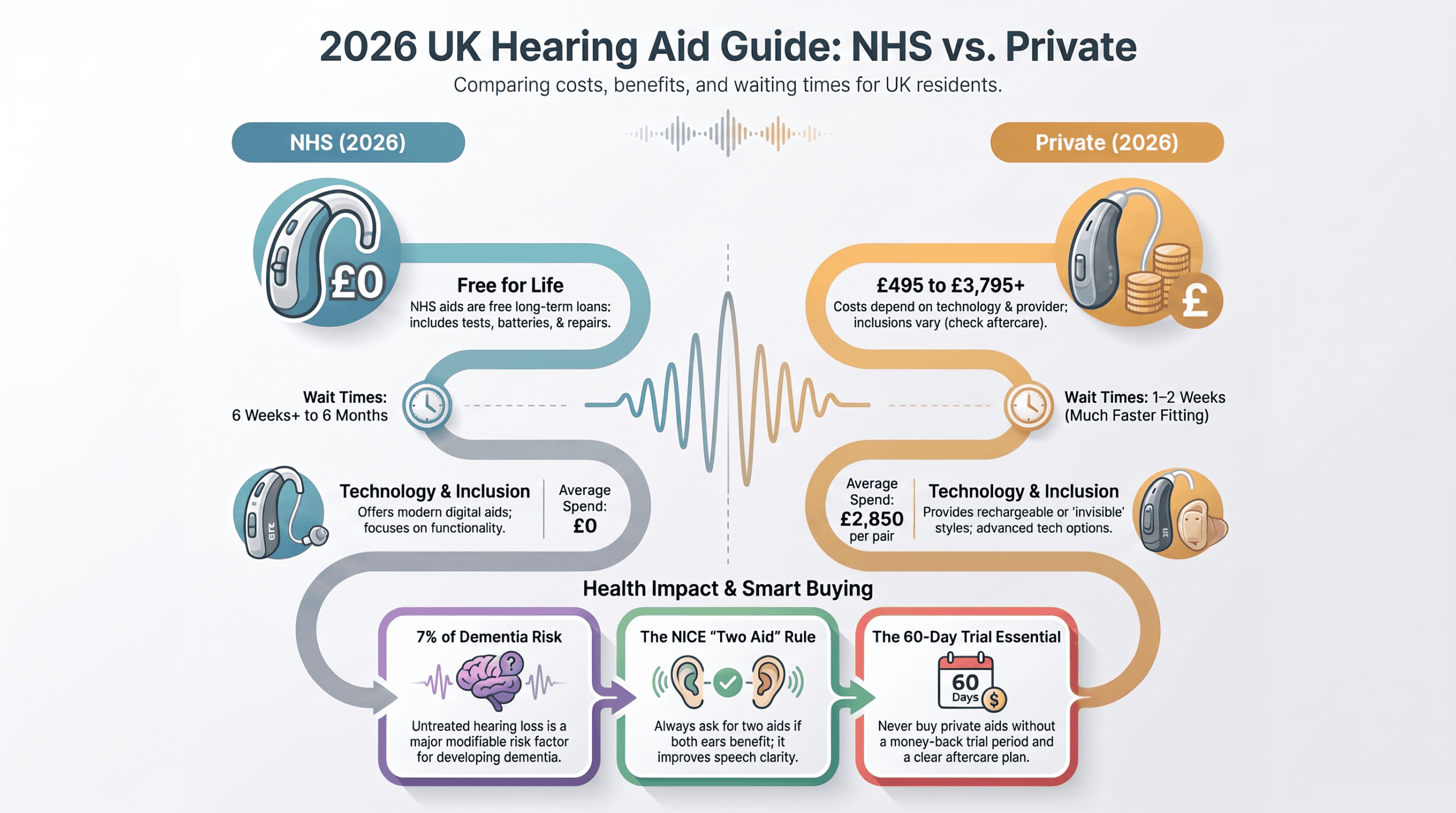
This guide sets out exactly what you will pay in 2026, with real figures. On the NHS, hearing aids are free. Privately, expect anywhere from £495 to around £3,795 for a pair. The price depends on the provider and the technology level you choose. We compare NHS and private routes side by side: costs, waiting times, what is included, and the questions worth asking before you sign anything.
The right choice depends on your budget, your patience and how much the latest features matter to you. The figures below will help you decide.
Key Takeaway: As of 2026, NHS hearing aids are free, including the test, fitting, batteries and repairs. The catch is the wait, which tops six weeks in many areas. Private hearing aid costs range from £495 for a basic pair at Specsavers or Boots to £3,795 for premium models, usually fitted within two weeks.
What Are Hearing Aid Costs on the NHS?
Nothing. That is the short answer, and it surprises many people. NHS hearing aids are provided free on long-term loan. The package includes the assessment, the fitting, follow-up appointments, batteries and repairs for the life of the aids. Over five years, that bundle would cost a private patient hundreds of pounds on top of the aids themselves.
The NHS typically supplies behind-the-ear digital aids. They are modern, programmable devices matched to your hearing loss – not the beige bricks of decades past. Many NHS services now issue models with Bluetooth streaming. You will not usually get the smallest in-ear styles or the newest rechargeable premium models. For everyday listening, though, the sound quality is good.
NICE guidance (NG98) recommends offering two hearing aids where both ears would benefit. Two aids make speech easier to follow in background noise and help you tell where sounds are coming from. Offered one aid for two aidable ears? Ask why. The NICE guideline on hearing loss in adults is on your side.
To start, ask your GP for a referral to audiology. In some areas you can self-refer directly to a local NHS audiology service, so ask your surgery what applies where you live. Our guide to the NHS e-Referral Service explains how to choose your hospital and cut waiting times once a referral is made.
Private Hearing Aid Costs in 2026: What You Will Pay
Private prices vary enormously. The technology level – not the brand on the door – drives most of the difference. Here is what the major UK high-street providers currently charge for a pair.
| Provider | Entry-Level Pair | Premium Pair | Aftercare Included |
|---|---|---|---|
| Specsavers | From £495 | Up to £3,500+ | 4 years, with batteries |
| Boots Hearingcare | From £495 | Around £3,045 | Yes, with 0% credit options |
| Amplifon | From £945 | Around £3,795 | Up to 3 years, selected models |
| Hidden Hearing | Quote on consultation | Quote on consultation | Yes, lifetime aftercare |
Which? research puts the average private spend at about £2,850 for a pair. The mid-range – roughly £1,500 to £2,500 – is where most people find the best balance of features and value. Rechargeable batteries, Bluetooth streaming to your phone and better background-noise processing all arrive at this level.
One caution. Some quotes exclude consumables such as wax guards and domes, or charge for appointments after an initial period. Always ask what the price covers over four or five years, not just on day one. A cheap pair with paid-for aftercare can end up dearer than a mid-price pair with everything included.
NHS vs Private: Waiting Times and What You Get
Cost is only half the comparison. The other half is time – and here private providers hold a clear advantage.
| Treatment | NHS Wait | NHS Cost | Private Cost | Private Wait |
|---|---|---|---|---|
| Hearing test and two hearing aids | 6 weeks to 6 months, area dependent | Free | £495 to £3,795 | 1 to 2 weeks |
NHS audiology aims to move from referral to fitting within about seven weeks, inside the 18-week treatment standard. Reality varies by postcode. NHS England data from March 2025 showed 38% of people waiting six weeks or more just for the assessment. Some areas quote six months. Private providers, by contrast, will usually test you within days – most offer the hearing test free – and fit aids within a fortnight.
Our view: if your budget is tight, the NHS route is excellent and the aids are perfectly capable. Go private if a short wait matters to you or you want rechargeable, nearly invisible in-ear styles. It is also the better route if you value one named audiologist looking after you for years. Paying £2,000 does not buy you better hearing than the NHS provides. It buys speed, choice and convenience.
Why Sorting Your Hearing Matters More Than You Think
Untreated hearing loss is not just a nuisance. The 2024 Lancet Commission on dementia identified hearing loss as one of the largest modifiable risk factors. It accounts for an estimated 7% of dementia risk across the population. The same report noted that the evidence for hearing aids reducing that excess risk has grown stronger.
That does not mean hearing aids prevent dementia – no device can promise that. But the research suggests keeping your brain supplied with sound helps protect memory, social connection and mood. People who treat their hearing loss stay in the conversation. Literally.
Hearing loss also often travels with tinnitus – ringing or buzzing with no external source. If that sounds familiar, our guide to understanding and living with tinnitus covers the latest management options. And if your hearing declined after years of noisy work, see our guide to noise-induced hearing loss for causes, prevention and treatment.
Questions to Ask a Private Hearing Aid Provider
Before you commit to a private purchase, put these questions to the audiologist:
- What exactly does the price include – and for how many years? Ask about batteries, wax guards, domes, repairs and follow-up appointments.
- Is there a money-back trial period? Sixty days is common; some providers offer more.
- Which technology level am I actually paying for, and what would the step below cost me?
- Can I try the aids in a noisy environment before the trial period ends?
- Who will I see for aftercare – the same audiologist each time, or whoever is available?
- What happens to servicing if my nearest branch closes?
A reputable provider will answer all six without flinching. Hesitation on the trial period or aftercare is your cue to shop elsewhere.
Hearing Aid Costs: Your Questions Answered
Can you pay to upgrade NHS hearing aids?
No. There is no top-up scheme for audiology in England. You either take the free NHS aids or buy privately – you cannot pay the difference for a fancier NHS model. Some people do both: NHS aids as the everyday workhorse, and a private pair for social occasions.
How long do hearing aids last?
Plan on around five years, whichever route you choose. The NHS replaces its aids free when they wear out or your hearing changes. Private buyers pay again, which is worth factoring into the true cost of a £3,000 pair.
Do private hearing aids come with a warranty?
Yes – typically two to four years on the manufacturer’s warranty, covering faults but not loss or accidental damage. Check whether your home insurance covers hearing aids away from the house. Some providers sell separate insurance; weigh the premium against the replacement cost before saying yes.
Are hearing tests free?
Usually, yes. NHS hearing tests are free with a referral. Specsavers, Boots and Amplifon all offer free hearing checks on the high street, with no obligation to buy. A free private test can be a quick first step if you simply want to know where you stand.
Key Takeaways
- NHS hearing aids are free in 2026, including the test, fitting, batteries and repairs for the life of the aids.
- Private hearing aid costs run from £495 to around £3,795 a pair; the UK average spend is about £2,850.
- NHS waits vary from six weeks to six months by area; private fitting usually takes one to two weeks.
- NICE recommends two hearing aids where both ears would benefit – ask if you are offered only one.
- The 2024 Lancet Commission links untreated hearing loss to around 7% of dementia risk, and hearing aids appear to reduce it.
- Always confirm what a private price includes over five years, and insist on a trial period.
Wondering what else is worth checking as you get older? Read our guide to the 7 essential scans for over-50s – and whether to stick with the NHS or go private for each. You can also join The Best of Health community on Facebook for weekly updates on NHS and private healthcare costs.
This article is for information only. Always consult your GP or a qualified healthcare professional before making health decisions.