
Going Abroad? Your Essential Travel First Aid Kit for Over-50s
Planning a holiday abroad? A well-prepared travel first aid kit is your safety net for minor injuries and illnesses while you’re away from home. For adults over 50, having the right items to hand can prevent a small problem becoming a costly emergency or spoiling your break.
This guide walks you through building a comprehensive travel first aid kit tailored to older travellers. We’ll cover what to pack, why each item matters, and how to navigate medication rules when crossing borders. Whether you’re heading to Europe, the Mediterranean, or further afield, you’ll have peace of mind knowing you’re prepared.
Why a Travel First Aid Kit Matters for Older Travellers
As you age, minor health events-a cut, a blister, indigestion, or a mild fever-can escalate quickly if left untreated. This sits alongside our broader travel health checklist for over-50s as a core part of pre-trip preparation. Abroad, you may not know where the nearest pharmacy or NHS walk-in centre equivalent is located. Language barriers can also make seeking help more difficult.
A travel first aid kit saves time, money, and stress. Rather than hunting for a pharmacy in an unfamiliar city, you’ll have trusted solutions in your luggage. For the over-50s, this is especially valuable when managing existing conditions or preventing common travel-related problems.
The NHS Fit for Travel service (fitfortravel.nhs.uk) recommends that all travellers carry a basic first aid kit, plus any prescription medications and copies of medical records. This is even more important if you have underlying health conditions or take regular medicines.
Your Complete Travel First Aid Kit Checklist
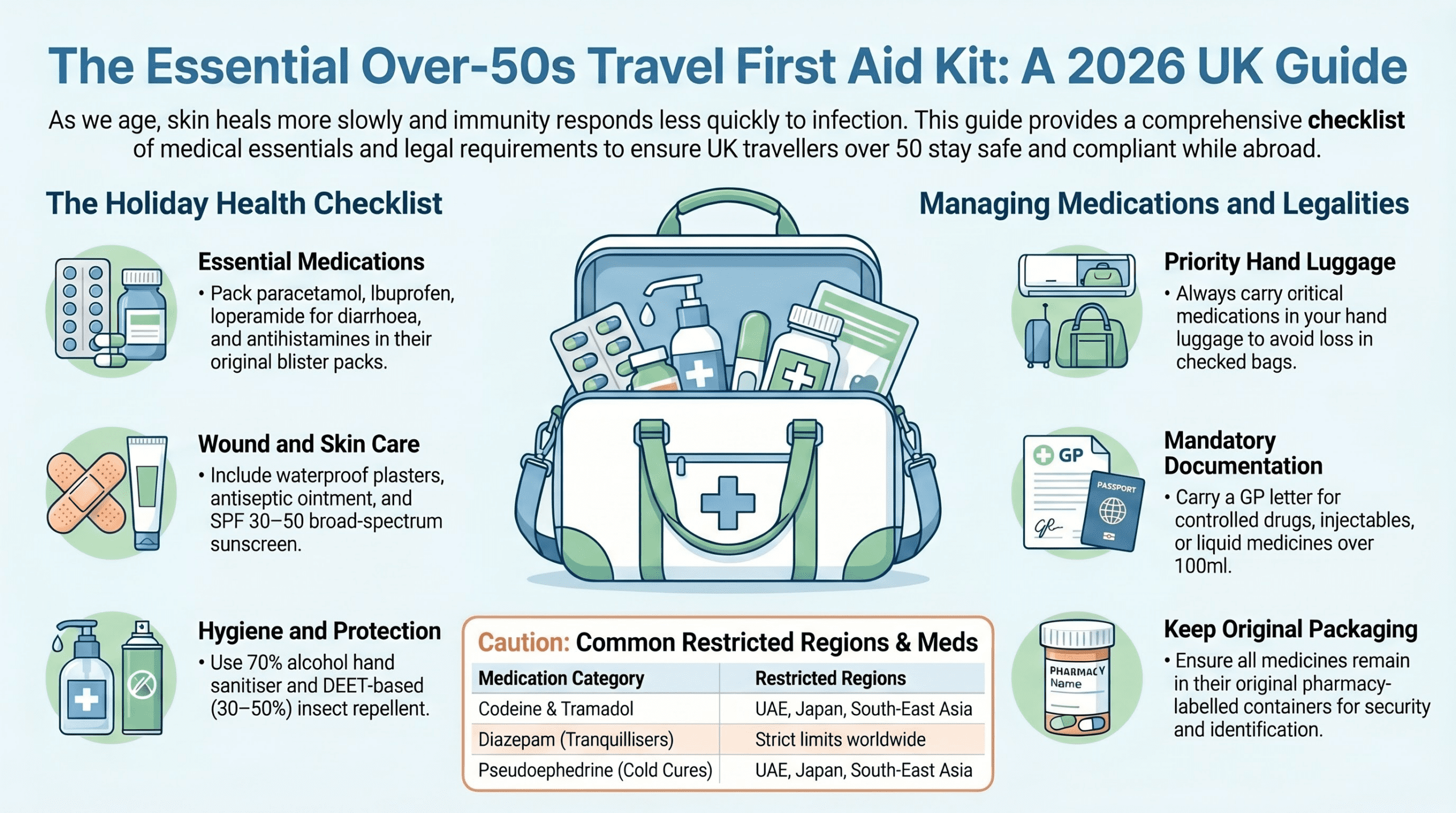
Below is a comprehensive checklist of items every over-50 traveller should consider packing. Adjust this based on your destination, travel length, and personal health needs.

| Item | Purpose | Quantity |
|---|---|---|
| Plasters (assorted sizes) | Minor cuts, grazes, blisters from walking or new shoes | 20-30 |
| Antiseptic wipes | Clean wounds before dressing to prevent infection | 10-15 packets |
| Antibiotic ointment (e.g. Germolene) | Apply after cleaning to reduce infection risk | 1 tube (15g) |
| Blister treatment pads | Cushion and protect pressure sores from walking | 8-10 |
| Paracetamol tablets | Headache, mild fever, general aches | 20 tablets |
| Ibuprofen tablets | Inflammation, muscle pain, arthritis flare-ups | 20 tablets |
| Antihistamine tablets | Allergic reactions, insect bites, hayfever | 10 tablets |
| Anti-diarrhoea medication | Traveller’s diarrhoea or upset stomach | 1 pack (4-6 doses) |
| Indigestion relief (e.g. Gaviscon sachets) | Heartburn from unfamiliar food or travel stress | 6-10 sachets |
| Antiemetic (travel sickness tablets) | Nausea and dizziness on planes, trains, boats | 10-20 tablets |
| Sunscreen SPF 50+ | Protect skin from UV damage and sunburn | 2 x 100ml bottles |
| Aftersun lotion with aloe vera | Soothe mild sunburn and moisturise skin | 1 x 200ml bottle |
| Insect repellent (DEET 20-30%) | Prevent mosquito and tick bites; reduce malaria risk | 1 x 100ml bottle |
| Insect bite cream | Reduce itch and inflammation from bites | 1 tube (15g) |
| Triangular bandage and elastic support bandage | Support sprains, strains, minor injuries | 2 each |
| Sterile gauze pads | Clean or dress larger wounds | 10-15 pads |
| Tweezers (small) | Remove splinters, thorns, or ticks | 1 |
| Thermometer (digital) | Check for fever if you feel unwell | 1 |
| Pain relief cream (e.g. Ibuprofen gel) | Localised muscle or joint pain without systemic tablets | 1 tube (50g) |
| Prescription medications + copies | Regular medicines in original containers plus backup prescriptions | As needed |
This checklist is a starting point. Add or remove items based on your personal health, destination climate, and planned activities (hiking, beach holidays, city breaks).
Medications: What You Can Bring Abroad
UK travellers can carry prescription and over-the-counter medicines into most countries, but rules vary. If you take insulin or other diabetes-specific medication, see our dedicated guide on travelling with diabetes. The government’s travel advice (gov.uk/foreign-travel-checklist) recommends you:
- Carry all medicines in original, clearly labelled containers
- Keep a copy of your prescription or a letter from your GP confirming what you’re taking and why
- Pack medicines in your hand luggage (checked bags can get lost or delayed)
- Check your destination country’s rules-some ban certain medications
- Carry at least a week’s extra supply in case of travel delays
For controlled medicines (such as some pain relief or psychiatric drugs), you’ll need a Fit to Fly certificate from your GP. Allow time to request this-it’s not instant. If you’re unsure whether a medicine is restricted, contact the destination embassy or use the International Air Transport Association (IATA) medicines list.
Over-the-counter painkillers, antihistamines, and digestive aids are usually permitted. However, codeine (found in some pain relief products) is banned in several countries, including the UAE and Thailand. Check before you pack.
Sun Protection for Mature Skin
Skin over 50 is thinner and more susceptible to sun damage, age spots, and skin cancer. For a deeper look at SPF, application, and the most common sunscreen mistakes to avoid over 50, see our companion guide. Yet many older travellers underestimate sun risk. A study cited by the British Association of Dermatologists found that people aged 60+ often get more intense sun exposure during holidays than at home.
Pack high-SPF sunscreen (SPF 50+) and apply every two hours. Include aftersun lotion to soothe skin if you do get burnt. Wear a wide-brimmed hat, UV-blocking sunglasses, and lightweight long sleeves when possible-these are just as important as cream.
Age UK’s holiday guides recommend checking the UV index at your destination and avoiding sun between 11am and 3pm. A lightweight, packable sun shirt can protect without the hassle of constant reapplication.
Preventing and Treating Insect Bites
Insect-borne illnesses (dengue, Zika, malaria) are a genuine risk in tropical and subtropical regions. Our full guide to insect bites and stings on holiday covers repellent choices, infection warning signs, and when to seek medical help. Even in cooler climates, mosquitoes and ticks can carry diseases. For specifically biting and stinging risks, see our guide to insect bites and stings.
Pack an insect repellent with 20-30% DEET (diethyltoluamide), the gold standard recommended by NHS Fit for Travel. Apply to exposed skin and reapply after swimming or every few hours. Some travellers prefer picaridin-based repellents if they have sensitive skin.
If you’re bitten, resist scratching. Use insect bite cream to reduce itch. Watch for signs of infection (spreading redness, pus, warmth). If you develop a fever, rash, or joint pain days after travel, contact your GP immediately-these are warning signs for mosquito-borne illness.
Managing Common Travel Health Problems
Even with prevention, travel can trigger minor health issues. Knowing how to manage them keeps your holiday on track.
Traveller’s Diarrhoea
This affects up to 40% of UK travellers to high-risk regions. Pack anti-diarrhoea tablets and oral rehydration salts (sachets that dissolve in water). Drink bottled water, avoid street food, and wash hands regularly. Most cases resolve in 24-48 hours; seek medical help if it persists or you have blood in stool.
Blisters and Foot Problems
New shoes and unfamiliar terrain cause friction. Blister treatment pads are invaluable. If a blister forms, keep it clean and covered. Moleskin or gel cushions prevent pressure; antibiotic ointment prevents infection.
Muscle Strain and Minor Injuries
A fall, strain, or overactive day sightseeing can cause pain. Ibuprofen gel applied locally avoids systemic medication. Elastic support bandages stabilise ankles and knees. Rest, ice (wrap ice cubes in a cloth), compression, and elevation (RICE protocol) treat most minor sprains within days.
Headache and Sleep Disruption
Time zone changes and dehydration trigger headaches. Pack paracetamol and stay hydrated. Jet lag is real; melatonin tablets (available over-the-counter) help some people adjust sleep patterns. Aim for outdoor light exposure in the morning at your destination.
How to Pack Your Travel First Aid Kit
Organisation makes your kit practical and accessible. Use a small waterproof pouch or plastic container with compartments. Clearly label sections (wound care, medications, sun care, insect protection).
Keep your kit in a carry-on bag for flights, not checked luggage. Checked bags can be delayed or damaged, leaving you without essential items. Store a backup copy of prescriptions and any relevant medical letters with your travel documents.
Before you leave, familiarise yourself with what you’ve packed and when to use each item. If you have specific health conditions, ask your GP for advice tailored to your destination-they may recommend additional items or precautions.
Costs: Building a Kit on a Budget
A basic travel first aid kit costs £15-30 to assemble from supermarket own-brands and online retailers. Pre-assembled kits sold at airports and travel shops cost £25-60 but often include unnecessary items.
Buy own-brand paracetamol, ibuprofen, and antihistamines from Tesco, Sainsbury’s, or Asda-these are identical in strength to branded versions but cost half the price. Cheap plasters work just as well as premium ones.
Sunscreen and insect repellent are essential expenses worth the cost. Buying abroad is possible but expensive and time-consuming when you’d rather be on holiday. Buying at home ensures you know the brands and potency.
Final Checklist: Before You Go
- Assemble your travel first aid kit at least one week before departure
- Check expiry dates on all medications and creams
- Verify medication rules for your destination on gov.uk or the embassy website
- Request a Fit to Fly certificate if taking controlled medicines (allow 2-3 weeks)
- Pack all medications in original containers with prescriptions
- Store your kit in a waterproof pouch in your carry-on luggage
- Take a photo of your kit’s contents for your insurance claim if needed
- Share the list with your travel companion in case you become ill
- Register with your GP’s surgery in case you need to contact home health services
- Check that your travel insurance covers medical emergencies and repatriation
Key Takeaways
- – A travel first aid kit is essential for over-50s abroad and prevents minor issues escalating into emergencies.
- – Include wound care (plasters, antiseptic wipes), pain relief, sun protection, insect repellent, and anti-diarrhoea medication.
- – All medications must be in original, labelled containers with a copy of your prescription or GP letter.
- – Check your destination’s rules on gov.uk or the embassy website; some medicines are restricted.
- – Pack your travel first aid kit in hand luggage on flights to avoid lost or delayed checked bags.
- – Budget £15-30 for a basic kit built from own-brand items; avoid overpriced airport kits.
What’s Your Travel First Aid Kit Priority?
Every trip is different. Whether you’re hiking in the Alps or relaxing on a Greek island, your kit should reflect the risks. Use the checklist above, add any personal medications, and customise based on your destination’s climate and activities.
Have a question about what to pack for your destination? Check the NHS Fit for Travel website (fitfortravel.nhs.uk), which provides country-specific health advice and vaccination requirements. Your GP can also help if you have health concerns about a particular trip.
Safe travels, and don’t let health worries spoil your break.
Frequently Asked Questions
What should I pack in a travel first aid kit?
The NHS recommends: paracetamol and ibuprofen for pain and fever; loperamide and oral rehydration sachets for traveller’s diarrhoea; antihistamine tablets for bites and hay fever; antiseptic wipes, plasters, and waterproof dressings; hydrocortisone cream for bites and rashes; antiseptic ointment for cuts; a digital thermometer; tweezers; and a small pair of scissors. Add insect repellent, sunscreen, and any prescription medicines.
Can I take medicines in my hand luggage?
Yes. UK Civil Aviation Authority rules let you carry essential prescription and over-the-counter medicines in your hand luggage in their original packaging. Liquid medicines over 100ml are permitted with a doctor’s letter. Always carry critical medication in your hand luggage rather than the hold – lost checked baggage means lost treatment.
Do I need a doctor’s letter to travel with prescription medicines?
You should always carry a printed letter from your GP or pharmacist listing each medication, the medical reason for it, and the dose. This is essential for controlled drugs (such as strong painkillers, ADHD medication, and some sleep medications), injectables (insulin, EpiPens, biologics), and any liquids over 100ml. Some destinations including the UAE, Singapore, and Japan require this letter.
Which UK-prescribed medicines are restricted abroad?
Several common UK medicines are restricted or banned in some countries. Codeine, tramadol, and pseudoephedrine (in some cold remedies) are restricted in many destinations including the UAE, Japan, and parts of South-East Asia. Diazepam and similar tranquillisers face strict limits worldwide. Always check the destination embassy website on Gov.uk before travelling.
Should I take an EpiPen abroad if I have severe allergies?
Yes – and carry two, not one. Travel with a doctor’s letter explaining the allergy and the prescription. Keep them at room temperature in your hand luggage (not the hold or in direct sun). Make sure your travel companions know how and when to use them. Wear a medical ID bracelet or necklace clearly stating your allergy and that you carry an EpiPen.
How do I get a To Take Out (TTO) prescription from my GP?
A TTO prescription provides enough of your regular medication to last your full trip plus a buffer of two or three extra days for delays. Ask your GP receptionist for a TTO at least four weeks before travel – longer if you take controlled drugs. Most surgeries process these by telephone or online; expect a small administrative fee for paper copies of the supporting letter.
Disclaimer
This article is for information only. Always consult your GP or a qualified healthcare professional before making health decisions, before travelling abroad, or if you experience symptoms that concern you while away. The NHS Fit for Travel service (fitfortravel.nhs.uk) provides evidence-based health information tailored to your destination.
Join the community
For more practical travel health advice for over-50s, join our Facebook community where we share weekly tips, NHS updates, and reader stories.