
10 Common Sunscreen Mistakes You Should Be Aware Of
Most people know the importance of using sunscreen to protect their skin from sun damage. However, even if you wear sunscreen religiously, there are a number of common sunscreen mistakes you could be making – and they may be putting your skin at serious risk.

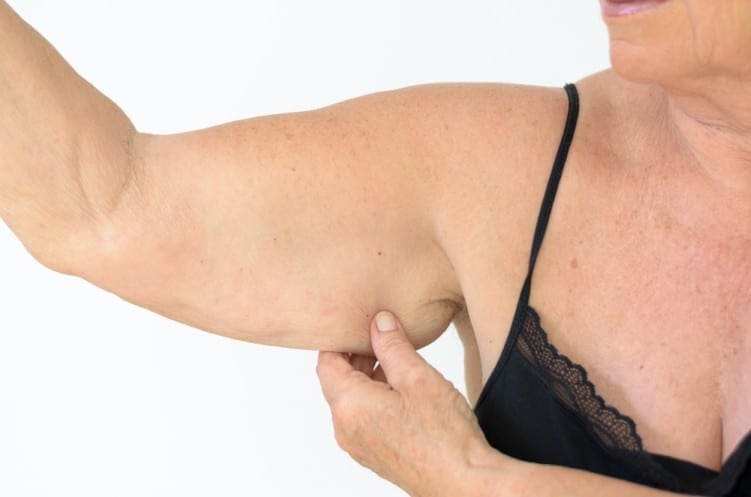
If you’re over 50, sun protection matters even more. Your skin is thinner, more vulnerable to UV damage, and more prone to developing melanoma and other skin cancers. In the UK, melanoma incidence rates have increased by almost a third over the past decade, with adults over 80 seeing a 57% rise in incidence. Yet many of us unknowingly undermine our sun protection efforts by making simple – but critical – mistakes.
In this guide, we’ll walk you through the 10 most common sunscreen errors, explain why they matter, and show you how to get sun protection right.
Why Sun Protection Matters More After 50
As we age, our skin becomes more susceptible to damage from ultraviolet (UV) radiation. Effective sun protection sits alongside other essentials in our travel health checklist for over-50s, particularly when planning a holiday in a sunny destination. Cumulative sun exposure over a lifetime builds up in the skin, increasing the risk of both non-melanoma skin cancers (basal cell and squamous cell carcinoma) and the more serious melanoma.
The NHS and Cancer Research UK both emphasise that up to 9 in 10 cases of melanoma skin cancer could be prevented by staying safe in the sun and avoiding sunbeds. The key is getting the basics right – and that starts with avoiding these common mistakes.
Additionally, mature skin has reduced natural oils and moisture, making it more reactive to harsh sunscreen ingredients. Choosing the right products and applying them correctly is essential for both protection and skin comfort.
The 10 Common Sunscreen Mistakes – And How to Fix Them
1. Not Using a Broad-Spectrum Formula
You may check the SPF number when buying sunscreen, but are you looking for a broad-spectrum formula? This is crucial – and many people miss it.
SPF (Sun Protection Factor) only measures protection against UVB rays, which cause sunburn. However, UVA rays penetrate deeper into the skin, damage collagen and elastin, and contribute to premature ageing and skin cancer risk. Broad-spectrum sunscreens protect against both.
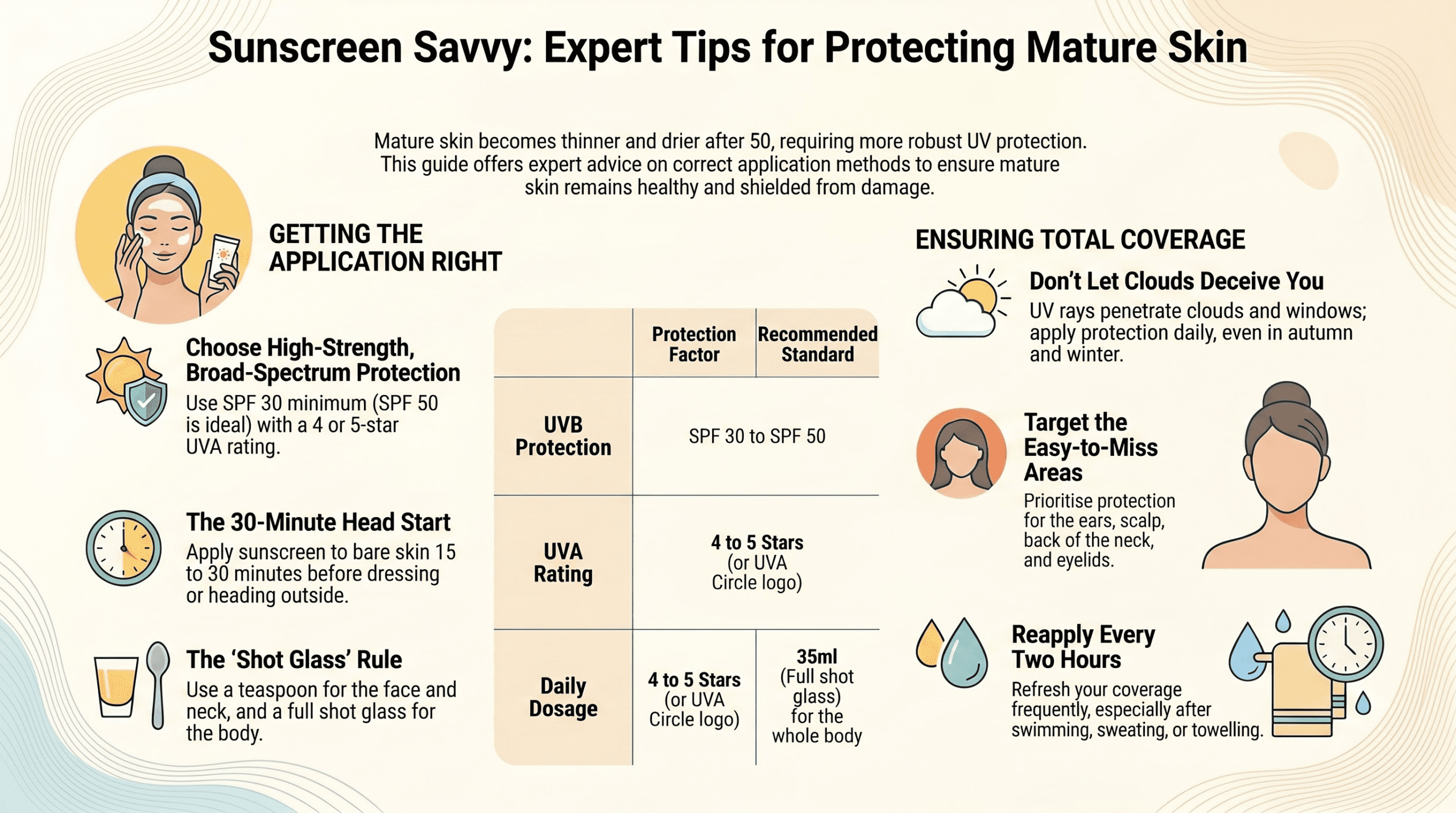
The fix: Always look for the label “broad spectrum SPF 30+” or higher. The NHS recommends SPF 30 as a minimum, though SPF 50 is ideal for mature skin and regular sun exposure. Check the label for the UVA symbol (a circle with “UVA” inside), which indicates it meets EU broad-spectrum standards.
2. Choosing an SPF That Is Too Low
A low SPF might seem appealing – it won’t feel greasy, it’s often cheaper, and the myth persists that low SPF allows you to “tan gradually.” In reality, any SPF below 30 leaves your skin dangerously underprotected.
The jump from SPF 15 to SPF 30 doubles your protection. SPF 15 blocks 93% of UVB rays; SPF 30 blocks 97%; SPF 50 blocks 98%. For over-50s skin, that extra 1-5% makes a real difference over time.
The fix: Use a broad-spectrum SPF 30 minimum. For daily outdoor activity or if you have fair skin, sensitive skin, or a history of sun damage, opt for SPF 50+. Remember: a high SPF is not a licence to skip reapplication – all sunscreens must be reapplied regularly regardless of SPF number.
3. Applying Sunscreen Only After You Go Outside
You’ve just stepped into the garden or onto the beach – and only then do you remember to apply sunscreen. By that point, your unprotected skin has already been exposed to UV radiation and damage has begun.
Sunscreen needs time to form a protective barrier on the skin. Most formulations need 10-15 minutes to absorb and activate, though some experts recommend a full 30 minutes for optimal protection.
The fix: Apply sunscreen indoors, about 15-30 minutes before heading outside. This gives it time to bind to the skin and become fully effective. Make it part of your morning routine – apply it after moisturiser but before getting dressed.
4. Applying Sunscreen Around Your Clothes
This is a practical problem many of us face: you don’t want to get sunscreen all over your outfit, so you apply it while wearing your clothes – and inevitably miss spots. Your shoulders, collarbone, and sides often escape coverage.
It’s tempting to apply sunscreen after dressing, but this approach creates gaps in protection and wastes product as it transfers onto fabric instead of skin.
The fix: Apply sunscreen to bare skin before getting dressed. Apply it liberally to all exposed areas – face, neck, ears, chest, arms, legs, and feet. This ensures even, complete coverage. If you’re wearing a low-cut top or swimsuit, make sure your dcolletage is thoroughly covered.
5. Not Using Enough Sunscreen
This is perhaps the most common mistake of all. Most people use roughly half the amount of sunscreen needed for proper protection. Spray sunscreens are particularly prone to underapplication because it’s hard to tell how much coverage you’ve achieved.
The recommended amount is about 35 millilitres (roughly a shot glass full) for the entire body, or a teaspoon for the face and neck.
The fix: For sprays, hold the can 4-6 inches from the skin and spray continuously until you see a visible layer of product, then rub it in thoroughly. For creams and lotions, squeeze out a generous amount and apply in circular motions, ensuring even coverage. Don’t be afraid to use more than you think you need – proper sunscreen protection requires adequate quantity.
6. Missing Key Spots
Feet, toes, underarms, the back of the neck, ears, the scalp parting, and eyelids – these are the forgotten zones. Because people don’t instinctively think to apply sunscreen to them, they’re frequently left exposed. Yet these areas are just as vulnerable to sun damage and skin cancer.
The back of the neck is especially vulnerable because it’s often exposed and frequently forgotten. Ears are another high-risk area for skin cancer, partly because they’re exposed and partly because many people simply don’t remember to cover them.
The fix: Create a mental checklist and apply sunscreen to every exposed area, including:
- Face and neck (front and back)
- Ears and the top of the head (use a SPF spray or powder if you have thinning hair)
- Dcolletage and chest
- Arms and the tops of hands
- Legs and tops of feet
- Underarms
- Any area with a visible parting in your hair
7. Not Reapplying Often Enough
A common misconception: if you apply sunscreen once in the morning, you’re protected for the day. In reality, sunscreen degrades over time due to sweat, water, friction from clothing, and UV exposure itself.
The general guidance is to reapply every 80 minutes, or immediately after swimming or sweating heavily. This applies to all SPF levels – a high SPF does not mean longer-lasting protection.
The fix: Set a phone reminder to reapply sunscreen every 80 minutes if you’re spending significant time outdoors. Keep a small bottle of sunscreen in your bag, in your car, and at your desk. If you’re swimming, reapply as soon as you’ve dried off. For convenience, consider powder or spray sunscreen for midday touch-ups over makeup.
8. Using Body Sunscreen on Your Face
Your facial skin is more delicate and sensitive than the skin on your body. It has a thinner stratum corneum (protective outer layer) and is often already stressed by daily exposure to environmental pollutants, makeup, and skincare products.
Body sunscreens are often formulated with heavier oils and ingredients designed for durability on larger surface areas. When applied to the face, they can clog pores, cause breakouts, and leave a greasy residue – especially problematic for over-50s skin that’s prone to sensitivity.
The fix: Use a dedicated facial sunscreen. Look for formulas labelled as “non-comedogenic” (won’t clog pores) and designed for facial skin. Many modern facial sunscreens for mature skin include hydrating ingredients like hyaluronic acid, soothing agents like aloe vera or niacinamide, and antioxidants such as vitamins C and E. Tinted mineral sunscreens are often preferred by dermatologists for over-50s skin because they’re less likely to cause irritation and won’t settle into fine lines.
9. Not Protecting Your Lips
Lips are among the most vulnerable parts of the body to UV damage, yet many people never apply sunscreen to them. The thin skin on lips lacks the protective melanin of the rest of the face, making them particularly susceptible to sun damage, premature ageing, and lip cancer (squamous cell carcinoma).
Additionally, constant talking, eating, and drinking wear away lip balm much faster than sunscreen wears away from the rest of the body.
The fix: Use a dedicated lip balm with SPF 30 or higher. Apply it generously and reapply frequently – especially after eating, drinking, or talking. Keep a lip balm in your pocket, bag, and on your desk. Look for formulas with moisturising ingredients like beeswax, shea butter, or lanolin to prevent drying.
10. Only Wearing Sunscreen on Hot, Sunny Days
Many people assume UV damage only happens on bright, hot summer days. This is a dangerous misconception. UV rays penetrate clouds, and in the UK, the sun is strong enough to cause damage from mid-March to mid-October – even on overcast days.
In fact, you can get more severely burned on a cool, cloudy day because you’re less aware of sun exposure and less likely to take precautions.
The fix: Use sunscreen year-round, every single day – not just in summer. When the UV index is 3 or above (which is often the case in the UK from March to October), apply sunscreen to any exposed skin. Make it non-negotiable, like brushing your teeth. In winter, sunscreen is less critical if you’re mostly indoors, but it’s still recommended if you’ll be outside for extended periods, especially at higher altitudes or near reflective surfaces like snow or water.
Choosing the Right Sunscreen for Mature Skin
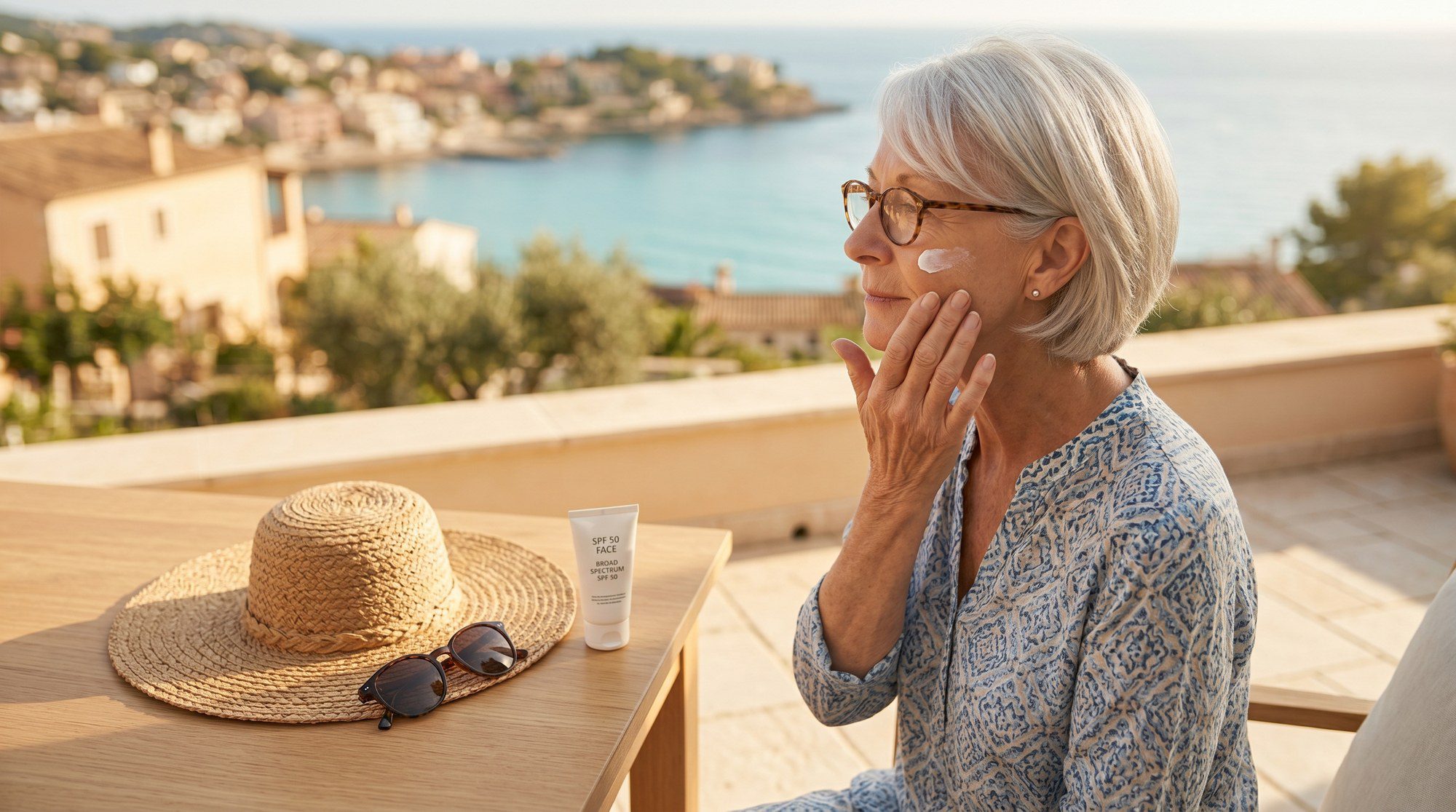
If you’re over 50, choosing the right sunscreen formula is as important as applying it correctly. Mature skin has specific needs – hydration, sensitivity, and anti-ageing benefits alongside UV protection.
Sunscreen is also a core item in any travel first aid kit for over-50s, so pack at least one bottle in your hand luggage when flying.
What to Look For
- Broad-spectrum SPF 30-50: SPF 30 is the minimum; SPF 50 is ideal for daily use or regular outdoor activity.
- Mineral (physical) sunscreens: Many dermatologists recommend mineral sunscreens containing zinc oxide or titanium dioxide for mature skin, as these are less likely to irritate sensitive skin than chemical (organic) filters.
- Hydrating ingredients: Look for hyaluronic acid, glycerin, ceramides, and peptides to support skin barrier function and plump fine lines.
- Antioxidants: Vitamins C and E help combat free radical damage and support skin repair.
- Anti-inflammatory agents: Aloe vera, niacinamide, and green tea extract soothe irritated skin and reduce redness.
- Tinted formulas: These even out skin tone without settling into fine lines and are often preferred by over-50s for everyday wear.
Many over-50s find that dermatologist-recommended formulas like La Roche-Posay Anthelios and Garnier Ambre Solaire Anti-Age SPF50 offer excellent protection with skin-friendly, hydrating formulations.
Balancing Sun Protection with Vitamin D
A common concern for over-50s: if I wear sunscreen every day and avoid the sun, will I become deficient in vitamin D?
The answer is nuanced. Between late March and the end of September, most people (including those wearing sunscreen) can produce adequate vitamin D through incidental sun exposure – the UV rays that reach you during normal daily activities, even with sunscreen applied. Pairing sunscreen with insect protection is also wise on holiday – see our guide on avoiding insect bites and stings while travelling.
However, the NHS notes that adults aged 65 and over are at increased risk of vitamin D deficiency, particularly if they are housebound or spend very little time outdoors. If you’re concerned, the Department of Health recommends that all adults over 50 consider a daily vitamin D supplement of 10 micrograms (400 IU), especially from October to March when there is insufficient UV radiation in the UK to produce vitamin D.
The bottom line: Wear your sunscreen without guilt. The risk of skin cancer far outweighs the risk of vitamin D deficiency, which is easily managed through diet (oily fish, egg yolks, fortified cereals) or a simple daily supplement.
Frequently Asked Questions About Sunscreen Mistakes
Does sunscreen expire?
Yes. Sunscreen typically has a shelf life of three years. Check the expiry date on the bottle. Expired sunscreen may be less effective. If you’ve had a bottle for more than three years or it’s been sitting in direct sunlight, replace it.
Is SPF 100 twice as strong as SPF 50?
No. The difference is minimal. SPF 50 blocks 98% of UVB rays; SPF 100 blocks 99%. The marketing benefit of SPF 100 is marginal, so SPF 50 is generally sufficient – and it’s often less expensive.
Can I use last year’s sunscreen?
Only if it hasn’t expired. Check the date. If it’s been stored in a hot car or direct sunlight, discard it regardless of the date, as heat degrades sunscreen ingredients.
Is “waterproof” sunscreen better?
There’s no truly waterproof sunscreen. The term “water-resistant” means it will maintain its SPF after 40 or 80 minutes in water, depending on the label claim. You still need to reapply after swimming and drying off.
Can I mix sunscreen with my moisturiser to save time?
This is not recommended. Mixing dilutes both products and reduces their effectiveness. Apply moisturiser first, wait a minute for it to absorb, then apply sunscreen as a separate layer.
Key Takeaways
- Always use a broad-spectrum SPF 30 or higher – SPF 50 is ideal for daily use and mature skin.
- Apply sunscreen 15-30 minutes before going outside, to bare skin, before getting dressed.
- Use enough sunscreen – roughly a shot glass full (35ml) for the entire body, or a teaspoon for face and neck.
- Reapply every 80 minutes, or immediately after swimming or sweating.
- Don’t forget easy-to-miss spots: ears, back of neck, feet, underarms, and eyelids.
- Use a dedicated facial sunscreen formulated for sensitive or mature skin, not body sunscreen.
- Protect your lips with SPF lip balm and reapply frequently.
- Wear sunscreen year-round, every day – UV damage happens even on cloudy days and in winter.
- For mature skin, choose formulas with hydrating ingredients (hyaluronic acid, ceramides) and antioxidants.
- Balance sun protection with vitamin D through supplements if needed – the risk of skin cancer is far greater than the risk of deficiency.
Why Getting Sunscreen Right Matters
Protecting your skin from the sun is one of the most effective anti-ageing and cancer-prevention strategies available. By avoiding these common sunscreen mistakes, you’ll significantly reduce your risk of premature ageing, sun damage, and skin cancer.
Remember: you’re not aiming for a tan. You’re aiming for healthy skin that will serve you well for decades to come. Every time you apply sunscreen correctly, you’re investing in your skin’s future. Skin damage and sun-related conditions can also affect travel insurance with medical conditions cover, so always declare any history of skin cancer or pre-cancerous lesions when applying.
Useful Resources and Sources
For more information about sun safety, skin cancer prevention, and sunscreen guidance, visit these trusted UK sources:
- NHS Sunscreen and Sun Safety Guidance – Official NHS recommendations on SPF, application, and sun protection.
- Cancer Research UK Sun Safety – Comprehensive guidance on preventing skin cancer, including UV index information and sun safety tips.
- NHS Vitamin D Guidance – Information about vitamin D production, deficiency, and supplementation for older adults.
Call to Action
Sun protection is a daily habit – not a summer-only concern. If you found this guide helpful, share it with friends and family. For more evidence-based health and wellbeing advice for over-50s, .
Join our Facebook community to connect with thousands of over-50s making smart health decisions. Share your sun safety tips and learn from others.
Important Disclaimer: This article is for information only and should not be considered medical advice. Always consult your GP or a qualified healthcare professional before making health decisions, particularly if you have a history of skin cancer, melanoma, or are concerned about any changes to your skin. If you notice any new or changing moles, patches, or lesions, seek professional assessment promptly.
Join the community
For more skin and travel health advice for over-50s, join our Facebook community where we share weekly tips, NHS updates, and reader stories.