

Insect Bites and Stings: A Practical Guide for Adults Over 50
Insects are marvellous creatures, vital to our planet’s survival. Yet insect bites and stings can quickly spoil a garden afternoon or holiday abroad. For adults over 50, understanding how to identify, treat, and prevent these irritations becomes increasingly important. Slower healing, certain medications like blood thinners, and changes to immune response all matter. This guide covers the common culprits-from mosquitoes to ticks-and equips you with practical, evidence-based advice to stay safe and comfortable.
What Causes Insect Bites and Stings?
An insect bite occurs when a creature pierces your skin to feed on blood. Insect protection is also covered in our wider travel health checklist for over-50s. A sting, by contrast, is a defence mechanism-the insect injects venom to protect itself. Mosquitoes, midges, and fleas bite. Wasps, bees, and hornets sting. Some insects do both.
Your body’s reaction to either a bite or a sting depends on several factors: the insect species, your skin sensitivity, whether you’ve been bitten before, and your overall health. For over-50s on anticoagulant medications (blood thinners), bites and stings can cause more pronounced bruising and bleeding. Additionally, your skin’s natural barrier weakens with age, making infection slightly more likely if you scratch.
The good news: most insect bites and stings cause only mild, short-term discomfort. Serious complications are rare in the UK, but they do happen-particularly with certain foreign travel destinations and specific allergies.
Common Insects: Identification, Symptoms, and Initial Treatment
Below is a practical table summarising the most common insects you might encounter at home or abroad, their typical symptoms, and what to do first.

| Insect | Typical Symptoms | First Aid | When to Worry |
|---|---|---|---|
| Mosquito | Itchy, red bump; swelling after hours | Apply ice, hydrocortisone cream; don’t scratch | Fever, rash (possible malaria/dengue in endemic areas) |
| Tick | Attached insect; may be painless initially | Remove with tweezers (grasp head, pull steadily); save tick | Expanding red rash around bite; fever; joint pain (Lyme disease) |
| Wasp | Sharp pain, red mark, localised swelling | Remove stinger if present; ice; paracetamol or ibuprofen | Anaphylaxis (breathing difficulty, throat tightness); multiple stings |
| Bee | Sharp pain, red swelling; stinger often left behind | Scrape stinger out (don’t pinch); ice; elevation | Anaphylaxis; severe swelling of face/throat; multiple stings |
| Horsefly | Very painful bite; large red bump; possible blistering | Ice; antihistamine; avoid scratching | Signs of infection; severe allergic reaction |
| Jellyfish (seawater) | Intense pain; red welts following tentacle contact | Exit water; rinse with vinegar if available; ice | Chest pain, breathing difficulty, severe swelling, multiple stings |
| Bed bug | Cluster of small, itchy red marks (often on legs/arms) | Antihistamine; moisturiser; resist scratching | Secondary infection from scratching; persistent infestation |
Mosquitoes: The Most Common Travel Hazard
Mosquitoes are responsible for more bites during holidays than any other insect. Repellent and antihistamines should sit alongside SPF in your travel first aid kit. They thrive in warm, humid climates and are most active at dawn and dusk. In the UK, mosquito bites are typically an irritation. Abroad, particularly in Africa, Asia, and parts of South America, mosquitoes can carry serious diseases. Our over-50s travel health checklist covers vaccinations, repellents, and pre-travel preparation in detail.
Mosquito-Borne Diseases to Know About
- Malaria: Transmitted by certain Anopheles mosquitoes. Symptoms include fever, chills, fatigue, and muscle aches, usually appearing 7-30 days after infection.
- Dengue fever: Increasingly common in tropical regions. Causes sudden fever, severe headache, and joint pain.
- Zika virus: Of particular concern for pregnant travellers; can cause birth defects.
- Yellow fever: Preventable by vaccination before travel to endemic areas.
If you’re travelling to a high-risk area, consult your GP or a travel clinic at least 4-6 weeks before departure. They will assess your individual risk and recommend appropriate vaccinations and antimalarial medication if needed.
Ticks and Lyme Disease: A Growing UK Concern
Ticks are small arachnids that cling to grass, heather, and woodland vegetation. For all-weather skin protection on holiday, see our guide to common sunscreen mistakes over 50. They attach to skin and feed on blood-sometimes without you noticing. Whilst most tick bites cause only mild irritation, certain ticks carry Borrelia burgdorferi bacteria, which causes Lyme disease.
Lyme Disease Symptoms
Early symptoms of Lyme disease typically appear within 3-30 days of infection. Look for:
- A circular or oval rash that expands outward from the bite site (often called “erythema migrans”)
- Flu-like illness: fever, fatigue, headache, muscle and joint pain
- Swollen lymph nodes
If left untreated, Lyme disease can cause chronic joint pain, neurological problems, and heart complications. Early diagnosis and antibiotic treatment are highly effective. For this reason, if you find a tick, remove it carefully and keep it for identification.
How to Remove a Tick Safely
- Use fine-tipped tweezers or a tick removal tool (available from chemists).
- Grasp the tick as close to the skin as possible-aim for the head, not the body.
- Pull steadily and slowly upward; do not jerk or twist.
- Place the tick in a sealed bag or container. Take it to your GP if a rash develops, or send it to a tick identification service if your area offers one.
- Clean the bite site with soap and water or antiseptic cream.
- Do not use petroleum jelly, alcohol, or heat to remove the tick-these can increase the risk of infection.
Wasps, Bees, and Hornets: Stinging Insects
Stinging insects are far less aggressive than popular culture suggests. Wasps and hornets defend their nest when threatened. Bees rarely sting unless pressed against your body. Understanding how to behave around them greatly reduces your risk.
Staying Safe Around Stinging Insects
- Remain calm. Do not flap your arms or make loud noises-this signals threat to the insect.
- Move away slowly if an insect approaches.
- Avoid wearing bright colours or strong perfumes outdoors.
- Keep food and sugary drinks covered when eating outside.
- Wear closed-toe shoes in grassy areas.
- Never provoke nests or hives, even if they appear abandoned.
What to Do After a Sting
For a typical wasp or hornet sting:
- Remove the sting if visible (bees leave their stinger behind; wasps do not).
- Wash the area with soap and water.
- Apply ice for 15-20 minutes to reduce swelling and pain.
- Take paracetamol or ibuprofen if needed (check interactions if you take other medications).
- Use antihistamine cream to reduce itching.
- Elevate the affected limb if possible.
Most stings resolve within 24 hours. Swelling can continue for 48 hours, which is normal.
Allergic Reactions and Anaphylaxis: When to Act Fast
Some people experience severe allergic reactions to insect bites or stings. For over-50s with a history of anaphylaxis, this risk is particularly serious. Anaphylaxis is a medical emergency. Our guide on what to do if you are injured on holiday walks through the steps if a bite or sting becomes a medical emergency.
Signs of Anaphylaxis
- Difficulty breathing or shortness of breath
- Throat tightness or sensation of choking
- Severe facial or oral swelling (lips, tongue, throat)
- Rapid or weak pulse
- Dizziness or loss of consciousness
- Widespread rash or hives across the body
If you suspect anaphylaxis, call 999 immediately. If you carry an adrenaline auto-injector (EpiPen), use it as instructed on your prescription. Always sit down and remain calm whilst waiting for the ambulance.
If you know you are allergic to bee or wasp stings, carry your auto-injector at all times during warm months, and inform family and friends of your allergy. Medical alert jewellery (bracelet or necklace) can be lifesaving if you are alone when a reaction occurs.

Preventing Insect Bites and Stings
Prevention is far more effective than treatment. A combination of practical measures and repellents will reduce your risk substantially.
Using Insect Repellents Effectively
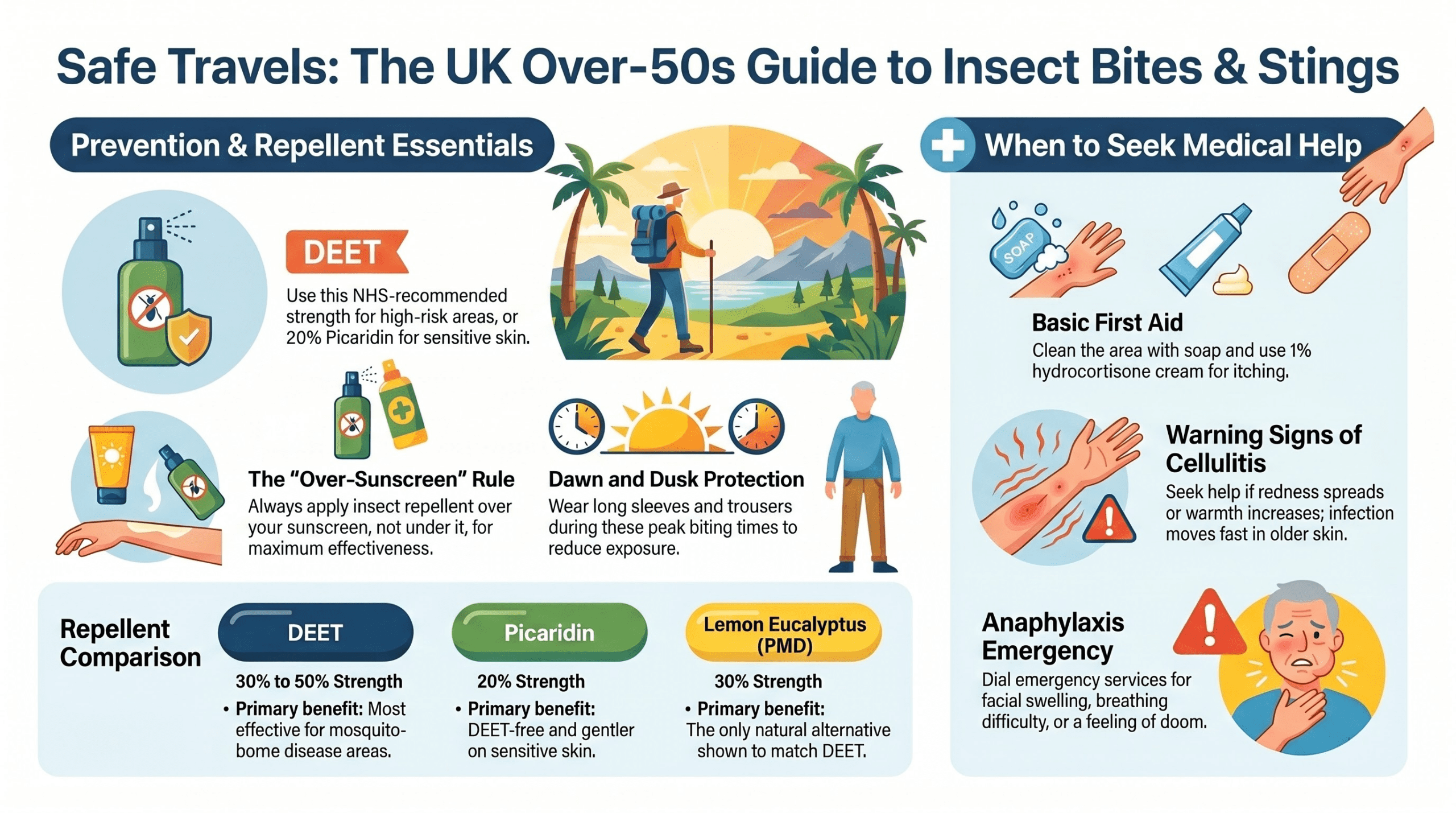
DEET (N,N-diethyl-meta-toluamide) is the gold standard for insect repellent. It is safe for adults and is recommended by the NHS and the National Travel Health Network and Centre (NaTHNaC). DEET is effective against mosquitoes, ticks, midges, and other biting insects.
- Concentration: Use 20-30% DEET for tropical or high-risk areas. 10-15% DEET is adequate for UK and European travel.
- Application: Apply to exposed skin and clothing. Reapply every 4-6 hours, or after swimming or sweating.
- Safety: DEET is not harmful when used as directed. Wash off when you come indoors.
- Alternatives: Picaridin (a synthetic compound similar to DEET) and oil of eucalyptus are also effective, though less so than DEET.
Protective Clothing
- Wear lightweight, loose-fitting long sleeves and trousers in areas where insects are active.
- Tuck trousers into socks when in tick-infested woodland.
- Wear light colours-insects are attracted to dark clothing.
- Choose tightly woven fabrics; mosquitoes can bite through loose weaves.
- Consider permethrin-treated clothing for extended woodland exposure (permethrin is a safe insecticide that repels ticks and other insects).
Environmental Precautions
- Avoid peak mosquito hours: dusk to dawn.
- Sleep under a bed net treated with permethrin or insecticide if accommodation is not screened.
- Keep windows and doors closed or screened during warm evenings.
- Remove standing water (bird baths, flower pots) from your garden-mosquitoes breed in stagnant water.
- Check your skin for ticks after walking in woodland or long grass.
Special Considerations for Adults Over 50
Ageing and certain health conditions can affect how insect bites and stings impact you.
Blood Thinners and Anticoagulants
If you take warfarin, apixaban, rivaroxaban, or other anticoagulant medications, insect bites can cause more pronounced bruising and bleeding. This is not dangerous, but it may be more noticeable and take longer to resolve. Avoid scratching at bites, and report any signs of infection to your GP promptly.
Slower Wound Healing
Skin healing naturally slows with age. If you scratch an insect bite and create a wound, keep it clean and dry. Watch for signs of infection: increasing redness, warmth, pus, or spreading inflammation. Seek GP advice if you notice these signs, as infections in over-50s can progress more quickly.
Immune Response Changes
Your immune system’s response to insect bites may differ from when you were younger. Some people experience less itching; others may have stronger delayed reactions. This is normal and does not indicate a serious problem.
Travel Vaccinations and Insect-Borne Disease Prevention
Before travelling to tropical or sub-tropical regions, consult a travel health clinic. They will advise on vaccinations for yellow fever, Japanese encephalitis, and other insect-borne illnesses relevant to your destination. They will also prescribe antimalarial tablets if needed.
For travel to areas where Lyme disease is prevalent (parts of Scandinavia, central Europe, and North America), discuss tick prevention strategies with your travel health provider.
When to Seek Medical Help
Most insect bites and stings resolve on their own with basic first aid. However, see your GP or seek urgent medical attention if:
- You develop signs of anaphylaxis (see above).
- A bite or sting becomes infected: increasing redness, warmth, pus, or red streaks extending from the bite.
- You have a large area of swelling (more than a few centimetres) that worsens after 48 hours.
- You develop a circular or expanding rash around a tick bite (possible Lyme disease).
- You feel unwell after a bite: fever, fatigue, joint pain (possible malaria, dengue, or Lyme disease).
- You experience a reaction after a bite whilst in a high-risk country for exotic diseases.
- A sting causes difficulty breathing or swallowing, even if mild.
Key Takeaways
- Most insect bites and stings cause only minor irritation and heal quickly with ice, antihistamine, and good hygiene.
- Mosquitoes, ticks, and stinging insects pose different risks; identification and prevention strategies vary.
- DEET-based repellents (20-30%) are highly effective for tropical travel; combine with protective clothing.
- Tick removal must be done carefully and promptly; watch for expanding rash (Lyme disease) in the following weeks.
- Anaphylaxis is a medical emergency; call 999 if you experience breathing difficulty, throat tightness, or severe swelling after a sting.
- Before travelling to high-risk areas, consult a travel health clinic for vaccines and antimalarial medication.
- As an adult over 50, pay special attention to infection signs and report persistent or worsening symptoms to your GP.
What’s Next?
If you’re planning a holiday to a warm or tropical destination, book a travel health appointment with your GP or a travel clinic now. Do not leave this until the week before departure-some vaccines require time to take effect, and antimalarial tablets should be started before you travel.
For more information on insect-borne diseases and prevention, visit NHS.uk, the NaTHNaC (National Travel Health Network and Centre), or Age UK.
Frequently Asked Questions
What is the best insect repellent for over-50s travelling abroad?
NHS Travel Health Pro recommends a DEET-based repellent at 30 to 50 per cent strength as the most effective for adults travelling to mosquito-borne disease areas. Picaridin (also known as icaridin) at 20 per cent is a good DEET-free alternative with similar effectiveness, often gentler on sensitive skin. Apply over sunscreen, not under.
Are insect bites more dangerous in some countries?
Yes. Mosquito-borne diseases such as malaria, dengue, Zika, chikungunya, and Japanese encephalitis are present in many tropical destinations including parts of Africa, South and Central America, South-East Asia, and the Pacific. Tick-borne Lyme disease is common in central and northern Europe. Always check NHS Fit for Travel and TravelHealthPro for country-by-country risks before you go.
Do I need to take malaria tablets?
Only if you are travelling to a malaria-risk area. NHS Fit for Travel publishes country-by-country malaria risk maps. If tablets are needed, you must start taking them 1 to 2 days before travel (or up to 3 weeks for mefloquine), continue throughout your trip, and for 4 weeks after returning. Tablets are prescription-only in the UK and should be discussed with your GP six to eight weeks before travel.
How can I tell if an insect bite has become infected?
Warning signs include increasing redness spreading outward from the bite, warmth, swelling that worsens after 48 hours, pus or yellow discharge, fever, or red streaks running from the bite. Seek medical attention immediately if you see these signs – infection in older skin can spread fast and cellulitis can require IV antibiotics.
What is the difference between an allergic reaction and anaphylaxis?
Mild allergic reactions cause local swelling, itching, and redness. Anaphylaxis is a medical emergency: rapid swelling of the face, lips, or tongue, difficulty breathing, dizziness, a fast heartbeat, and a feeling of doom. If you have a known allergy to bee or wasp stings, carry an EpiPen, ensure your travel companions know how to use it, and dial the local emergency number (112 in most of Europe) at the first sign.
How can I prevent bites at night when sleeping?
In high-risk areas, sleep under a permethrin-treated mosquito net even in air-conditioned rooms. Close windows at dusk, use a plug-in vapouriser or a fan (mosquitoes are weak fliers), and wear long sleeves and trousers in the early evening. Treat clothing with permethrin spray before travel for added protection.
Disclaimer: This article is for information only. It is not a substitute for professional medical advice. Always consult your GP or a qualified healthcare professional before making health decisions, particularly if you have a history of allergies, take anticoagulant medications, or are planning travel to an unfamiliar region. If you suspect anaphylaxis, call 999 immediately.
Join the community
For more practical travel health advice for over-50s, join our Facebook community where we share weekly tips, NHS updates, and reader stories.