
What to Expect from Laser Eye Surgery: A Complete Step-by-Step Guide for UK Adults
Laser eye surgery has transformed the lives of millions of people across the UK, offering freedom from glasses and contact lenses. But if you’re considering the procedure – especially if you’re aged 50 or over – you’ll want to know exactly what to expect before, during, and after treatment.

This guide walks you through every stage: from your first consultation through to months of recovery. We’ll cover the different procedures available on the NHS and private clinics, the risks you should know about, and special considerations for older eyes. By the end, you’ll have the knowledge to make an informed decision about whether laser eye surgery is right for you.
Is Laser Eye Surgery Right for You? The Consultation and Suitability Assessment
Before any laser eye surgery can take place, you’ll attend a detailed consultation with an ophthalmologist or specialist eye surgeon. This is not a quick appointment – expect to spend 1-2 hours in the clinic.
During your consultation, your surgeon will carry out a comprehensive assessment to determine whether you’re a suitable candidate. They’ll test:
- Your current prescription (short-sightedness, long-sightedness, astigmatism)
- The thickness of your cornea (the transparent layer covering the front of your eye)
- The shape and topography of your cornea using a specialist scanner
- Your eye pressure and the health of your optic nerve
- Whether you have any conditions that might affect healing (diabetes, rheumatoid arthritis, dry eye syndrome)
- Your pupil size, especially in dim light (important for predicting night vision side effects)
Your surgeon will also ask about your lifestyle, work environment, and visual needs. If you spend long hours on a computer or in dusty conditions, this may affect the type of procedure recommended or recovery management.
Age and suitability: Laser eye surgery can be performed on people aged 50 and over, but there are important age-related factors to consider. If you have cataracts, presbyopia (age-related difficulty focusing on near objects), or are developing macular degeneration, your surgeon may recommend lens replacement surgery as an alternative. Our companion guide to real-world laser eye surgery results and over-50 suitability explains when lens replacement becomes the better option and what outcomes each procedure typically delivers. This is worth discussing with your ophthalmologist.
Once you’re cleared as suitable, you’ll be booked for your procedure. Most surgeons recommend booking 1-2 weeks ahead to allow time for pre-operative drops and to ensure your eyes are in optimal condition.
Choosing Your Surgeon: Qualifications, Regulation, and Safety
The quality of laser eye surgery depends entirely on your surgeon’s skill and experience. Unfortunately, regulation in the UK is loose.
Any doctor with basic medical qualification can legally perform laser eye surgery in the UK, regardless of specialist training. This has led to inconsistent standards. In 2025, a Which? investigation found that one in three consultations at laser eye surgery clinics failed to meet quality standards.
How to choose a reputable surgeon:
- Check their credentials: Is the surgeon registered with the General Medical Council (GMC) and specialising in ophthalmology?
- Look for Fellowship in eye surgery: The Royal College of Ophthalmologists (RCOphth) or the International Society of Refractive Surgeons (ISRS) membership is a good sign.
- Ask about their experience: How many procedures have they performed? Do they use current technology?
- Check for patient reviews and satisfaction rates: Reputable clinics publish their complication and satisfaction rates.
- Verify the clinic’s insurance and accreditation: The clinic should carry professional liability insurance and be accredited by a recognized body.
If you’re unsure about your surgeon, seek a second opinion elsewhere. Your vision is too important to compromise.
Questions to Ask Your Surgeon Before Booking
Come to your consultation prepared. Here are essential questions to ask:
- How many laser eye surgery procedures have you performed, and what is your complication rate?
- Which laser technique do you recommend for my prescription and why?
- What is your patient satisfaction rate, and how do you measure it?
- What happens if I’m undercorrected or overcorrected? Do you offer free enhancements?
- What are your specific risks for someone my age with my eye measurements?
- How do you manage dry eyes after surgery? What drops do you prescribe?
- If I develop cataracts in the future, will my previous surgery complicate cataract treatment?
- Do you have any patients I can speak to or reviews I can read?
- What aftercare do you provide, and how many follow-up appointments are included?
- What is your protocol if complications arise?
A surgeon confident in their work will answer these questions fully and honestly.
The Day of Laser Eye Surgery: What Happens Step by Step
On the morning of your treatment, you’ll be advised to avoid wearing contact lenses for at least a week beforehand, and to stop wearing makeup and eye creams the day before. You’ll need someone to drive you home, as your vision will be blurred and your reaction time compromised.
Here’s what happens on the day:
Stage 1: Preparation and Numbing (5 minutes)
You’ll arrive 30 minutes early for final checks and to collect anaesthetic eye drops. These drops take effect within 2-3 minutes. You won’t feel pain during surgery, but you’ll still feel pressure and see movement.
Your surgeon will position you under the laser and use a special lid holder to keep your eyelids open comfortably. Don’t worry – this isn’t painful, though it may feel slightly unusual.
Stage 2: Creating the Corneal Flap (LASIK) or Surface Ablation (LASEK/PRK) (2-3 minutes per eye)
The exact procedure depends on which technique your surgeon recommends. In LASIK – the most common procedure in the UK – a femtosecond laser creates a thin, hinged flap on the surface of your cornea. You’ll see a bright light and may notice a slight “pushing” sensation, but this lasts only a few seconds.
In LASEK and PRK procedures, the surgeon gently removes or reshapes the outer layer (epithelium) instead of creating a flap. This takes slightly longer but may be safer if you have a thin cornea or participate in contact sports.
Stage 3: Reshaping the Cornea (Excimer Laser) (30-90 seconds per eye)
Once the flap is created, an excimer laser reshapes the underlying corneal tissue to correct your refractive error. You’ll focus on a red or green light while the laser works. The entire process is guided by advanced eye-tracking technology that stops the laser instantly if your eye moves.
You’ll hear a clicking sound as the laser fires. Many patients report a slight smell – this is the burning of corneal tissue and is completely normal.
Stage 4: Flap Repositioning and Completion (1 minute per eye)
The flap is carefully repositioned over the reshaped cornea. It acts as a natural bandage and bonds back within 24-48 hours without stitches. Your surgeon will apply lubricating drops, and the procedure is complete.
Total time: Under 15 minutes for both eyes.
Immediate Recovery: What to Expect in the First 24 Hours
The immediate post-operative period is crucial. Your eyes will feel irritated, and your vision may be blurry or hazy.
First few hours (0-4 hours):
- Your eyes will feel gritty, scratchy, or as if there’s a foreign body in them
- You may experience mild discomfort or aching – not severe pain
- Vision will be blurry and unpredictable
- Sensitivity to light is common
- You must wear protective dark sunglasses or a transparent eye shield while indoors
Most surgeons prescribe numbing drops to use for the first 24 hours, along with antibiotic and anti-inflammatory drops. These should be used exactly as directed.
After 4-12 hours:
Surprisingly, many patients notice a dramatic improvement in vision within the first few hours. Some report clear vision by bedtime on the day of surgery, though this varies widely.
You must avoid touching or rubbing your eyes at all costs, as this can dislodge the corneal flap. Use prescribed drops instead. Avoid water, cosmetics, and swimming pools for at least one week.
Day 1 follow-up appointment:
You’ll return to the clinic the day after surgery for a check-up. Your surgeon will measure your vision, check that the corneal flap is sitting correctly, and adjust your drop regimen. Most people are surprised to find their vision is already substantially better.
Recovery Timeline: Week 1, Month 1, and Beyond
| Timeline | Vision and Comfort | Restrictions and Care |
|---|---|---|
| Day 1-3 | Vision improves daily. Grittiness, mild discomfort. Some blurriness or slight ghosting of images. | Avoid touching eyes, water, makeup, strenuous activity. Use prescribed drops hourly. No contact sports. |
| Week 1 | Vision stabilising. Most discomfort resolves. Many patients enjoy functional vision by day 3-5. | Continue prescribed drops. Can return to light work and screen time. Wear sunglasses outdoors. Avoid swimming and saunas. |
| Weeks 2-4 | Vision clearing significantly. Dry eye and sensitivity gradually improving. Small fluctuations in vision are normal. | Can resume most normal activities. Avoid intense eye contact with chlorine. Continue eye drops. Can drive safely if vision is clear. |
| Month 1-3 | Vision stabilising fully. Most patients achieve their target prescription. Dry eye typically resolves. | Can return to sport, swimming, and gym work. Continue drops as prescribed. Contact lens prescriptions no longer valid. |
| 3-6 months onwards | Vision stable. Final refraction achieved. Eyes comfortable and healthy. | No restrictions. Attend annual eye health check-ups. Report any changes to your surgeon. |
Recovery is fast, but stabilisation is gradual. Your vision may fluctuate slightly week-to-week, especially in weeks 2-4. This is completely normal as your cornea continues to settle and heal.
Laser Eye Surgery Risks and Side Effects You Should Know
Like all surgery, laser eye surgery carries risks. Understanding these helps you make an informed decision and recognise warning signs.
Common side effects (usually temporary):
- Dry eyes: The most frequent complaint. Your eyes produce fewer tears temporarily after surgery. Using lubricating drops regularly usually resolves this within 3-6 months.
- Halos and glare around lights at night: Especially noticeable when driving. Often improves within weeks as the cornea heals, though may persist mildly in some patients.
- Sensitivity to light (photophobia): Your eyes feel uncomfortable in bright sunlight or in brightly lit rooms. Wear quality sunglasses with UV protection for the first 1-2 weeks.
- Blurred or fluctuating vision: Common in the first month. Usually settles as healing progresses.
- Difficulty focusing on near objects: More common in patients over 50 who already have presbyopia. Multifocal laser treatments can help, but this is worth discussing during consultation.
Less common complications:
- Undercorrection or overcorrection: Your vision doesn’t reach the target prescription (undercorrection), or is corrected too much (overcorrection). Enhancement procedures can address this.
- Regression: Your eyes gradually shift back toward your original prescription over months or years. This occurs in 5-10% of cases, especially in patients with high prescriptions.
- Corneal ectasia: The cornea weakens and bulges abnormally after surgery. This is rare (1 in 500 cases) and more likely if the cornea was thin or your prescription was very high. Your suitability assessment screens for this risk.
- Night vision problems: Some patients report difficulty seeing in low light or starbursts around streetlights. Usually mild and improves over time.
According to the Royal College of Ophthalmologists, complications requiring further treatment occur in roughly 1 in 20 cases. The vast majority of patients are satisfied with their results.
Laser Eye Surgery over 50: Special Considerations
If you’re in your 50s, 60s, or beyond, laser eye surgery is still an option, but age-related eye changes matter.
Presbyopia and reading vision:
After age 40, your lens hardens and focusing on close objects becomes difficult – even with perfect distance vision. Laser eye surgery corrects distance vision but doesn’t reverse presbyopia. Your surgeon may discuss:
- Monovision: One eye corrected for distance, the other for near vision. Your brain adapts over weeks.
- Multifocal LASIK: Special laser settings that optimise both distance and near focus. Ask about availability and costs.
- Accepting reading glasses: Many older patients are happy to see clearly at distance and wear reading glasses for close work.
Cataracts:
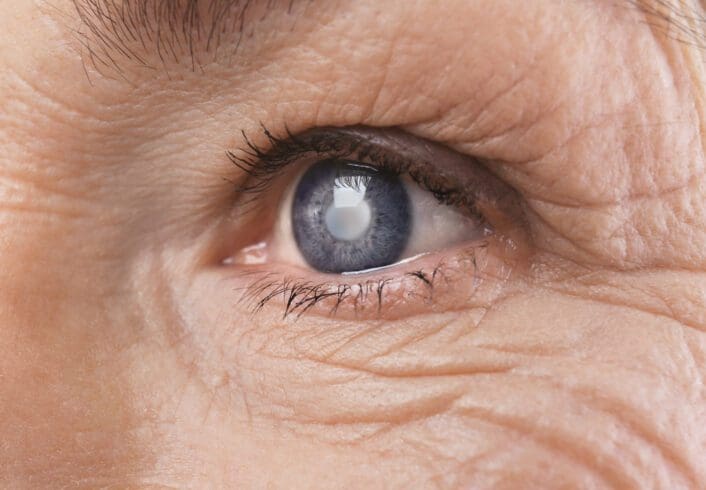
If you already have cataracts, laser eye surgery won’t help. Your surgeon will recommend treating the cataract first, which can often be combined with vision correction.
Lens replacement surgery as an alternative:
For patients over 50 with presbyopia, cataracts, or who want a solution that also prevents future cataract formation, refractive lens exchange (RLE) or premium lens replacement may be better than laser eye surgery. This procedure removes your natural lens and replaces it with an artificial intraocular lens (IOL) that corrects all refractive errors. Discuss this option with your surgeon. For a deeper comparison of the evidence, our analysis of real laser eye surgery results and over-50 success rates weighs up LASIK, SMILE, and lens replacement side by side.
How Much Does Laser Eye Surgery Cost? NHS vs. Private
Laser eye surgery for refractive correction (correcting your prescription to see clearly) is not available on the NHS unless your vision falls outside extremely narrow parameters or you’ve experienced trauma. For most people, this is a private procedure.
Private costs in the UK (2026):
- LASIK (standard): £1,500-£3,500 per eye (typically £3,000-£5,000 for both eyes)
- LASEK/PRK (surface treatment): £1,800-£3,500 per eye
- SMILE (newer technique): £2,500-£4,500 per eye
- Multifocal LASIK (presbyopia correction): £4,000-£6,500 for both eyes
Many private clinics offer financing options (interest-free credit over 12-24 months) to make surgery more affordable.
For a detailed cost comparison between NHS and private eye care options, our dedicated laser eye surgery cost UK 2026 guide lists prices from named UK clinics, explains what each quote typically includes, and covers the main finance options available.
Success Rates: What the Evidence Shows
Modern laser eye surgery is highly successful. Current evidence (as of 2026) shows:
- Vision correction accuracy: 95-98% of patients achieve their target prescription within 0.5 dioptres (a measure of refractive error).
- Patient satisfaction: 90-95% of patients report satisfaction with their vision and would have the surgery again.
- Safety: Serious complications requiring further treatment occur in 1-2% of cases when performed by experienced surgeons at accredited clinics.
- Night vision issues: Halos, glare, and night vision problems are reported by 20-30% of patients but are mild enough to be acceptable in 85%+ of these cases.
These figures improve when surgery is performed by experienced surgeons at accredited centres and when patients are carefully selected.
Key Takeaways
- Laser eye surgery is a quick outpatient procedure (under 15 minutes) with rapid visual recovery and high success rates (95%+ achieve target vision).
- Expect temporary grittiness and blurred vision for 1-2 weeks; most patients enjoy functional vision within 3-7 days.
- Common side effects include temporary dry eyes, halos around lights at night, and light sensitivity – most resolve within weeks to months.
- Serious complications are rare (1-2%) when surgery is performed by experienced, qualified surgeons at accredited clinics.
- For patients over 50, presbyopia and cataracts are important considerations; lens replacement surgery may be a better alternative.
- Check your surgeon’s qualifications, experience, and GMC registration before committing; regulation in the UK is loose, so due diligence matters.
- Private costs in the UK range from £3,000-£5,000 for standard LASIK; the NHS doesn’t cover elective refractive surgery for most patients.
Useful Resources and Sources
- Moorfields Eye Hospital NHS Foundation Trust – information on NHS eye care and referral pathways.
- NICE (National Institute for Health and Care Excellence) – evidence-based guidance on laser eye surgery techniques and safety.
- Royal College of Ophthalmologists – Find a registered specialist and information on standards of eye care in the UK.
- NHS.uk: Refractive Errors (Myopia, Hyperopia, Astigmatism) – factual overview of refractive conditions and treatment options.
- General Medical Council (GMC) Doctor Search – verify your surgeon’s registration and check for any disciplinary records.
What to Expect from Laser Eye Surgery: Final Thoughts
Laser eye surgery can be life-changing if you’re suitable and work with a qualified, experienced surgeon. The procedure itself is painless and quick, and recovery is remarkably fast for most people.
But success depends on realistic expectations, careful surgeon selection, and understanding the risks specific to your eyes. If you’re aged 50 or over, spend time discussing age-related considerations like presbyopia and the alternative of lens replacement surgery with your ophthalmologist.
Take your time with your decision. Your vision is irreplaceable, so choose your surgeon wisely, follow post-operative instructions precisely, and don’t hesitate to ask questions.
Frequently Asked Questions
Does laser eye surgery hurt?
No. The procedure itself is painless because anaesthetic eye drops numb the surface of your eye, and most people feel only mild pressure during the 15 to 60 seconds when the laser is applied. For the first four to six hours afterwards you may feel grittiness, watering, and light sensitivity, which fades quickly with the lubricating drops your clinic provides.
How long does laser eye surgery actually take?
Budget about 90 minutes at the clinic in total, but the laser treatment itself is usually under 15 minutes for both eyes. Most of the appointment covers checks, dilation, and post-op observation. You will need someone to drive you home.
When can I drive after laser eye surgery?
Most LASIK patients can legally drive again 24 to 48 hours after surgery once their vision meets the DVLA minimum standard, but your surgeon must confirm this at your first post-op check. LASEK and PRK recovery is slower, so expect to avoid driving for around a week. Check the official DVLA eyesight rules before getting back behind the wheel.
Can I have laser eye surgery on the NHS?
Almost never. The NHS treats laser eye surgery as a cosmetic or lifestyle procedure and funds it only in exceptional medical cases, such as severe refractive error where glasses and contact lenses genuinely cannot be worn. For almost everyone else, it is a private procedure. Our UK cost guide breaks down current pricing and finance options.
Explore More in the Laser Eye Surgery Guide
If you found this helpful, our companion guides cover the next decisions you will face:
- For full 2026 pricing across the main UK providers, read our Laser Eye Surgery Cost UK 2026 guide.
- To see real-world success rates and over-50 suitability, see Does Laser Eye Surgery Really Work?.
- Still weighing up your options? Our comparison of glasses vs contact lenses vs laser eye surgery.
For a wider conversation with adults 50+ making the same decisions, join our Best of Health community on Facebook.
Disclaimer: This article is for information only and is not a substitute for professional medical advice. Always consult your GP or a qualified healthcare professional before making decisions about laser eye surgery. The information in this article reflects current evidence as of March 2026, but medical guidance may change. Your ophthalmologist is the best source of advice tailored to your individual eyes and circumstances.