


If you are waiting for a diagnostic scan on the NHS, you are not alone. As of early 2026, around 1.6 million people in England are waiting for a diagnostic test – and the NHS six-week target for scans has not been met since February 2017. For many people, especially those aged 50 and over, that wait can feel both frustrating and worrying.
Private scans offer a faster route to answers. You can typically book an MRI, CT scan, or ultrasound within days rather than months, choose a location that suits you, and receive your results quickly. But when you compare the cost of private scans in the UK, prices vary widely – from around £100 for a basic X-ray to over £2,000 for a full-body MRI. This guide explains what each type of scan costs, which providers to consider, and how to decide whether going private is right for you.
Key takeaway: When you compare the cost of private scans in the UK, prices range from around £100 for a private X-ray to £2,000 or more for a full-body MRI. Private providers typically offer appointments within one to five days, compared to NHS diagnostic waits that can stretch to several weeks. Prices vary by scan type, body area, and provider location.
Compare the Cost of Private Scans in the UK
The cost of private scans varies depending on the scan type, the part of the body being examined, the provider, and your location. Clinics in London and the South East tend to charge more than those in other regions. The table below shows indicative guide prices from a selection of major UK providers as of 2026.
Always request a written quote before booking, and ask what is included – particularly whether a radiologist report, consultant review, and any follow-up are covered in the price.
| Type of Scan | Bupa | Circle Health Group | Spire Healthcare | Vista Health | Bristol Medical Imaging |
|---|---|---|---|---|---|
| Ultrasound Scan | £220-£450 | £160-£420 | £210-£370 | £175-£190 | £260-£370 |
| MRI – 1 Body Part | £375-£700 | £470-£730 | £365-£630 | £249-£380 | £365-£630 |
| MRI – 2-3 Body Parts | £600-£945 | £680-£945 | £630-£945 | £630-£945 | £630-£945 |
| MRI – Full Body | £995-£2,000 | £1,260-£2,100 | £1,050-£1,890 | £1,345-£1,925 | £1,350-£1,925 |
| MRI – Prostate mpMRI | £500-£700 | £525-£735 | £475-£680 | £650 (fixed) | £475-£680 |
| CT Scan | £400-£800 | £525-£890 | £470-£735 | £445-£620 | £470-£735 |
| X-Ray | £105-£260 | £160-£315 | £105-£260 | £99 (fixed) | £105-£260 |
Guide prices as of March 2026. Prices are indicative and subject to change. Always request a written quote directly from your chosen provider. Bupa prices are estimated based on published guidance and should be verified at bupa.co.uk.
Here are some further examples of what private scans typically cost:
- Ultrasound scan: Costs range from around £160 to £500 depending on the type and body area. At Bupa, a private ultrasound typically costs £220-£450, depending on the type and clinic location.
- MRI scan (single body part): Ranges from around £249 to £730 across providers. At Nuffield Health, prices typically start at £375 for a single-area scan, rising to £995 or more for complex examinations.
- CT scan: Costs range from around £445 to over £890. At Spire Healthcare, a CT scan typically costs £470-£735 depending on the clinic and area scanned.
- X-ray: The most affordable scan type, ranging from around £99 to £350 across private providers.
For a wider range of imaging services, our guide to essential scans for the over-50s covers the key tests worth considering as part of a proactive health check.
NHS vs Private Scans: What is the Difference?
On the NHS, diagnostic scans are free at the point of use – but you generally need a GP or specialist referral, and you join a waiting list. As of 2026, NHS performance against the six-week standard for diagnostic tests stands at around 72-75%, meaning roughly one in four patients is waiting longer than six weeks. For some scan types and in some regions, waits can be significantly longer.
Private scans require you to pay out of pocket (or claim through private health insurance), but offer considerably faster access. Many private providers allow self-referral – no GP letter required.
| Scan Type | NHS Availability | Typical NHS Wait | Private Cost (Guide) | Typical Private Wait |
|---|---|---|---|---|
| Ultrasound | Free with referral | 4-10 weeks | £160-£500 | 1-5 days |
| MRI (1 body part) | Free with referral | 6-18 weeks | £249-£730 | 1-5 days |
| CT Scan | Free with referral | 4-12 weeks | £445-£900 | 1-5 days |
| X-Ray | Free with referral | Days to 2 weeks | £99-£350 | Same day-2 days |
| Full Body MRI | Not routinely available | N/A | £1,050-£2,100 | 1-5 days |
Source: Private cost ranges compiled from named UK providers, March 2026. NHS waits are indicative based on NHS England data and regional variation. Always check with your NHS provider for your specific waiting time.
You may also find our guide to latest research into ovarian cancer helpful.
Why Choose a Private Scan?
There are several reasons why you might choose to pay for a private diagnostic scan rather than wait for an NHS referral.
- Speed: NHS diagnostic waiting times remain under significant pressure. As of 2026, around 1.6 million people in England are waiting for a diagnostic test, according to BMA analysis of NHS England data. The NHS constitutional standard – that patients should receive diagnostic tests within six weeks – has not been met since February 2017. Private providers can typically book you in within one to five working days.
- Choice: You can select your consultant, location, and appointment time.
- Comfort: Private imaging centres often offer a quieter, more relaxed environment.
- Advanced technology: Some private clinics use the latest imaging technology, including 3 Tesla MRI machines and AI-assisted image analysis, which may not yet be widely available in all NHS settings.
What are the Different Types of Private Scan?
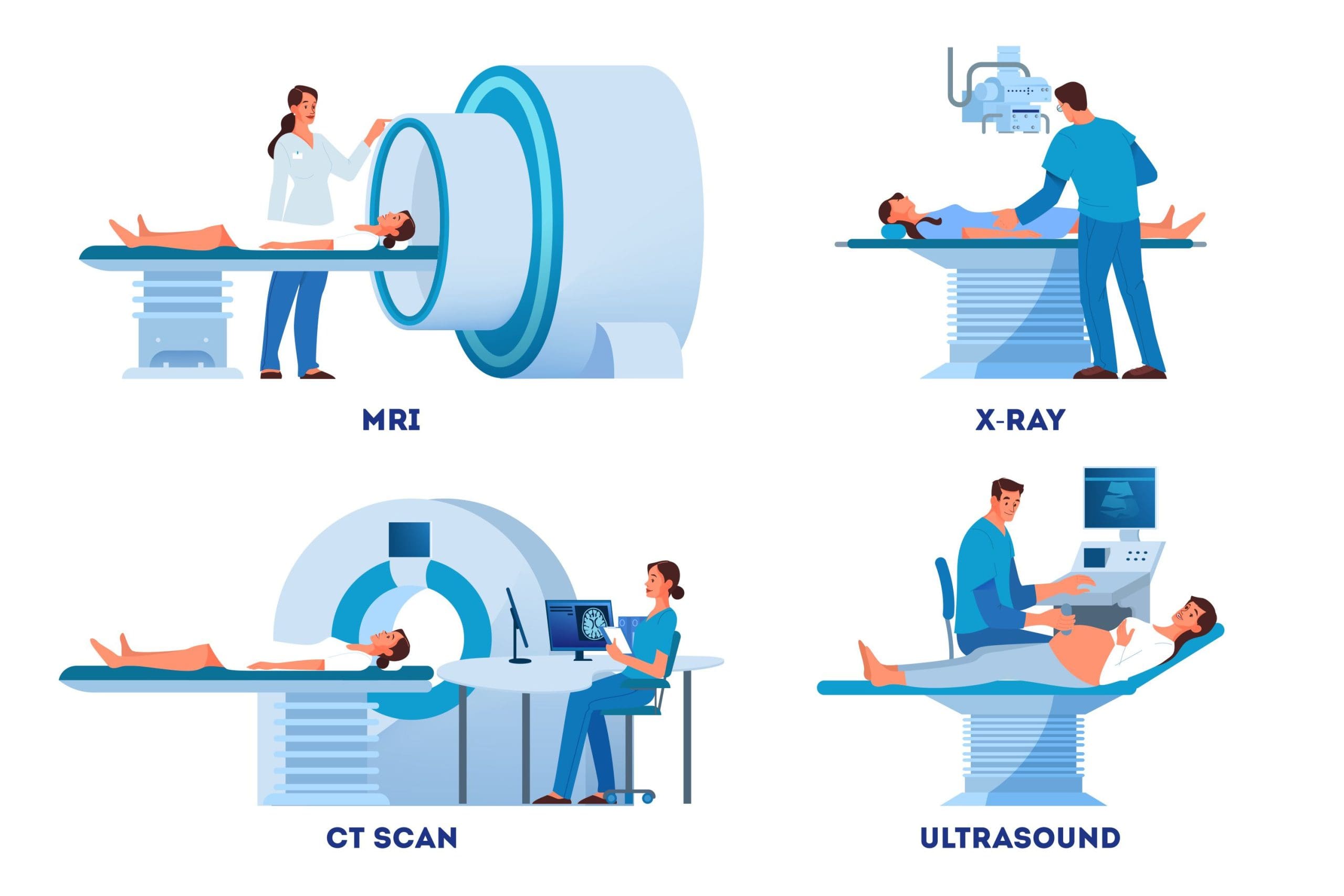
Understanding which scan you need is the first step to making an informed decision about going private. Here is a plain-language guide to the main types.
Ultrasound Scan
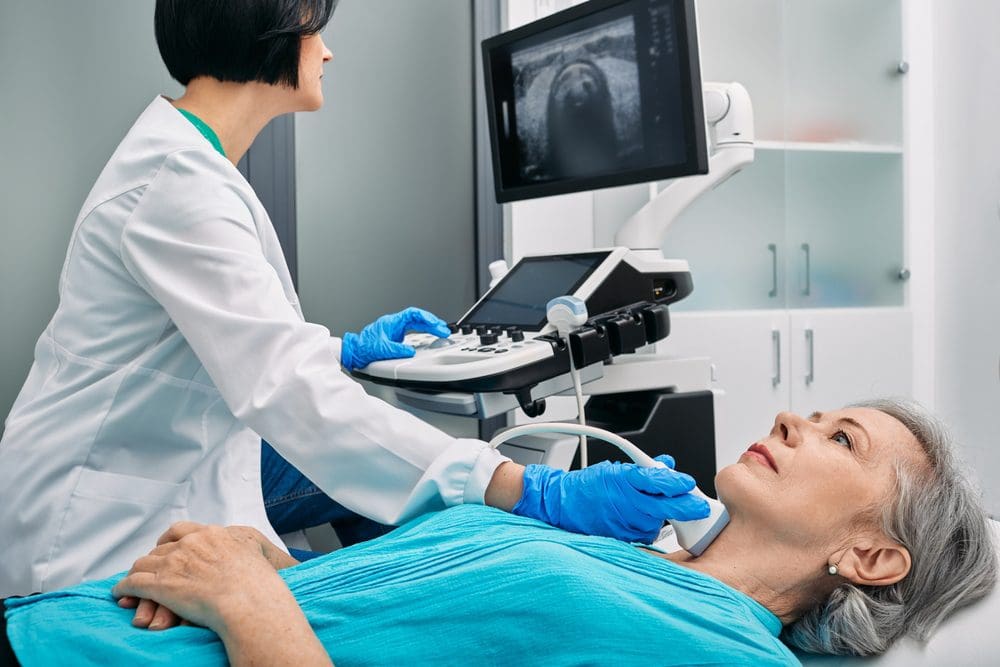
An ultrasound uses high-frequency sound waves to produce images of organs, soft tissues, and blood flow. It is one of the most common and affordable private scans. Ultrasounds are widely used during pregnancy but are also helpful for investigating abdominal pain, suspected gallstones or kidney stones, and problems with the liver, kidneys, thyroid, or pelvis. No radiation is involved, making it very safe.
MRI Scan
Magnetic Resonance Imaging (MRI) uses powerful magnetic fields and radio waves to produce highly detailed images of the body’s soft tissues, joints, and organs. It is frequently used to investigate back and joint pain, neurological symptoms, unexplained pain, and suspected cancers. MRI does not use radiation. As of 2026, the UK has just 8.6 MRI scanners per million people – well below the EU average of 12.4 – which helps explain NHS waiting pressures and the growing private market.

CT Scan
A Computed Tomography (CT) scan uses X-rays and computer processing to create detailed cross-sectional images. It is faster than an MRI and particularly useful for assessing injuries, chest conditions, abdominal problems, and cancer staging. Unlike an MRI, a CT scan does involve a small dose of radiation. Private CT scans are widely available and can often be booked quickly without a GP referral.
X-Ray
The most straightforward type of imaging, an X-ray is most commonly used for bone fractures, chest conditions, and joint problems. Private X-rays are among the most affordable diagnostic scans available, and results are usually available the same day.
Full Body Scan
Full body MRI or CT scans have grown in popularity as a preventive health-screening tool. They provide a comprehensive overview of internal organs and can identify abnormalities that might not yet be causing symptoms. These are not routinely available on the NHS and are primarily a private service. Costs typically start at around £1,050 and can exceed £2,100 depending on the provider and level of reporting. You should discuss any findings with your GP to ensure appropriate follow-up.
What Factors Affect the Cost of Private Scans?
- Location: Clinics in London and the South East are typically 10-25% more expensive than those in other regions.
- Provider: Different private healthcare groups have different pricing structures. Some offer fixed-price packages that include the scan, report, and follow-up – others charge separately for each element.
- Type of scan: More complex imaging (such as a full-body MRI or a specialist prostate mpMRI) costs significantly more than a standard single-area scan.
- Body area scanned: Multi-area or whole-body protocols take longer and require more radiologist time, increasing the price.
- Contrast material: Some CT and MRI scans require contrast dye to improve image quality. This is usually charged separately and can add £50-£150 to the total.
- Consultant fees: A scan price may not include the fee for a consultant to review and interpret the results. Always ask whether a formal radiologist report is included.
- Self-referral vs GP referral: Some providers offer a small discount if you have a GP referral letter rather than self-referring.
What Health Conditions Can Scans Help Identify?
Diagnostic imaging is used across a wide range of conditions. The scan type your doctor recommends will depend on your symptoms and which part of the body needs investigating.
- Ultrasound is used to investigate abdominal pain, gallstones, kidney stones, liver and kidney problems, thyroid abnormalities, and gynaecological or pelvic conditions.
- MRI is used for musculoskeletal problems (including joint pain, back pain, and ligament injuries), neurological symptoms (headaches, dizziness, memory problems), and suspected soft-tissue cancers. It is also now the recommended first-line imaging test for suspected prostate cancer under NICE guidance (NG131).
- CT scans are used to investigate chest and lung conditions, abdominal pain, head injuries, suspected cancer, and internal bleeding.
- X-rays are used primarily for bone fractures, joint conditions, and chest and lung assessment.
Full-body screening scans – available privately using MRI, CT, or PET technology – can detect abnormalities across multiple organ systems in a single appointment. These are not routinely available on the NHS but are increasingly used by individuals who want a proactive baseline assessment of their health.
Can MRI Scans Help Detect Prostate Cancer?
Yes – and this is now the recommended approach. NICE guidelines (NG131) state that multiparametric MRI (mpMRI) should be the first-line investigation for anyone with suspected localised prostate cancer. This means an MRI scan before a biopsy – a significant shift from previous practice.
New research from UCL, UCLH, and King’s College London reinforces this approach. The REIMAGINE study, published in BMJ Oncology, found that combining MRI scans with PSA density measurements significantly improves the detection of serious prostate cancers that the standard PSA blood test alone can miss. Among 303 men aged 50-75 in the trial, 15 of the 29 men diagnosed with serious cancer had PSA scores below the current referral threshold – meaning they would not have been investigated under existing NHS guidelines.
The study also highlighted disparities in engagement, with Black men responding to screening invitations at one-fifth the rate of white men despite facing double the risk of the disease. Researchers are continuing this work through the LIMIT trial, including mobile scanning units to reach underserved communities.
For a full overview of prostate MRI, including what to expect and how to access it privately, see our article on prostate MRI scans and cancer diagnosis. You can also read the original UCL research at the University College London News page.
What Are the Latest Advances in Medical Imaging?
Medical imaging is developing rapidly, with several technologies making scans faster, safer, and more accurate.
Artificial Intelligence in Diagnostics
AI-powered image analysis is increasingly being used alongside radiologists to improve diagnostic accuracy, particularly for conditions such as stroke, cancer, and heart disease. AI tools can also screen images for abnormalities and flag urgent cases, helping to reduce reporting backlogs in both NHS and private settings.
3 Tesla MRI
Higher-field 3 Tesla MRI machines produce significantly more detailed images than standard 1.5 Tesla equipment. They are increasingly available at private clinics and are particularly useful for neurological conditions, prostate cancer assessment, and musculoskeletal imaging.
Photon-Counting CT
Next-generation photon-counting CT technology can distinguish multiple tissue types simultaneously, producing sharper images with less radiation than conventional CT scanners. Studies suggest this can reduce the need for repeat scans in oncology by up to 65%.
Portable and Same-Day Ultrasound
Compact, portable ultrasound devices are making same-day diagnostic imaging accessible in a wider range of private clinic settings – including urgent care, GP practices, and specialist outpatient services.
Questions to Ask Before Booking a Private Scan
Before you book a private scan, it is worth asking the following questions to make sure you are getting the right service at a fair price.
- Does the price include a formal radiologist report, or is that charged separately?
- Will the results be sent to my GP automatically, or do I need to arrange that?
- Is contrast dye required for my scan, and if so, what is the additional cost?
- What is the machine field strength for MRI (1.5T or 3T)?
- Can I self-refer, or do I need a GP letter?
- How quickly will I receive my results?
- Does the clinic have UKAS or CQC accreditation for diagnostic imaging?
Frequently Asked Questions
How much does a private MRI scan cost in the UK?
A private MRI scan covering one area of the body typically costs £249-£730 as of 2026. Full-body MRI scans cost considerably more – typically £1,050-£2,100. Prices vary by provider, location, and the number of body areas scanned.
Can I get a private scan without a GP referral?
Yes. Most private imaging providers in the UK offer self-referral, meaning you can book directly without a letter from your GP. However, if you have complex symptoms or need the results to inform NHS treatment, it is worth informing your GP so that your care is properly joined up.
How long is the NHS waiting time for a scan?
NHS waiting times for diagnostic tests vary significantly by region and scan type. As of 2026, around 1.6 million people in England are waiting for a diagnostic test. The NHS constitutional target – that all patients should receive their test within six weeks – has not been fully met since February 2017. In practice, waits for an MRI scan can range from a few weeks to several months depending on your local NHS trust. Private providers can typically book you in within one to five working days.
What are the different types of medical scans?
The main types are X-ray, ultrasound, MRI (Magnetic Resonance Imaging), CT (Computed Tomography), and PET (Positron Emission Tomography). Each uses different technology and is suited to different diagnostic purposes. MRI and ultrasound do not use radiation. CT and X-ray involve a small radiation dose. PET scans use a small amount of radioactive material injected into the body.
Are there any risks associated with medical scans?
The risks are generally very low. MRI and ultrasound scans do not use ionising radiation and are considered very safe. CT scans and X-rays involve a small radiation dose, which carries a very low risk. If contrast dye is used, there is a small chance of an allergic reaction. Always tell the scanning team about any allergies, kidney problems, or metal implants before your scan.
Can I have a scan if I am pregnant?
Ultrasound and MRI scans are generally considered safe during pregnancy. X-rays and CT scans involve radiation and are usually avoided unless medically necessary. Always tell the provider if you are pregnant or might be pregnant before booking.
What is the difference between a CT scan and an MRI?
A CT scan uses X-rays and computer processing to produce detailed images quickly – it is faster and less expensive than an MRI but involves a small radiation dose. An MRI uses magnetic fields and radio waves instead, produces more detailed images of soft tissues and joints, and involves no radiation – but takes longer and costs more. Your doctor will recommend the most appropriate scan for your symptoms.
Does private health insurance cover the cost of scans?
Many private health insurance policies cover diagnostic scans, subject to policy terms and any excesses. You will usually need a GP or specialist referral to claim. Check your policy details before booking, and confirm the scan is pre-authorised by your insurer if required.
Summary: Key Points About the Cost of Private Scans
- When you compare the cost of private scans in the UK, prices range from around £99 for an X-ray to over £2,000 for a full-body MRI.
- As of 2026, around 1.6 million people in England are waiting for NHS diagnostic tests – many for longer than six weeks.
- Private providers typically offer appointments within one to five days, with no referral needed in most cases.
- Prices vary by scan type, body area, provider, and location – always request an itemised quote.
- MRI is now the recommended first-line imaging test for suspected prostate cancer under NICE guidelines (NG131).
- Advances including AI-assisted reporting, 3 Tesla MRI, and portable ultrasound are making private scans faster and more accurate.
If you are weighing up NHS versus private healthcare more broadly, our guide to 7 essential scans for the over-50s covers the key imaging tests worth considering as part of a proactive health check. For bone density screening specifically, see our guide to the cost of a DEXA bone scan in the UK.
Join the conversation: Have you had a private scan in the UK? Share your experience in The Best of Health Facebook community.
This article is for information only. Always consult your GP or a qualified healthcare professional before making health decisions. Private scan prices and NHS waiting times change regularly – always check directly with your provider or local NHS trust for the most current information.