
AI Health Benefits for Over 50s: How Technology is Transforming UK Healthcare
For millions of Britons over 50, the healthcare landscape is shifting. Artificial intelligence is now quietly at work behind hospital doors and GP screens-spotting early signs of disease, predicting health crises before symptoms strike, and helping people recover at home. AI health benefits are proving transformative: faster diagnoses, more personalised care, and a healthcare system better equipped to support an ageing population. Yet this technological revolution brings both opportunity and challenge. This article explores how AI-driven technologies are addressing age-related health challenges, enabling preventative care, and enhancing quality of life for over 50s across the United Kingdom.
Why AI Health Benefits Matter for Over 50s
England alone has over 21 million people aged 50 and above, representing 38% of the population-a proportion that continues to grow. The British Medical Association reports that planned care waiting lists exceed 7.36 million cases. Over 50s face unique health challenges: increased risk of chronic diseases such as diabetes and heart conditions, age-related cognitive decline, and mobility issues that impact independence and quality of life.
AI offers powerful tools to address these challenges. Unlike one-size-fits-all solutions, AI systems learn from millions of data points to detect patterns that humans might miss, personalise treatment plans, and alert healthcare providers to risks before they become emergencies.
How AI is Transforming NHS Healthcare Delivery
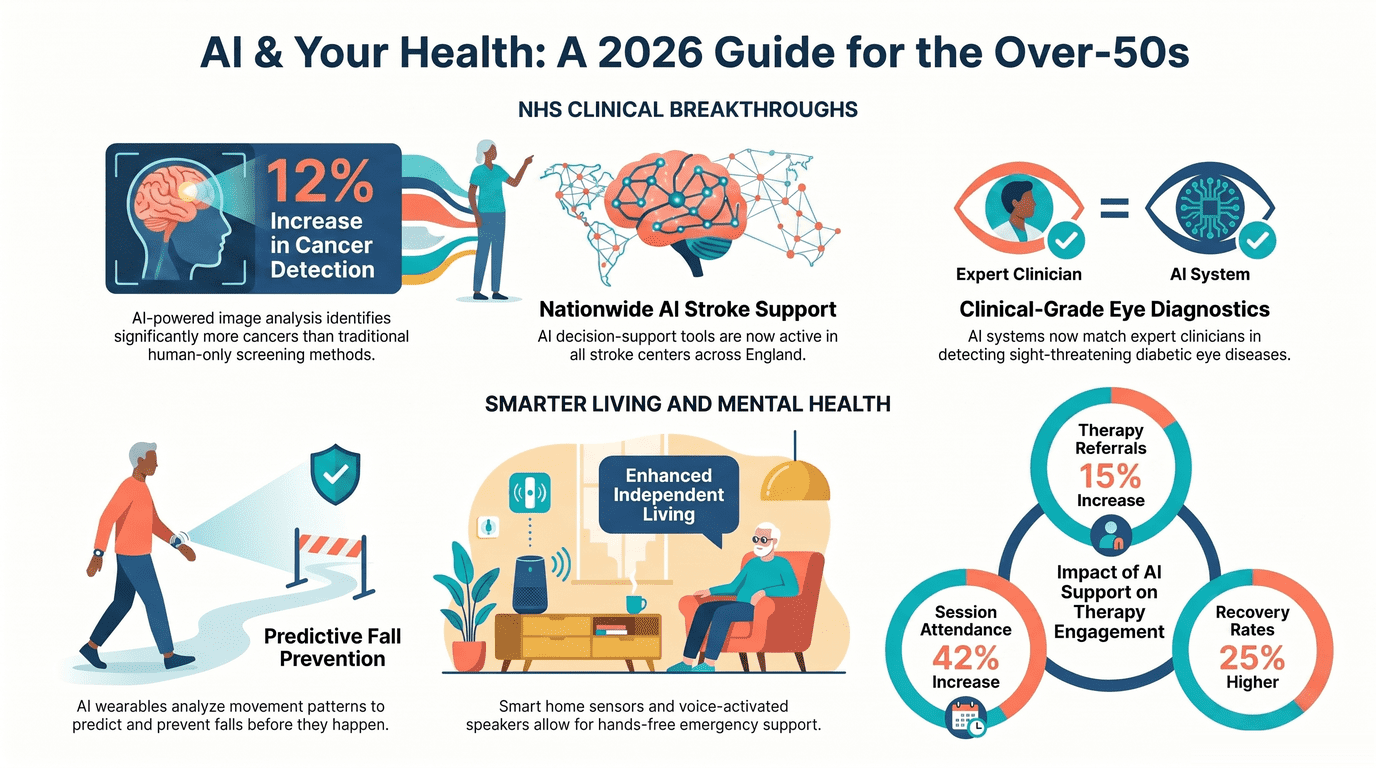
The NHS is already deploying AI at scale. The world’s largest AI-led breast cancer screening trial began in April 2025, involving nearly 700,000 women across 30 screening sites. Five competing AI systems are being tested to assist radiologists in identifying early signs of breast cancer. Research shows that AI-powered image analysis can detect approximately 12% more cancers than human-only screening, and one specialist can now complete the work that previously required two.
Stroke detection has also been revolutionised. AI decision-support tools were rolled out to all stroke centres in England in Summer 2024 as part of the national optimal stroke imaging pathway. These systems help clinicians make faster, more accurate treatment decisions-critical when every minute counts in stroke care.
Beyond radiology and acute care, NHS AI initiatives are expanding to support primary care, mental health services, and preventative screening. The NHS strategy aims for nationwide deployment of validated AI algorithms from 2027 onward, transforming how GPs diagnose and manage chronic diseases.
AI-Powered Diagnostics: Early Detection for Better Outcomes
Early detection is key to better health outcomes. AI diagnostics excel at spotting subtle changes that indicate early-stage disease.
If you are considering private health screening, our guide to the cost of private scans in the UK covers MRI, CT, and ultrasound prices at leading providers, helping you decide when a private diagnostic scan is worth the investment.
Breast Cancer Screening
The NHS breast cancer screening trial represents a watershed moment. AI algorithms analyse mammogram images to highlight suspicious areas, giving radiologists a second opinion. This reduces missed cancers and allows women to access treatment earlier, when outcomes are typically better.
Diabetic Eye Screening
Diabetic retinopathy affects roughly one-third of the UK’s 4.4 million people living with diabetes. Researchers at King’s College London have developed an AI model-trained on anonymised NHS eye imaging data from over 100,000 patients-that can predict who is at high risk of sight-threatening retinopathy up to three years in advance. DeepMind Health has also partnered with Moorfields Eye Hospital to develop AI systems that detect a wide range of sight-threatening eye diseases with accuracy matching expert clinicians.
Cardiovascular Risk Assessment
Emerging AI tools assess cardiovascular risk using retinal imaging. Dr. Noon CVD, a CE-marked and MHRA-approved system, uses retinal scans to identify early signs of heart disease risk, enabling preventative interventions before a heart attack or stroke occurs.
Wearables and Smart Monitoring for Over 50s
Wearable devices powered by AI have evolved far beyond simple step counters. Modern wearables analyse complex movement patterns, heart rhythms, and sleep data to detect health risks early.
Fall Detection and Prevention
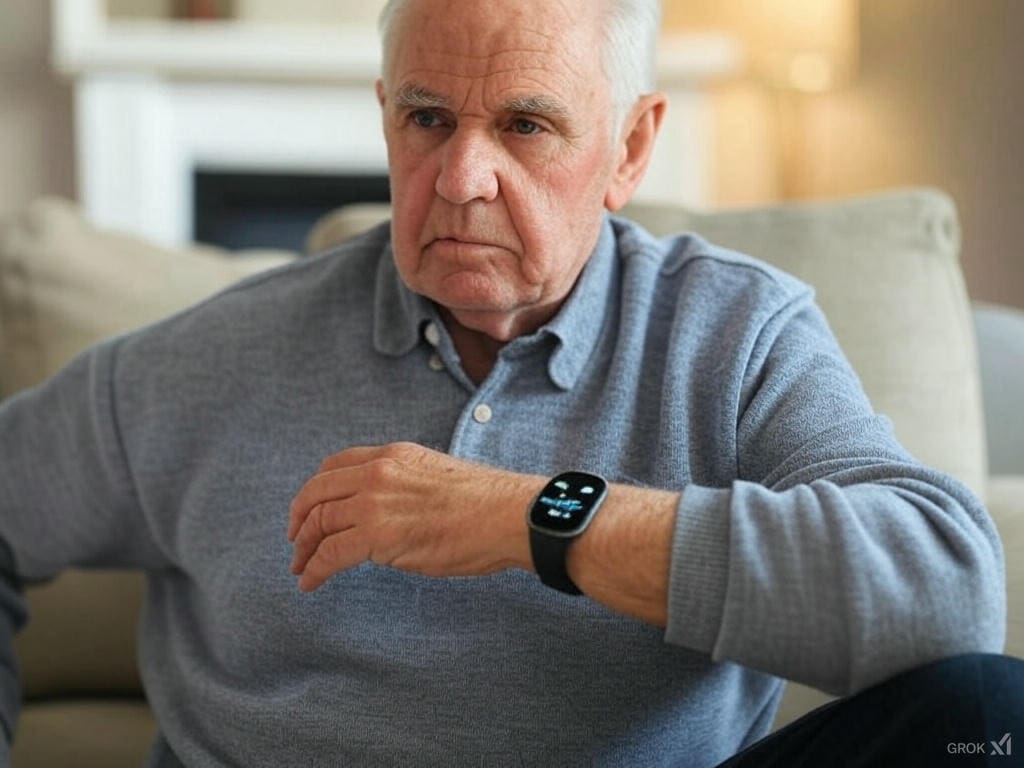
Falls are a leading cause of injury and disability in older age. AI-enabled wearables analyse gait patterns and movement micro-instabilities to predict falls before they happen. Devices worn on the thigh or chest capture detailed information about how you move, balance, and respond to hazards. When a fall is detected, the device can automatically alert emergency services, potentially reducing time on the ground and preventing serious injury.
Heart Rhythm Monitoring
Wearable ECG monitors go beyond counting heartbeats. They analyse rhythm irregularities, stress patterns, and oxygen fluctuations to detect early signs of atrial fibrillation (AFib) and other arrhythmias. Devices such as the BodyGuardian MINI Plus offer continuous cardiac monitoring with AI-driven analytics, alerting both the wearer and their doctor if abnormalities are detected. The Withings ScanWatch 2 combines a traditional watch design with medical-grade ECG recording and 30-day battery life, making continuous monitoring practical for daily use.
Medication Reminders and Adherence
Many over 50s take multiple medications-a situation called polypharmacy that increases the risk of missed doses or dangerous drug interactions. AI-powered apps send timely reminders, track dosages, and flag potential interactions with other medications or supplements. This simple but powerful support dramatically improves medication adherence and safety.
For men over 50 managing heart conditions, understanding which medications interact safely is vital. Our guide to whether Viagra is safe for your heart covers drug interactions, contraindications with nitrates, and when to speak to your GP before starting treatment.
Smart Home Technology and Independent Living
Smart home systems allow over 50s to maintain independence longer whilst remaining safe. These systems use AI to learn your normal patterns-when you usually wake, move around, eat, and sleep-and alert carers or family if something unusual occurs.
Common smart home technologies include personal emergency response systems (PERS), activity sensors, voice-activated lighting, smart thermostats, and fall detectors. NHS telecare services use networks of sensors to monitor daily activity, and AI tools predict fall risk and identify early signs of health deterioration. Research shows that participants’ quality of life significantly improved after smart home adoption, with marked gains in “achieving in life” and “future security”.
Ofcom estimates that half of all UK homes now have a smart speaker, which over 50s can use to control lighting, adjust heating, play music, set reminders, and even make emergency calls hands-free. For those with mobility limitations or who live alone, these systems are transformative.
Mental Health Support: AI-Powered Therapy and Talking Services
Mental wellbeing is as important as physical health, yet waiting times for NHS Talking Therapies can be long. AI chatbots are now improving access to mental health support.
Bradford’s talking therapies service implemented AI-powered clinical assessment tools that streamlined triage, reduced wait times, and improved engagement. Evidence from 2026 research shows remarkable results: services using AI chatbots recorded a 15% increase in referrals versus 6% in matched control services. Patients supported by AI companion apps attended 42% more therapy sessions and showed 25% higher recovery rates than historical comparisons.
These tools do not replace human therapists-they provide initial assessment, check symptoms between sessions, and flag urgent cases for immediate human review. For over 50s struggling with anxiety, depression, or loneliness, AI-assisted therapy reduces both wait times and stigma, improving access to life-changing support.
Addressing Safety, Privacy and Trust
As AI becomes more prevalent in healthcare, protecting your privacy and ensuring systems are safe and fair is paramount.
Data Protection and Security
Health data is classified as “special category personal data” under the UK General Data Protection Regulation (UK GDPR). This means healthcare organisations must maintain the highest standards of security. The Data (Use and Access) Act 2025 has strengthened these protections by establishing mandatory information standards for all health and social care IT systems. Your GP, hospital, and any AI system accessing your data must demonstrate robust security measures to prevent unauthorised access.
Bias and Fairness
AI systems learn from historical data. If that data reflects past health disparities-such as underdiagnosis in certain populations-the AI may perpetuate those biases. Regulators, including the Care Quality Commission (CQC) and the MHRA, now require that AI systems in healthcare are tested for fairness and do not discriminate. The NHS is also developing safeguards to ensure AI benefits all older adults, regardless of ethnicity, gender, or socioeconomic status.
Human Oversight and Autonomy
AI is a tool for clinicians, not a replacement. NICE guidelines and NHS policy require that AI systems are used under human supervision. Your doctor always has the final say in diagnosis and treatment. AI should explain its recommendations so you and your clinician can make informed decisions together.
Digital Skills and Support
Not all over 50s are equally confident with technology. Age UK offers digital skills programmes specifically designed for older adults, helping with smartphone use, app navigation, and online safety. If you’re unsure about using a wearable or AI tool, ask your GP or NHS provider for training and support-it’s part of their responsibility to ensure technology benefits you.
Common Questions About AI in Healthcare
Is AI in the NHS safe and approved?
Yes, but with safeguards. AI tools deployed on the NHS-such as breast screening AI and stroke detection systems-have been evaluated for safety and accuracy before rollout. The MHRA regulates AI as medical devices and will publish a comprehensive regulatory framework in 2026. All NHS AI use involves human oversight; clinicians always retain decision-making authority.
Will AI replace my doctor?
No. AI is designed to support clinicians, not replace them. It handles data analysis and pattern recognition, freeing doctors to focus on patient care, communication, and complex decision-making. The NHS strategy emphasises that AI and human expertise must work together.
How is my health data protected when AI is involved?
Health data is protected under strict UK GDPR rules and NHS information governance policies. Organisations must encrypt data, limit access to authorised staff, and conduct regular security audits. You have the right to see what data is held about you and how it is used.
What if I prefer not to use AI tools?
You have the right to refuse. If your GP recommends an AI-assisted test or service, you can ask for a traditional alternative. Your consent is always required before your data is used in AI systems.
Key Takeaways: AI Health Benefits for Over 50s
- Early Detection: AI-powered diagnostics spot breast cancer, diabetic eye disease, and stroke risk years earlier than traditional methods.
- Wearable Monitoring: Smart devices track heart rhythm, movement patterns, and falls, alerting healthcare providers to risks in real time.
- Remote Care: Telehealth and home monitoring systems allow safe, independent living with professional oversight.
- Mental Health Access: AI-assisted therapy tools reduce waiting times for NHS Talking Therapies and improve treatment outcomes.
- Privacy Protected: UK GDPR and NHS governance ensure your health data is secure, and AI use is transparent and human-supervised.
- Your Choice: AI tools are optional. You retain the right to refuse any technology and request traditional alternatives.
Useful Resources and Sources
- NHS X: AI in the NHS – Official NHS information on AI strategy, deployments, and updates.
- Age UK Digital Skills Programmes – Free training and support for older adults learning to use technology safely.
- UK National AI Strategy – Government policy on AI regulation and healthcare transformation.
- NHS Digital Regulations Service: Health Data Laws – Guidance on how health data is protected and used in AI systems.
- Moorfields Eye Hospital: AI Research with DeepMind – Real-world AI application in eye disease detection.
What Next?
AI is transforming healthcare for over 50s in the UK. Whether you’re interested in early screening, managing a chronic condition, or staying independent at home, technology offers tools tailored to your needs. Talk to your GP about which AI-assisted services and devices might benefit you. You can also use the NHS e-Referral Service to choose a specialist or hospital for AI-assisted diagnostic services. If you’re new to health technology, ask your NHS provider or Age UK for training and support. You can also join our Facebook community to share experiences and learn from other over 50s navigating health and wellbeing in the digital age.
Disclaimer: This article is for information only and should not replace professional medical advice. Always consult your GP or a qualified healthcare professional before making health decisions or trying new diagnostic or monitoring tools. If you have concerns about how your health data is used, contact your GP practice or the Information Commissioner’s Office (ICO).