
Cost of Weight Loss Injections UK 2026: NHS Eligibility and Private Prices Explained
Understanding the cost of weight loss injections UK patients face in 2026 is essential before starting treatment. For many people over 50, years of dieting, calorie counting, and fighting cravings have left you feeling stuck. Now, medications like Wegovy, Mounjaro, and Saxenda are being offered on the NHS and through private clinics.
Whether your weight is linked to metabolism, an overactive thyroid, or simply years of gradual gain, these treatments offer a new option. But before you book an appointment, you need to know the real costs. Private prices range from £179 to £375 per month. The NHS covers them for eligible patients-but only a small number qualify.
This guide compares NHS costs against private options, explains which medication suits you, and answers your questions about safety and effectiveness for the over-50s.

Cost of Weight Loss Injections UK: NHS vs Private 2026
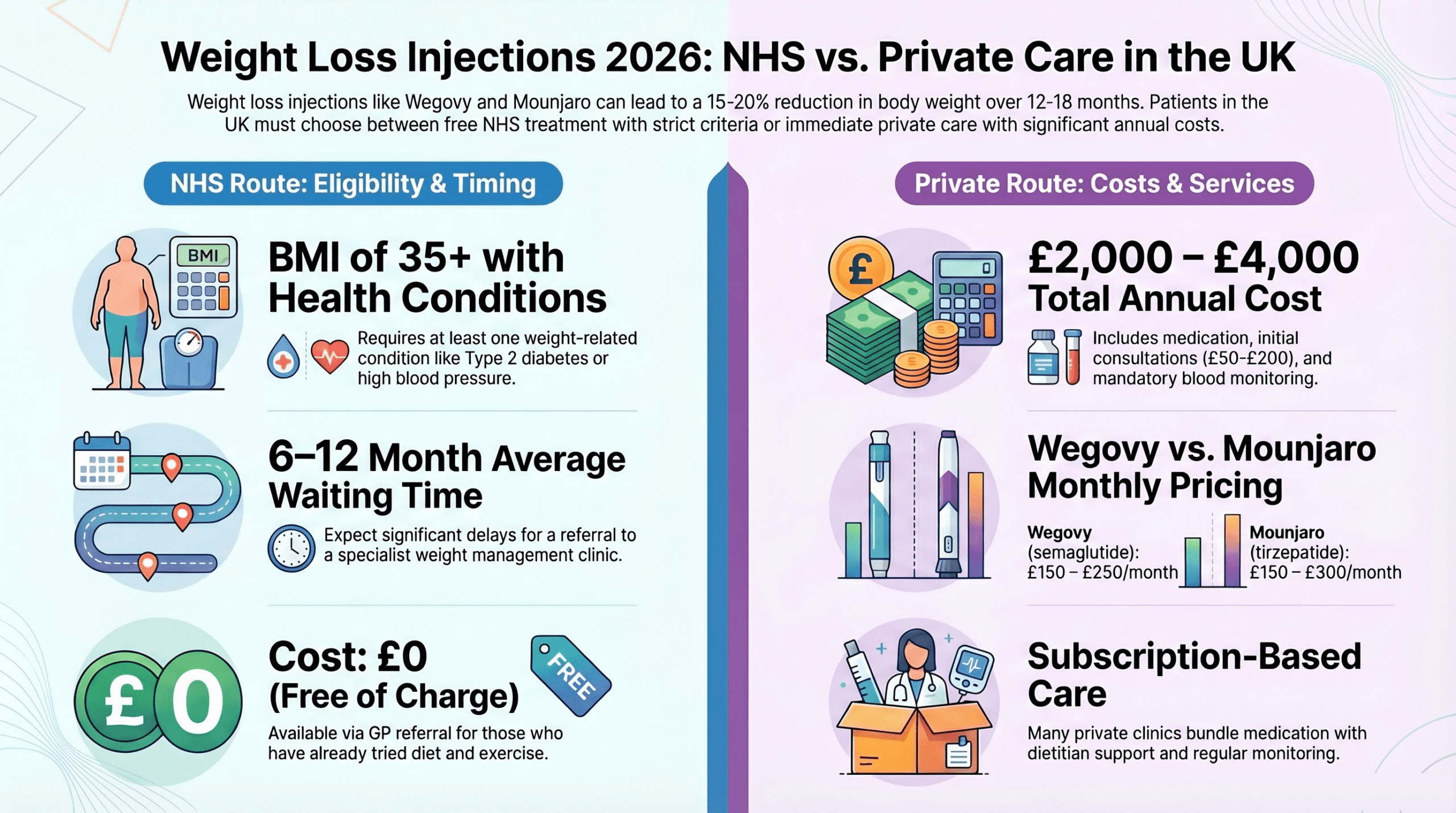
The cost of weight loss injections UK patients pay varies dramatically depending on where you get them. If you qualify for the NHS, your cost is minimal. If you go private, you’ll pay significantly more-but you may access treatment faster and with fewer restrictions.
| Medication | NHS Cost (eligible patients) | NHS Waiting Time | Private Monthly Cost | Private Waiting Time |
|---|---|---|---|---|
| Wegovy (semaglutide) | £9.90 per item (prescription charge) | 6-18 months | £199-£299 | 1-2 weeks |
| Mounjaro (tirzepatide) | £9.90 per item (prescription charge) | 6-18 months | £249-£375 | 1-2 weeks |
| Saxenda (liraglutide) | £9.90 per item (prescription charge) | Less commonly offered by NHS | £179-£220 | 1-2 weeks |
| Ozempic (semaglutide) | £9.90 per item (off-label use) | Limited NHS availability | £199-£250 | 1-2 weeks |
| Rybelsus (oral semaglutide) | Not typically offered by NHS | Not available | £150-£180 | 1-2 weeks |
Note: In Scotland, Wales, and Northern Ireland, NHS prescriptions are free once issued. England charges the standard prescription fee of £9.90 per item. Private costs shown are typical ranges based on 2026 pricing from major UK providers; actual costs may vary.
Watch: Weight Loss Injections UK – NHS Eligibility, Costs and Private Options
Watch our cinematic overview covering the cost of weight loss injections in the UK, how to qualify on the NHS, what you will pay privately for treatments like Wegovy and Mounjaro, and how to make the right choice for your health after 50.
Which Injections Are Available on the NHS?
The NHS offers weight loss injections, but access is restricted. You must meet strict eligibility criteria. Not every patient who wants these medications will qualify.
NHS eligibility for weight loss injections (2026):
- BMI of 30 kg/m or higher, or
- BMI of 27 kg/m or higher with weight-related health conditions (type 2 diabetes, high blood pressure, sleep apnoea, heart disease)
- Weight loss attempts using diet and exercise alone have been unsuccessful
- No medical contraindications (e.g. personal or family history of thyroid cancer, pancreatitis)
- Willingness to commit to lifestyle changes and regular monitoring
Semaglutide (marketed as Wegovy) and tirzepatide (Mounjaro) are the most commonly prescribed on the NHS. Liraglutide (Saxenda) and ozempic are available but less frequently offered. Waiting times vary by region but typically range from 6 to 18 months.
If you do not meet NHS criteria, or prefer not to wait, private clinics and online pharmacies offer faster access with no postcode lottery.
Private Weight Loss Injection Providers: UK Directory 2026
If you choose to go private, several well-established UK providers offer weight loss injections online and in clinics.
Compare the UK’s leading private weight loss injection providers at a glance. See current self-pay prices, locations, and key features to help you choose the right provider.
Directory note: All prices are self-pay guide prices as of early 2026 and may vary by dose, duration, and individual circumstances. Always contact providers directly for current pricing. Sources: Individual provider websites, NICE, NHS.uk.
Before choosing a private provider, check they are registered with the General Pharmaceutical Council (GPhC) or the General Medical Council (GMC). Ask about follow-up GP support, blood tests, and exit strategy once you stop the medication.
How Do Weight Loss Injections Work?
Weight loss injections work by mimicking a natural hormone called GLP-1 (glucagon-like peptide-1). This hormone tells your brain you feel full faster. It also slows how quickly your stomach empties, keeping you satisfied longer.
Newer medications like Mounjaro target a second hormone called GIP as well. This dual action makes them more powerful than single-hormone medications like Wegovy or Saxenda.
The Three Main Types of Weight Loss Injection
1. Semaglutide (Wegovy, Ozempic)
Semaglutide is injected once weekly under the skin. You get a pre-filled pen and inject it yourself. Studies show patients lose 15-17% of their body weight over 68 weeks. It works well for appetite control and has an established safety record.
2. Tirzepatide (Mounjaro, Zepbound)
Tirzepatide is the newest option and the most potent. It targets two hormones (GLP-1 and GIP) instead of one. Patients lose up to 20-22% of their body weight in clinical trials. It is also injected once weekly with a pre-filled pen. Some people respond better to tirzepatide than semaglutide, especially if they have struggled with appetite control alone.
3. Liraglutide (Saxenda)
Liraglutide is an older GLP-1 medication. It requires daily injection, which is less convenient than weekly options. However, some patients find it better tolerated. Weight loss is typically 5-8% of body weight. It remains a valid choice for people who experience side effects with weekly injections.
Special Considerations for People Over 50
If you are over 50, weight loss injections can be highly effective. But you should consider a few factors unique to older age.
Muscle Mass Loss
Rapid weight loss can cause muscle loss as well as fat loss. Over 50, muscle is precious-it protects bone, maintains metabolism, and keeps you mobile. Experts recommend combining weight loss injections with resistance training (strength exercises) at least twice a week. This preserves muscle while you lose fat.
Bone Density
Some research suggests rapid weight loss may affect bone density, especially in women past the menopause. If you have osteoporosis or are at risk, talk to your GP before starting injections. They may recommend a DEXA scan (bone density scan) before and during treatment.
Cardiovascular Benefits
For the over-50s, the biggest benefit may be cardiovascular. Research published in 2024-2025 shows tirzepatide and semaglutide reduce the risk of heart attacks and strokes by 20-25%. This is independent of weight loss. If you have heart disease, high cholesterol, or diabetes, these injections may directly protect your heart.
Kidney and Liver Function
If you have kidney disease or liver problems, these injections need careful monitoring. Your GP will order blood tests before you start and at regular intervals during treatment. Make sure you disclose all your medical conditions upfront.
Weight Loss Injection Side Effects: What You Need to Know
Weight loss injections are generally safe when prescribed by a doctor. However, side effects are common, especially when starting. Most are mild and improve over time.
Common Side Effects
- Nausea (most common, affects 20-40% of users)
- Vomiting
- Diarrhoea or constipation
- Stomach pain or bloating
- Reduced appetite (this is the desired effect but can be extreme)
- Headache
These side effects typically appear in the first two weeks and fade within 4-8 weeks as your body adjusts. Your doctor may suggest small, regular meals, avoiding fatty or spicy foods, and staying hydrated.
Serious but Rare Side Effects
- Pancreatitis (inflammation of the pancreas) – very rare; stop treatment and seek emergency care if you have severe upper belly pain
- Gallstones – affects 2-3% of users; risk increases with rapid weight loss
- Thyroid changes – rare but important if you have a family history of thyroid cancer
- Hypoglycaemia (low blood sugar) – if you take other diabetes medication, your risk may increase
Report any severe or persistent side effects to your GP immediately. Do not stop the injection abruptly-your doctor will advise you on safe discontinuation.
Do Weight Loss Injections Work? The Evidence
Yes. Weight loss injections are among the most effective weight loss treatments available. The evidence is strong and comes from large, well-designed clinical trials.
Weight Loss Results
- Saxenda (liraglutide): Average 5-8% body weight loss over 52 weeks
- Wegovy (semaglutide): Average 15-17% body weight loss over 68 weeks
- Mounjaro (tirzepatide): Average 20-22% body weight loss over 72 weeks
For comparison, diet and exercise alone typically result in 3-5% weight loss. Weight loss surgery achieves 25-35% loss but carries surgical risk.
Heart and Metabolic Benefits
Beyond weight loss, these medications improve cardiovascular health. The SELECT trial (2024) and SURMOUNT trials (2025) show semaglutide and tirzepatide reduce the risk of heart attack and stroke by 20-25%. Blood sugar control improves in 80%+ of people with type 2 diabetes or prediabetes. Blood pressure, cholesterol, and liver health also improve.
How Long Do Results Last?
If you stop taking the injection, you may regain weight. Long-term studies (3-4 years) show patients who continue treatment maintain most of their weight loss. Those who stop treatment regain 30-40% of lost weight within one year, but many keep 50-60% of the loss if they stick to lifestyle changes (diet and exercise).
Think of weight loss injections as a long-term tool, similar to taking a statin for cholesterol. Most people who benefit will stay on them for years.
Questions to Ask Your GP Before Starting
Before you commit to a weight loss injection, have an informed conversation with your GP. If your GP agrees you are eligible, they may use the NHS e-Referral Service to refer you to a specialist weight management clinic. Here are key questions to ask.
- Am I eligible for this medication on the NHS, or will I need to pay privately?
- Which medication (semaglutide, tirzepatide, or liraglutide) is best for my BMI and health conditions?
- How often will I need check-ups and blood tests while taking this medication?
- What are the risks for me personally, given my medical history?
- If I have kidney or liver disease, is this medication safe for me?
- Will this medication interact with any of my current tablets or injections?
- What happens if I want to stop? Can I stop suddenly or do I need to taper?
- If I lose weight, will my blood pressure or diabetes medication need to change?
- Do you recommend any specific diet or exercise plan alongside the injection?
- What support is available if I have side effects?
- How long will I need to stay on this medication?
- Will my GP monitor me if I buy this privately, or do I need to use a private clinic?

Comparison: Weight Loss Injections vs Weight Loss Surgery
Weight loss injections are a non-surgical alternative. But how do they compare to surgery? Our guide to the most common surgeries for over-50s covers NHS costs and private options. Here is how injections compare.
Weight Loss Injections:
- Weight loss: 15-22% over 12-15 months
- Non-invasive, no surgical risk
- Reversible side effects
- Cost: £179-£375 per month (private) or £9.90 (NHS)
- Total cost over 12 months: £2,148-£4,500 (private)
- Ongoing use likely needed for sustained results
- Good for people who want to avoid surgery
Weight Loss Surgery (gastric bypass, sleeve gastrectomy):
- Weight loss: 25-35% over 12-18 months
- Surgical risks (infection, bleeding, leaks)
- 6-8 week recovery period
- Cost: £8,000-£15,000 (private)
- One-time cost (NHS sometimes available but long waiting lists)
- More permanent results
- Requires lifelong nutritional monitoring
- Best for people with very high BMI or multiple failed weight loss attempts
For most people over 50, weight loss injections are a sensible first step. They are safer, cheaper upfront, and reversible. If you lose a significant amount of weight on injections and maintain it with lifestyle changes, surgery becomes less necessary.
Real-World Experiences: Weight Loss Injections Over 50
Patient stories from The Best of Health community show how these medications work in practice.
“I was 68 and had struggled with my weight for 30 years. Wegovy helped me lose 3 stone. More importantly, my blood sugar came down and I no longer need metformin. The injections cost me £230 a month privately, but it has been worth every penny for my health.” – Margaret, 68
“I tried Mounjaro and the nausea was awful for the first three weeks. I nearly stopped. But my GP suggested smaller meals and ginger tea, and it improved. Now six months in, I’ve lost 2 stone and feel so much better. I wish I’d known the nausea would pass.” – David, 62
These real experiences highlight the importance of managing expectations, communicating with your doctor, and committing to lifestyle changes alongside the medication.
Useful Resources and Sources
- NHS Obesity Guidance – Official NHS information on weight loss medications and eligibility.
- NICE Guidelines (Technology Appraisals TA875 & TA1003) – Evidence-based recommendations on semaglutide and tirzepatide for weight management.
- MHRA (Medicines and Healthcare Products Regulatory Agency) – Approved weight loss medications and safety data.
- Diabetes UK – Support and information on GLP-1 medications for type 2 diabetes and weight loss.
- General Pharmaceutical Council (GPhC) – Check if your online pharmacy or pharmacist is registered.
Frequently Asked Questions
What happens when you stop taking weight loss injections?
Most people experience a gradual return of appetite within a week of their final dose. Research suggests that without sustainable diet and exercise habits in place, around two-thirds of the weight lost can return within 12 to 18 months. Your prescriber may recommend tapering the dose gradually rather than stopping suddenly to help your body adjust. Building long-term lifestyle changes while on the medication gives you the best chance of maintaining your results.
Can my GP prescribe weight loss injections directly?
In most cases, your GP cannot prescribe weight loss injections directly. Under current NHS guidelines, semaglutide (Wegovy) and tirzepatide (Mounjaro) must be initiated through a specialist weight management service, which your GP can refer you to. However, since June 2025, some GP practices and community centres have been able to prescribe Mounjaro to selected patients. Your GP can also prescribe Wegovy to reduce cardiovascular risk if you have had a heart attack or stroke and have a BMI of 27 or above. Privately, online pharmacies and weight management clinics can prescribe without a specialist referral.
Can I drink alcohol while taking weight loss injections?
There is no direct drug interaction between GLP-1 medications (such as Wegovy or Mounjaro) and alcohol. However, alcohol can worsen the gastrointestinal side effects many people experience, including nausea and stomach discomfort. Alcohol also adds significant calories – around 7 per gram – which can undermine your weight loss progress. If you have type 2 diabetes, combining alcohol with these medications may increase your risk of low blood sugar. Most prescribers advise drinking only in moderation and discussing your intake at your review appointments.
How long do you need to take weight loss injections for?
NHS guidelines currently recommend a maximum treatment duration of two years for semaglutide prescribed through specialist weight management services. Continuation beyond the initial months depends on achieving at least 5% weight loss from your starting weight. For patients prescribed Wegovy to reduce cardiovascular risk (following a heart attack or stroke), there is currently no fixed time limit – treatment can continue for as long as you and your doctor consider it appropriate. Privately, treatment duration is agreed between you and your prescriber based on your individual progress.
How quickly do weight loss injections start working?
Most people notice a reduction in appetite within the first one to two weeks of starting treatment. Visible weight loss typically begins within the first month, although the dose is usually increased gradually over several weeks to reduce side effects. Clinical trials show average weight loss of 5% of body weight within the first three months, with results continuing to improve over 12 to 18 months at the maintenance dose. Individual results vary depending on your starting weight, medication type, diet, and activity levels.
Key Takeaways
- Weight loss injections cost £179-£375 per month privately, or £9.90 per item on the NHS if eligible (plus waiting time).
- Mounjaro (tirzepatide) is the most effective, achieving 20-22% weight loss; Wegovy (semaglutide) achieves 15-17%; Saxenda (liraglutide) achieves 5-8%.
- You must meet strict NHS eligibility criteria: BMI 30+ or 27+ with health complications, and previous failed weight loss attempts.
- Side effects like nausea are common but usually mild and temporary; serious side effects are rare.
- For the over-50s, cardiovascular benefits and cardiovascular protection are as important as weight loss itself.
- Weight loss injections work best when combined with diet, exercise, and lifestyle changes; weight regain is likely if treatment is stopped.
- Before starting, discuss medical eligibility, long-term plans, and lifestyle support with your GP.
What’s Next?
If you think weight loss injections are right for you, the next step is to speak to your GP. Ask whether you are eligible on the NHS. If not, contact a private provider such as or to discuss private options.
You may also want to read our guide to weight loss injections: risks, benefits and the hope they offer, which covers the clinical evidence and what to expect from treatment.
If you are also considering other options, our guide to vitamins for weight loss over 50 looks at supplements that may support your progress alongside medication.
Join our Facebook community to share experiences and get support from others on the same journey.
Disclaimer
This article is for information only and does not constitute medical advice. Weight loss injections are prescription medications and must be prescribed by a qualified healthcare professional. Always consult your GP, practice nurse, or a registered private doctor before starting any weight loss medication. Your doctor will assess your individual health needs, medical history, and eligibility. Never stop or change a weight loss injection without medical guidance. If you experience any side effects or concerns, contact your healthcare provider immediately. The Best of Health is not responsible for any adverse effects or outcomes from the use of information in this article.