

ABTA Travel Tips: 2026 UK Guide to Risk-Free Holidays
Travelling abroad is one of life’s greatest pleasures. But for those of us over 50, a bit of planning makes all the difference between a memorable holiday and a health crisis far from home.
The Association of British Travel Agents (ABTA) reports that many travellers, particularly older adults, overlook essential health preparation before departure. A few simple steps-before you leave the UK-can protect you against common travel health risks and ensure your trip is enjoyable, stress-free, and safe.
This guide covers everything you need to know about staying healthy whilst travelling. You’ll find practical tips on vaccinations, medications, sun safety, food and water hygiene, and more. Whether you’re heading to Europe, Asia, or Africa, these expert-backed recommendations will help you travel with confidence.
Why Pre-Travel Health Planning Matters for Over-50s
Travelling introduces new health risks that our bodies may not be accustomed to. For a comprehensive pre-trip routine, see our travel health checklist for over-50s. Dehydration, jet lag, unfamiliar food, insect-borne illnesses, and altitude changes all affect travellers-but the over-50s population faces additional considerations. Our over-50s travel health checklist brings the full pre-trip preparation together in one place.
The NHS Fit for Travel service exists specifically to help UK travellers assess health risks before departure. Age 50 onwards often brings conditions like high blood pressure, diabetes, or arthritis that require extra attention abroad.
Pre-travel health planning reduces anxiety. It ensures you have the right medications, vaccinations, and information to handle minor health issues without disrupting your holiday. Most importantly, it can prevent serious illness that might otherwise require emergency evacuation-a costly and distressing experience.
Starting your health preparation 4-6 weeks before departure gives time for vaccinations to take effect and any health issues to be resolved.
Pre-Travel Health Checklist: What Every Over-50 Traveller Needs
| Health Task | Why It Matters | Timeline |
|---|---|---|
| Book an NHS Fit for Travel appointment or online consultation | Personalised health advice based on your destination and medical history | 6 weeks before travel |
| Review current medications and check supplies | Prevents shortages abroad; clarifies medication names in local languages | 6 weeks before |
| Obtain vaccinations (if needed) | Protects against diseases not common in the UK | 4-6 weeks before |
| Check travel insurance covers pre-existing conditions | Ensures medical costs abroad are covered | Before booking flights |
| Visit your dentist | Dental problems abroad are costly and stressful | 4 weeks before |
| Arrange GP letter confirming medications and conditions | Required to carry controlled medicines across borders | 2 weeks before |
| Pack a comprehensive travel medical kit | Covers minor ailments: blisters, diarrhoea, indigestion, pain relief | 1 week before |
| Download emergency contact numbers for your destination | Quick access to healthcare if needed abroad | Before departure |
Vaccinations and Travel Diseases: What You Need to Know
Vaccinations are a cornerstone of healthy travel. The vaccines you need depend entirely on where you’re going and your past immunisation history.
Common travel vaccines for over-50s include:
- Typhoid – recommended for most destinations outside Western Europe and North America
- Hepatitis A – essential if visiting areas with poor sanitation
- Yellow fever – legally required for entry to some African and South American countries
- Japanese encephalitis – for certain Asian destinations, especially during summer months
- Rabies – advised for remote travel or activities involving animals
- Polio booster – if you travelled before routine immunisations ended in the UK
The NHS Fit for Travel website lets you enter your destination and receive personalised vaccine recommendations instantly. It’s free and takes five minutes.
Private travel clinics can also advise and administer vaccines, though NHS services are available on the NHS if certain criteria are met. Many travel insurance policies don’t cover vaccine-preventable illnesses if you didn’t get the recommended vaccine.
Vaccines usually take 2-4 weeks to provide full protection, so book your appointment early. If you’re travelling with a partner or family, book appointments for everyone together to ensure consistent timing.
Managing Medications Abroad: Essential Tips
Taking regular medications abroad requires careful planning. If you are travelling with diabetes, see our specific guide on travelling with diabetes. Medication names, dosages, and availability vary significantly between countries.
Before you travel:
- Request a letter from your GP listing all medications, doses, and the conditions they treat. This is legally required if you carry controlled medicines (painkillers, certain sleeping tablets, inhalers).
- Ask your pharmacist for the generic names of your medications in case local pharmacies don’t recognise brand names.
- Pack medications in original containers with clear labels showing your name and dosage instructions.
- Carry at least a week’s supply in your hand luggage and the remainder in checked baggage to protect against loss or delay.
- Check whether your destination country restricts any of your medications-some common UK medicines are banned or prescription-only abroad.
A GP letter also serves as insurance. If your luggage is lost or stolen, it proves you have a legitimate medical need for replacement medications.
International travel insurance should cover emergency medication costs. Check this explicitly when choosing a policy.
Sun Safety: Protecting Your Skin Over 50
Sun exposure damages skin at any age, but over-50s skin is thinner and more vulnerable to sun damage. Holiday sun-especially abroad-is often stronger and UV-intensive than the UK.
Practical sun safety for healthy holidays:
- Apply broad-spectrum SPF 50+ sunscreen 15 minutes before sun exposure and reapply every 2 hours.
- Wear a wide-brimmed hat, sunglasses (UV-protective), and lightweight long-sleeved clothing when possible.
- Avoid the sun during peak hours (11am-3pm) when UV intensity is highest.
- Stay hydrated by drinking water regularly, not just when thirsty.
- Check that your sunscreen is not expired-old sunscreen loses effectiveness.
Certain medications increase sun sensitivity. Ask your GP or pharmacist whether any of your regular medicines make your skin more prone to burning. If so, take extra precautions or avoid midday sun altogether.
Many travellers underestimate holiday sun. Even cloudy days allow UV rays through. A bad sunburn early in your trip can spoil the rest of your holiday and increase skin cancer risk long-term.
Food and Water Safety: Avoiding Holiday Illness
Traveller’s diarrhoea is one of the most common health problems affecting older holidaymakers. It’s caused by unfamiliar bacteria, viruses, or parasites in contaminated food or water.
To reduce your risk:
- Drink only bottled water in countries where tap water quality is questionable. Use bottled water for brushing teeth, too.
- Avoid ice made from tap water.
- Eat hot, freshly cooked food served whilst still warm. Avoid food that has been sitting out.
- Peel fruit and vegetables yourself if possible. Avoid raw salads if water safety is in doubt.
- Be cautious with shellfish and undercooked meat, especially in hot climates.
- Choose busy restaurants where high turnover suggests fresher food.
Pack rehydration salts (oral rehydration therapy packets) in your travel medical kit. If diarrhoea develops, staying hydrated matters more than stopping it quickly.
Most travel-related diarrhoea resolves on its own within a few days. However, contact medical help if symptoms persist beyond three days, you pass blood, or you develop fever.
Insect-Borne Illnesses: Malaria, Dengue, and Zika
Mosquitoes are the world’s deadliest animals. They carry malaria, dengue fever, and Zika virus-all serious health risks in tropical and subtropical destinations.
Malaria risk varies by region and season. Some areas have high transmission; others have seasonal risk only. The NHS Fit for Travel website tells you exactly which areas require malaria prevention.
Malaria prevention for over-50s travellers often involves antimalarial medication. Your GP will recommend the correct drug based on your destination, medical history, and any other medications you take.
Insect bite prevention (equally important as medication):
- Use insect repellent containing 20-30% DEET on exposed skin.
- Wear loose, light-coloured, long-sleeved clothing at dawn and dusk when mosquitoes are most active.
- Sleep under a mosquito net treated with permethrin insecticide if air-conditioning or screens are unavailable.
- Avoid perfumed toiletries that attract mosquitoes.
- Empty standing water around your accommodation (birdbaths, plant pots).
Ticks and other biting insects present risks in some regions. Ask your travel health clinic whether these are a concern for your destination and what precautions to take.
Altitude, Heat, and Fitness: Understanding Physical Demands
Holiday destinations often involve physical challenges that differ from daily UK life. Mountain destinations, hot climates, and long days of sightseeing all strain the body differently.
Altitude sickness affects travellers ascending too rapidly to high elevations (above 2,500 metres). Symptoms include headache, breathlessness, and nausea. The best prevention is slow ascent-spending a day acclimatising at each elevation increase.
If you have heart or respiratory conditions, consult your GP before travelling to high altitude. Certain medications increase altitude sickness risk.
Heat exposure is taxing for over-50s bodies. Heat increases demands on the heart. If you have high blood pressure or heart disease, take heat seriously. Wear light clothing, stay in shade during peak heat, drink regularly, and avoid strenuous activity in extreme temperatures.
Plan your activities realistically. A full day’s sightseeing is more tiring abroad than at home. Build rest days into your itinerary, especially early in the holiday, so your body can adapt.
Swimmer’s Ear, Stomach Trouble, and Motion Sickness
Minor health issues can ruin a holiday if you’re unprepared. A comprehensive travel medical kit prevents this.
Essential items for your travel kit:
- Paracetamol and ibuprofen for pain and fever
- Antihistamine tablets for allergies and insect bites
- Anti-diarrhoea medication (loperamide) and rehydration salts
- Antacid tablets for indigestion and heartburn
- Hydrocortisone cream for itchy skin and insect bites
- Antibiotic ointment for minor cuts and grazes
- Plasters, blister plasters, and elastic bandages
- Antiemetic (anti-nausea) tablets for motion sickness or travel sickness
- Eye drops if you wear contact lenses or have dry eyes
- Cotton wool, tweezers, and a small thermometer
Swimmer’s ear-caused by water trapping in the ear canal-is common in beach and pool holidays. Gently insert a few drops of white vinegar or rubbing alcohol into the ear after water exposure to prevent it. Keep ears dry.
Motion sickness tablets work best if taken before travel, not after symptoms start. Ask your pharmacist which options suit you-some cause drowsiness.
Important: Keep all medications in their original containers. Loose tablets in a bag may not be permitted through customs.
Travel Insurance and Healthcare Access Abroad
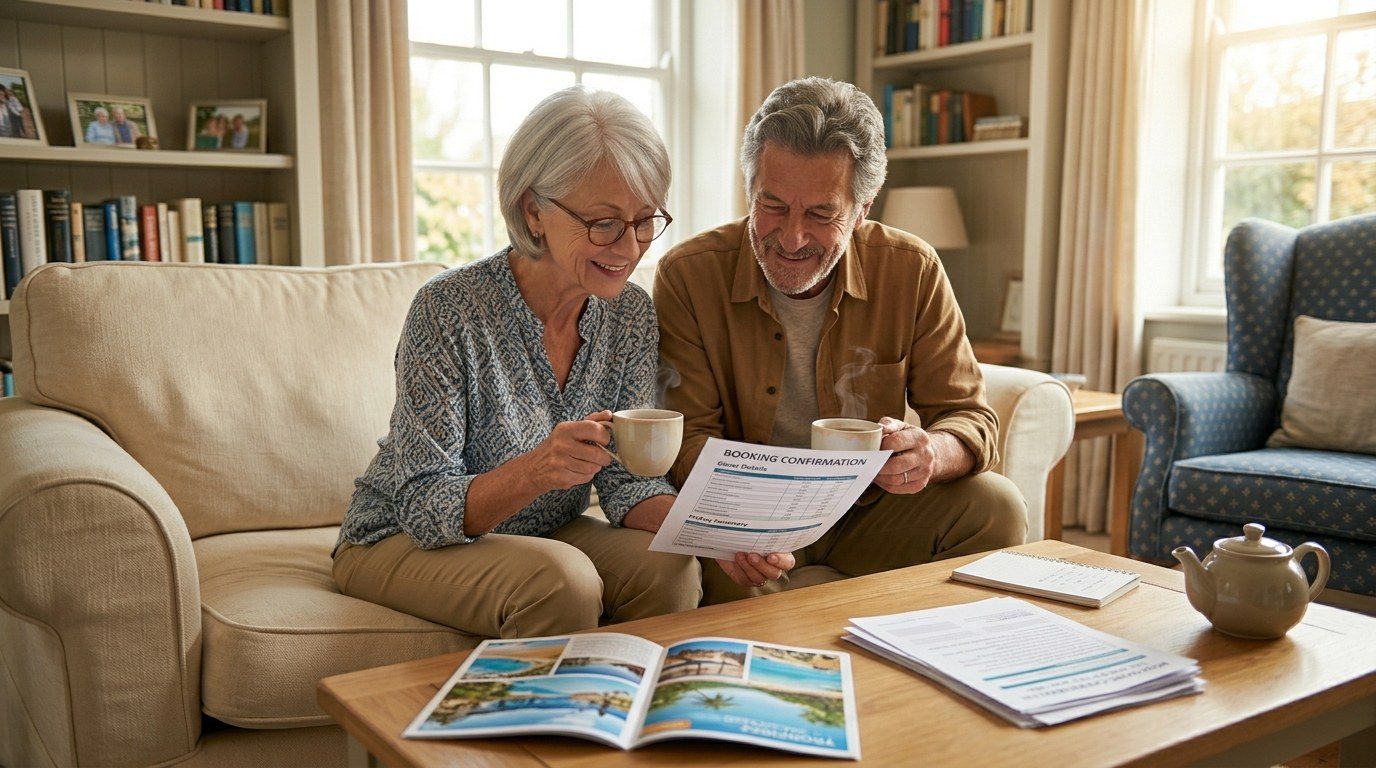
Travel insurance is non-negotiable for over-50s travellers. Our complete UK guide to travel insurance with medical conditions compares specialist providers and the disclosure rules every over-50 traveller should know. Standard policies may not cover pre-existing medical conditions unless they are specifically declared at purchase. For specialist cover that handles pre-existing conditions, see our guide to travel insurance with medical conditions.
discusses this in detail. When buying a policy, provide an honest account of your health history. Not declaring conditions is a common reason insurance claims are rejected.
Your insurance should include:
- Medical expenses cover (at least £1 million for European travel)
- Emergency evacuation or repatriation
- Prescription medication costs abroad
- Hospital inpatient and outpatient care
- Medical equipment (diabetic supplies, compression stockings, etc.)
The European Health Insurance Card (EHIC) entitles UK citizens to state healthcare in EU countries and some others. It’s free and valid until the expiry date. However, it covers state healthcare only-not private treatment or evacuation. It doesn’t replace travel insurance.
Before departure, save the contact details of your travel insurer and the emergency numbers for your destination country. Many travel insurers have 24/7 helplines. Use them if you’re uncertain whether a health issue requires medical attention.
Air Travel Health: DVT Prevention and Comfort
Long-distance air travel increases the risk of deep vein thrombosis (DVT)-blood clots in the legs. Over-50s with certain risk factors (recent surgery, family history of clotting, hormone therapy) have elevated risk.
DVT prevention during flights:
- Move around the cabin every 2-3 hours. Walk to the toilet, stretch in the aisle.
- Perform leg exercises whilst seated: flex and point your feet, squeeze calf muscles, lift knees.
- Wear loose, comfortable clothing around the legs and waist.
- Stay hydrated-dehydration thickens blood and increases clot risk. Drink water regularly; limit alcohol and caffeine.
- Avoid sleeping pills if possible, as they increase immobility.
- Consider compression socks if you have DVT risk factors.
If you have significant DVT risk, discuss anticoagulation with your GP before travel. In rare cases, low-dose blood thinners are prescribed for long flights.
Jet lag-the circadian rhythm disruption from crossing time zones-affects sleep and digestion. Over-50s often struggle more than younger travellers. covers strategies to minimise its impact.
What to Do If You Become Unwell Abroad
Despite preparation, illness sometimes strikes. For injury-specific advice including hospital paperwork and claims, see our guide on what to do if you are injured on holiday. Knowing what to do prevents panic and ensures appropriate care.
Minor issues (diarrhoea, headache, mild fever):
- Rest and use over-the-counter medications from your travel kit.
- Contact your travel insurance’s helpline if symptoms don’t improve within 48-72 hours.
More serious symptoms (persistent chest pain, severe allergic reactions, high fever, difficulty breathing):
- Seek immediate medical attention. Use your insurance’s emergency number or call emergency services locally (999 equivalent).
- Always inform medical staff of your full medication list and allergies.
- Request itemised receipts and medical records for insurance claims later.
Your GP letter and medication list are invaluable if you need emergency treatment. Carry these in your hand luggage and on your person at all times.
Key Takeaways
- Book travel health advice early. Contact NHS Fit for Travel 4-6 weeks before departure for personalised advice on vaccinations, malaria prevention, and destination-specific risks.
- Check and carry sufficient medications. Obtain a GP letter listing all medications, dosages, and conditions. Keep medications in original containers; pack spares in hand luggage.
- Get recommended vaccinations. Certain destinations require specific vaccines. The NHS Fit for Travel website provides instant, destination-specific recommendations.
- Arrange comprehensive travel insurance. Declare all pre-existing conditions. Ensure cover includes medical expenses, evacuation, and prescription costs abroad.
- Protect yourself from sun, insects, and food-borne illness. Use SPF 50+ sunscreen, DEET-based insect repellent, and practise food/water safety to prevent the most common travel health problems.
- Pack a travel medical kit. Include pain relief, anti-diarrhoea medication, plasters, antihistamines, and rehydration salts-small items that prevent minor issues from ruining your holiday.

Where to Find Official Travel Health Information
Always consult official sources before travelling. Trusted UK resources include:
- NHS Fit for Travel: www.fitfortravel.nhs.uk – free, evidence-based advice on vaccinations, diseases, and health risks by destination.
- GOV.UK Foreign Travel Advice: www.gov.uk/foreign-travel-advice – country-by-country safety, health, and local healthcare information.
- ABTA (Association of British Travel Agents): www.abta.com – travel insurance guidance and directory of registered travel agents.
- Travel Health Clinics: Private clinics can administer vaccines and offer personalised health consultations if NHS services aren’t available.
Travel health information changes frequently, especially regarding disease outbreaks and vaccine recommendations. Check these sources close to your departure date, not months in advance.
A Final Word: Enjoy Your Holiday with Confidence
Being over 50 doesn’t mean you can’t travel. Millions of people in our age group travel safely and thoroughly enjoy it every year. The difference is preparation.
A few hours spent on health planning before departure-visiting your GP, checking vaccinations, packing a medical kit-removes worry and lets you focus on enjoying your trip. offers ideas for making your travel fulfilling and age-appropriate.
Travel reconnects us with the wider world. It refreshes the mind and enriches life. Follow these healthy holiday tips over 50, and you’ll return home with wonderful memories and no health regrets.
Join the community
For more practical travel and lifestyle advice for over-50s, join our Facebook community where we share weekly tips, NHS updates, and reader stories.
Frequently Asked Questions
What does ABTA stand for and what does it do?
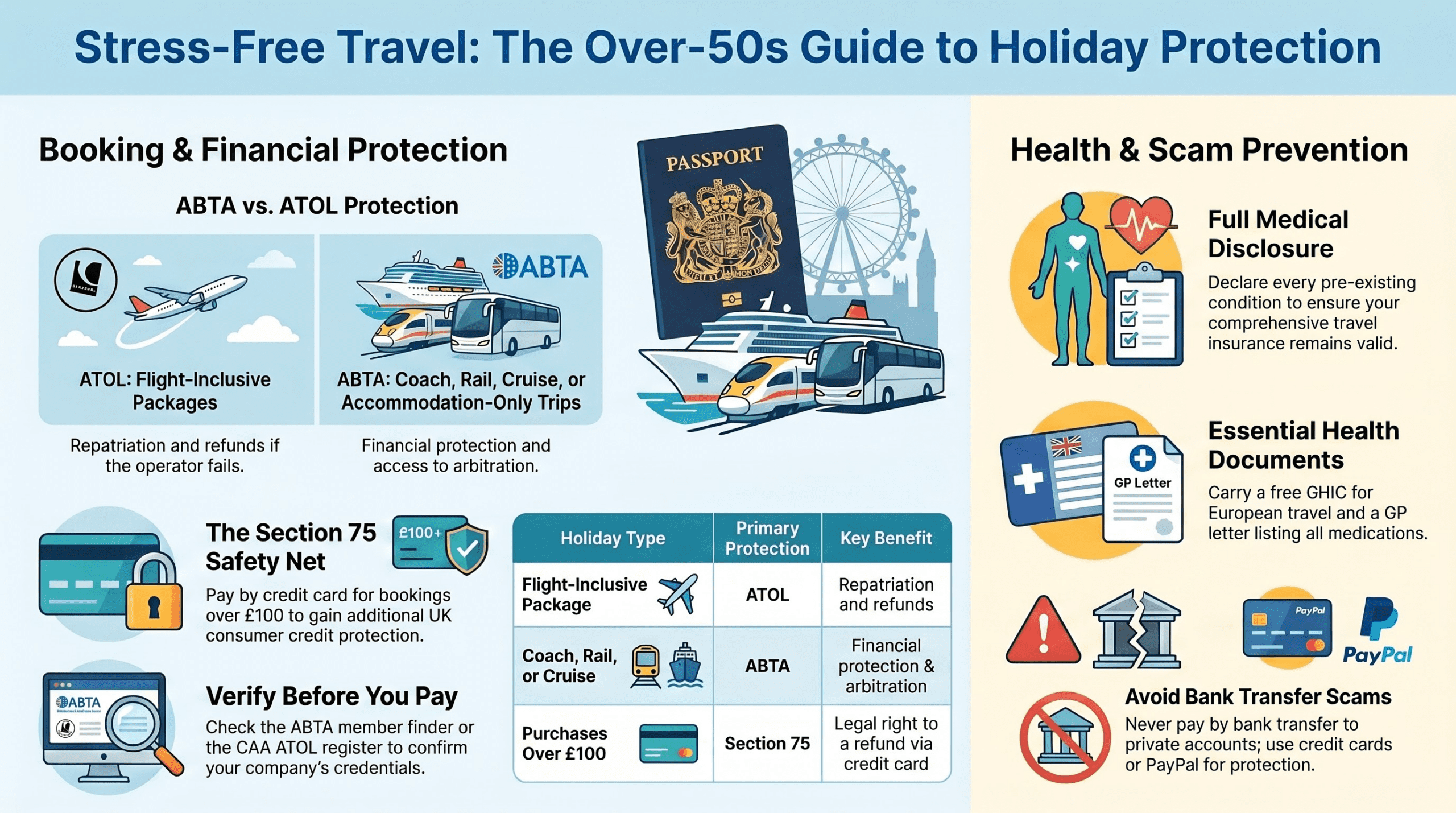
ABTA stands for the Association of British Travel Agents. It is the UK travel trade association whose members – travel agents and tour operators – sign up to a code of conduct. ABTA offers consumer protection if a member company fails financially, dispute arbitration, and travel advice. Look for the ABTA logo when booking.
What is the difference between ABTA and ATOL?
ATOL (Air Travel Organiser’s Licence) is a UK government scheme protecting flight-inclusive package holidays – if your tour operator goes bust, ATOL pays for your repatriation and refund. ABTA covers package holidays without flights (such as coach, rail, or accommodation-only trips). Many travel companies hold both – always ask for written confirmation of which protection applies.
How do I know if my holiday is ABTA or ATOL protected?
Check the booking confirmation – ATOL-protected packages must legally include the ATOL certificate showing your unique booking reference. ABTA membership numbers appear on the company website and booking documents. You can also verify any company on the ABTA member finder at abta.com or the CAA ATOL register at caa.co.uk.
What should I do if my holiday company goes out of business?
If you have not yet travelled, contact ABTA (or your ATOL administrator) for a refund. If you are already abroad, ATOL or ABTA will pay for your return flight and accommodation until departure. Save all booking documents, receipts, and email confirmations. Pay by credit card where possible (purchases over £100 are also covered under Section 75 of the Consumer Credit Act).
How can I protect myself from holiday booking scams?
Book directly with established companies or ABTA / ATOL-registered agents. Never pay by bank transfer to a private account – use a credit card or PayPal which both offer dispute protection. Be cautious of holiday villa sites with unrealistically low prices, sketchy contact details, or pressure to pay quickly. Reverse-image search villa photos to spot duplicate listings.
Should I always book through an ABTA member?
It is the safest option if you want guaranteed financial and dispute protection. Booking directly with a hotel or airline can be cheaper but offers fewer protections if something goes wrong. For complex multi-destination trips, an ABTA member with experience is usually worth the small premium – particularly for over-50s travellers with health considerations.
Disclaimer: This article is for information only. Always consult your GP or a qualified healthcare professional before making health decisions, particularly before travelling with pre-existing medical conditions or starting new medications abroad. Neither The Best of Health nor the information provided in this article constitutes medical advice.