
Erectile Dysfunction: Causes and Treatments Available to You
Erectile dysfunction (ED) affects millions of men in the UK, and it becomes more common as you get older. If you’re over 50 and experiencing difficulties achieving or maintaining an erection, you’re not alone. The good news is that effective treatments exist-both on the NHS and privately. Understanding the causes and your options empowers you to take control of your health and intimate life.

This guide covers what causes ED, how to recognise it, and the full range of treatments available to you in 2026-from lifestyle changes to cutting-edge therapies.
Understanding How Erections Work
An erection is a complex process involving your nervous system, blood vessels, and hormones. When you’re sexually aroused, nerves signal your arteries to relax and widen. This allows more blood to flow into the spongy tissue of the penis (the corpus cavernosum), creating pressure that traps blood inside. Your veins then close off, maintaining the erection.
When any part of this chain breaks down-whether nerves, blood vessels, or hormones-erectile dysfunction can result. For men over 50, these breakdowns become more likely, but they’re treatable.
Physical Causes of Erectile Dysfunction in Men Over 50
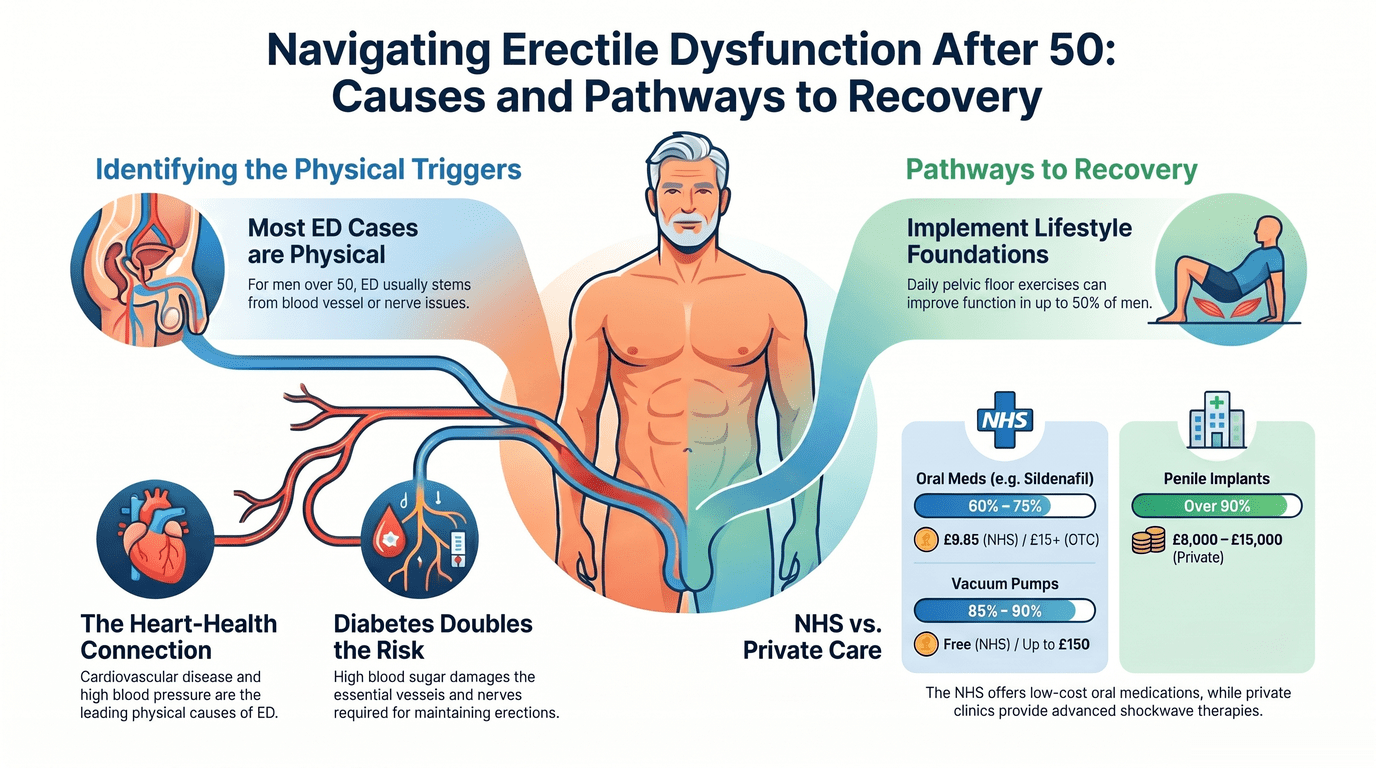
Most cases of ED in older men stem from physical rather than psychological causes. Understanding which physical factors may apply to you helps your GP identify the best treatment.
Cardiovascular Disease and High Blood Pressure
Heart disease and high blood pressure are the leading causes of ED in men over 50. High blood pressure damages the lining of blood vessels, making it harder for them to relax and widen. If your blood vessels are stiffened by hypertension, they cannot deliver enough blood to the penis. Many blood pressure medications (beta-blockers and some thiazide diuretics) can also contribute to ED as a side effect. Discuss with your GP if you suspect your medication is involved-alternatives may be available.
Diabetes
Diabetes roughly doubles the risk of ED. High blood sugar damages blood vessels and nerves over time, a process called diabetic neuropathy. Men with poorly controlled type 2 diabetes are particularly at risk. Even well-controlled diabetes increases ED risk significantly compared to men without diabetes.
Stroke and Neurological Conditions
A previous stroke can damage the nerves that control erections. Similarly, Parkinson’s disease, multiple sclerosis, and other neurological conditions interfere with nerve signals. These conditions may require specialist ED treatments tailored to neurological causes.
Spinal Injury
Spinal cord injuries disrupt the nerve pathways between the brain and the penis. The severity of ED depends on the location and extent of the injury. Many men with spinal injuries successfully manage ED with medical or mechanical treatments.
Hormonal Changes
Testosterone naturally declines with age-by roughly 1% per year after age 30. Low testosterone (hypogonadism) reduces sexual desire and can make erections harder to achieve or maintain. Your GP can test your testosterone levels with a simple blood test. If levels are low, testosterone replacement therapy (TRT) may help, though it’s not suitable for all men.
Medications
Many common medications for chronic conditions can cause or worsen ED, including:
- Beta-blockers (for high blood pressure)
- Thiazide diuretics (water tablets)
- Some antidepressants (SSRIs)
- Antipsychotics
- Antihistamines
- Finasteride (for prostate enlargement)
If you suspect your medication is responsible, never stop taking it without medical advice. Your GP can suggest alternatives or add another treatment to offset the side effect.
Smoking, Alcohol, and Obesity
Smoking constricts blood vessels and reduces blood flow throughout the body, including to the penis. Heavy alcohol use can also interfere with erections. Excess weight increases inflammation and can damage blood vessels. These lifestyle factors are often reversible-quitting smoking or reducing alcohol can restore erectile function within weeks.
Psychological and Relationship Causes
Although physical causes dominate in men over 50, psychological factors still play a role. Performance anxiety, stress, depression, and relationship conflict can all contribute to ED. Often, physical and psychological causes overlap. Treating the physical issue alone may not fully restore function if anxiety or low self-esteem persists. Counselling and psychotherapy are valuable alongside medical treatments.
NHS Erectile Dysfunction Treatments and Costs
The NHS provides several ED treatments free on prescription, though availability varies by region. Your first step is a consultation with your GP, who will assess your health, review your medications, and may order blood tests.
Oral Medications: PDE5 Inhibitors
Phosphodiesterase-5 (PDE5) inhibitors are the first-line treatment on the NHS. These medications relax blood vessel walls and increase blood flow to the penis. The most common options are:
- Sildenafil (Viagra) – 50-100mg taken 30-60 minutes before sex. Success rate: 60-70%. Low-dose sildenafil is now available over the counter from UK pharmacies (without prescription) for £15-20 per dose. This makes it accessible for mild-to-moderate ED.
- Tadalafil (Cialis) – 10-20mg taken as needed, or 5mg daily. Works for up to 36 hours. Success rate: 65-75%.
- Vardenafil (Levitra) – 5-20mg taken 30-60 minutes before sex. Success rate: 65-75%.
On the NHS, these are typically prescribed to men with specific conditions: diabetes, cardiovascular disease, spinal cord injury, prostate cancer treatment, Parkinson’s disease, or multiple sclerosis. If you fall outside these criteria, you may be asked to pay privately or use over-the-counter sildenafil.
NHS cost: Prescription charge only (£9.65 in 2026) if eligible; otherwise, private cost per dose £8-15.
Vacuum Pumps (Penile Traction Devices)
Vacuum pumps (also called penis pumps) draw blood into the penis and are held in place by a constriction ring. They work regardless of the cause of ED and don’t require arousal. Success rate: 85-90%. The NHS may provide or fund a vacuum pump device if medical treatment fails. Some men prefer them because they’re non-invasive and side-effect-free.
NHS cost: Free if prescribed; otherwise £40-150 to purchase privately.
Alprostadil Injections and Pellets
Alprostadil (Caverject) is a synthetic hormone injected directly into the base of the penis before sex. It widens blood vessels and increases blood flow. Success rate: 80-85%. The NHS may prescribe it after oral medication fails. A newer form, Muse (urethral pellets), is inserted into the urethra.
NHS cost: Prescription charge only if eligible; otherwise £15-30 per dose privately.
Private ED Treatments and Costs
If you don’t qualify for NHS treatment or prefer privacy and choice, private clinics and telemedicine services offer a full range of options.
Shockwave Therapy (ESWT)
Extracorporeal shockwave therapy (ESWT) is a newer treatment gaining popularity in 2026. Low-intensity acoustic waves stimulate blood vessel growth and improve blood flow. Several studies suggest it may improve erectile function, particularly for men with vascular causes. Treatment involves 6-12 sessions over several weeks.
Private cost: £2,000-5,000 for a full course. Not yet widely available on the NHS.
Penile Implants (Prostheses)
Penile implants are surgical devices inserted into the penis. They come in two types: inflatable (most popular) and malleable (semi-rigid). Success rates exceed 90%, and satisfaction among men and partners is high. Implants are suitable for men who fail to respond to medical treatments or prefer a permanent solution.
NHS availability: Available on the NHS in some regions for men with specific conditions (e.g. post-prostate surgery). Availability and criteria vary widely by CCG.
Private cost: £8,000-15,000 for surgical insertion and the device. This is a one-time cost with a lifespan of 15-20 years.
Platelet-Rich Plasma (PRP) Therapy
PRP involves injecting concentrated platelets from your own blood into penile tissue to stimulate repair and growth. Evidence is still emerging. Some men report improvements, but clinical trials are limited.
Private cost: £800-1,500 per session; typically 3-6 sessions recommended.
Comparison Table: ED Treatments at a Glance
| Treatment | NHS Availability | Private Cost (2026) | Success Rate | How It Works |
|---|---|---|---|---|
| Sildenafil (Viagra) | Prescription (eligible men) or OTC | £8-20 per dose | 60-70% | Oral tablet; relaxes blood vessels |
| Tadalafil (Cialis) | Prescription (eligible men) | £10-25 per dose | 65-75% | Oral tablet; works up to 36 hours |
| Vardenafil (Levitra) | Prescription (eligible men) | £10-22 per dose | 65-75% | Oral tablet; faster onset than sildenafil |
| Vacuum Pump | Free if prescribed; otherwise buy | £40-150 | 85-90% | Mechanical device; no side effects |
| Alprostadil Injection | Prescription (if oral fails) | £15-30 per dose | 80-85% | Injected into penis; immediate effect |
| Penile Implant | Available in some regions | £8,000-15,000 | 90%+ | Surgical insertion; permanent solution |
| Shockwave Therapy | Not yet standard NHS | £2,000-5,000 | 50-70% (variable) | Acoustic waves stimulate blood vessel growth |
| PRP Therapy | Not available NHS | £800-1,500 per session | Evidence emerging | Platelet-rich plasma injected into tissue |
Lifestyle Changes That Can Restore Erectile Function
Many cases of ED improve significantly with lifestyle changes alone, especially if you address them early:
Stop Smoking
Smoking damages blood vessels within weeks of quitting, improvements in erectile function can appear within 4-12 weeks. If you smoke, quitting is one of the most powerful steps you can take.
Exercise Regularly
Aerobic exercise (brisk walking, cycling, swimming) for at least 150 minutes per week improves cardiovascular health and blood flow. Studies show regular exercise can be as effective as PDE5 inhibitors for mild ED. Strength training also helps, particularly for testosterone production.
Improve Your Diet
A Mediterranean-style diet rich in vegetables, fish, whole grains, and nuts supports blood vessel health. Foods high in nitrates (beetroot, leafy greens) and L-arginine (nuts, fish) naturally improve blood flow. Limit saturated fats and processed foods, which damage blood vessels.
Manage Your Weight
Losing just 5-10% of your body weight can significantly improve erectile function if you’re overweight. Weight loss reduces inflammation and improves blood vessel function.
Reduce Alcohol Consumption
Heavy drinking interferes with nerve signals and blood vessel function. Limiting alcohol to 2-3 units per day can help restore function.
Manage Stress and Sleep
Chronic stress elevates cortisol, which impairs erectile function. Good sleep (7-9 hours per night) supports testosterone production and overall sexual health. Consider mindfulness, meditation, or counselling to manage stress.
Pelvic Floor Exercises
The pelvic floor muscles (the same ones you use to stop urinating mid-stream) support erections by trapping blood inside the penis. Strengthening them through regular exercises (Kegel exercises) can improve erectile function and orgasm control. Studies show 6 weeks of daily pelvic floor exercises can produce measurable improvements in 40-50% of men with ED.
To perform pelvic floor exercises: identify the muscles, contract them for 3 seconds, then relax for 3 seconds. Repeat 10-20 times, three times daily.
When to See Your GP
Book an appointment with your GP if:
- ED lasts longer than a few weeks and affects your quality of life
- ED develops suddenly (this may signal a new health condition)
- You have other symptoms: chest pain, shortness of breath, or leg pain
- You’re on medications you suspect may be causing ED
- You’re experiencing anxiety or depression alongside ED
Your GP will take a medical history, ask about lifestyle and relationship factors, examine you if appropriate, and may order blood tests to check testosterone, glucose, and cholesterol levels. Be honest with your doctor-ED is common and they’re trained to help.
Psychological Support and Counselling
Even when physical causes are identified, psychological factors often persist. Cognitive-behavioural therapy (CBT), sex therapy, or couples counselling can help address anxiety, depression, or relationship conflict. The NHS provides counselling through talking therapies services; ask your GP for a referral. Private sex therapists are also available (typically £60-120 per session).
Your GP may recommend the NHS talking therapies service (IAPT) if depression or anxiety is suspected. Treating these conditions often improves erectile function.
Key Takeaways
- ED is common in men over 50 but is treatable. Most cases have physical causes: cardiovascular disease, diabetes, low testosterone, or medication side effects.
- Talk to your GP first. Sudden ED may signal a new health problem. Your GP can test for underlying conditions and discuss treatment options tailored to you.
- NHS treatments are free or low-cost if you’re eligible. PDE5 inhibitors (Viagra, Cialis), vacuum pumps, and alprostadil are available on prescription or over the counter.
- Lifestyle changes work. Stopping smoking, regular exercise, weight loss, and pelvic floor exercises can restore function without medication.
- Multiple treatment options exist. If one doesn’t work, others will. Shockwave therapy and penile implants are newer options with high success rates.
- Psychological support matters. Counselling or sex therapy alongside medical treatment improves outcomes, especially if anxiety or relationship issues are present.
What to Ask Your GP
Prepare for your GP appointment with these questions:
- Could any of my current medications be causing ED?
- Should I have blood tests for testosterone, diabetes, or cholesterol?
- Which treatment would you recommend for my situation?
- How long before I see improvement?
- What if the first treatment doesn’t work?
- Should I see a specialist (urologist or sexual medicine consultant)?
- Can you refer me to counselling or sex therapy?
Questions to Ask a Private ED Provider
If you’re considering private treatment:
- What’s your experience with men my age and health profile?
- What are your success rates?
- What happens if the treatment doesn’t work?
- Are there any side effects I should know about?
- Do you offer follow-up support or a money-back guarantee?
- Is the cost all-inclusive, or are there hidden fees?
Summary
Erectile dysfunction causes and treatments have evolved significantly by 2026. You have more options than ever before, from over-the-counter sildenafil and pelvic floor exercises to shockwave therapy and penile implants. The key is to seek help early, be honest with your doctor, and explore the full range of options available to you.
ED is not a normal part of ageing, and you don’t have to live with it. Whether you choose NHS treatment or private care, psychological support or medical intervention, solutions exist. Take the first step and book an appointment with your GP-your sexual health and quality of life are worth it.
If prostate medication or surgery has contributed to ED, it’s worth understanding how it interacts with treatments like sildenafil. Our guide to whether Viagra is safe for your heart covers the drug interactions your GP will want to discuss.
Cardiovascular health and ED are closely connected. If high blood pressure is a factor for you, our practical guide to how to lower your blood pressure naturally outlines lifestyle steps that can help both conditions.
Low testosterone affects both mood and sexual function. Our guide to testosterone replacement therapy costs in the UK explains NHS and private options for men over 50.
External Sources & References: