

Sex After Menopause: Treatments, Advice and Breaking the Taboo
Sexual intimacy doesn’t end at the menopause-yet many women over 50 struggle with changes to their sexual health and feel too embarrassed to seek help. Vaginal dryness, reduced desire, and physical discomfort are common after the menopause, affecting one in two women to some degree. The good news is that treatments exist. From hormone replacement therapy (HRT) to vaginal oestrogen and pelvic floor exercises, solutions can help you reclaim a fulfilling sex life. This guide explores the causes of sexual changes after menopause, the treatments available on the NHS and privately, and how to start conversations with your GP about sex after menopause.
How Menopause Affects Your Sexual Health
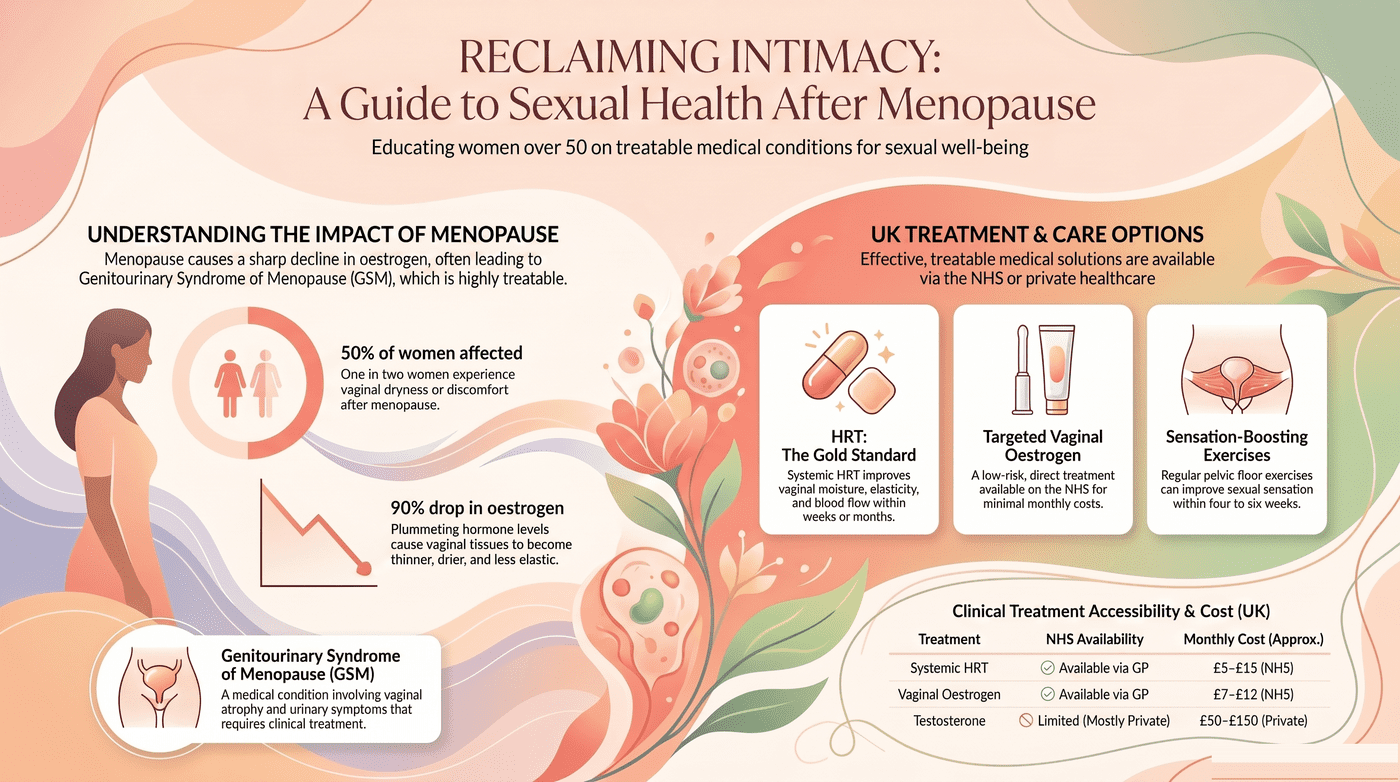
The menopause marks a dramatic shift in your body’s oestrogen production. As oestrogen levels plummet-sometimes over just a few months-the tissues lining your vagina and urethra become thinner and drier. This process, called genitourinary syndrome of menopause (GSM) or vaginal atrophy, affects the elasticity and lubrication of the vagina.
The impact is physical and psychological. Vaginal atrophy can make penetrative sex uncomfortable or painful (dyspareunia), discouraging both partners from sexual activity. At the same time, falling oestrogen and testosterone levels often reduce libido-the desire for sex itself. Sleep disturbances from hot flushes, mood changes, and relationship stress can compound the problem.
Research shows that sexual function and satisfaction decline significantly in the first one to two years after the menopause, but many women experience persistent symptoms well into their 60s and beyond if untreated.
Understanding Vaginal Atrophy and Genitourinary Syndrome of Menopause
Genitourinary Syndrome of Menopause (GSM) is the medical term for the cluster of symptoms that affect the vagina, vulva, and urinary tract when oestrogen levels fall after the menopause. The name was adopted in 2014 to replace the older term “vaginal atrophy” — because the condition affects far more than the vagina alone. It also causes urinary symptoms such as frequency, urgency, and recurrent infections.
The “genitourinary” part covers both the genital tissues (vagina, vulva, clitoris) and the urinary tract (urethra and bladder), all of which rely on oestrogen to stay healthy. When oestrogen declines, these tissues become thinner, drier, and less elastic — a process that is progressive and tends to worsen over time if left untreated.
Vaginal atrophy is the physical manifestation of GSM inside the vagina itself. Without adequate oestrogen, the vaginal lining becomes thin, pale, and fragile. Blood flow to the area decreases, reducing natural lubrication. The vagina may also shorten and lose elasticity, making intercourse uncomfortable.

Symptoms of GSM include:
- Vaginal dryness and itching
- Painful intercourse (dyspareunia)
- Vaginal bleeding or spotting after sex
- Reduced vaginal lubrication
- Urinary symptoms: frequency, urgency, or burning
- Loss of vaginal elasticity and shortened vaginal canal
- Recurrent urinary tract infections (UTIs)
Unlike hot flushes, which often ease over time, GSM symptoms typically do not improve on their own — and for many women they get worse as the years pass. The good news is that GSM responds very well to treatment. Vaginal oestrogen, HRT, and lubricants can all reverse or significantly reduce the symptoms, and starting treatment earlier generally produces better results.
The Role of Oestrogen in Sexual Function
Oestrogen does more than maintain vaginal tissue-it supports the entire sexual response cycle. This hormone increases blood flow to the genitals, enhances natural lubrication, and supports nerve sensitivity needed for arousal and orgasm.
During the menopause, oestrogen levels fall by up to 90 percent. This sharp decline affects not only the vagina but also the clitoris, labia, and the tissues surrounding the urethra. Many women report that orgasm becomes harder to achieve or less intense.
Testosterone, which is present in small amounts in women and declines with age, also plays a role in sexual desire and arousal. Its loss contributes to low libido after the menopause.
Treatment Options for Sex After Menopause: A Comparison
Several treatments are available to restore sexual function and comfort. The choice depends on your symptoms, overall health, and personal preference. Here is a comprehensive comparison:
| Treatment | How It Works | NHS Availability | Cost (Private) | Best For |
|---|---|---|---|---|
| Hormone Replacement Therapy (HRT) | Systemic oestrogen and/or progesterone restores hormone levels throughout the body, improving vaginal, skin, and bone health | Yes, available on prescription via GP | £5-£15 monthly (NHS); £30-£100+ if private | Multiple menopausal symptoms (hot flushes, mood, vaginal atrophy, low libido) |
| Vaginal Oestrogen (creams, tablets, pessaries) | Topical oestrogen applied directly to vaginal tissue; minimal systemic absorption | Yes, available on prescription via GP | £7-£12 monthly (NHS); £20-£50 private | Vaginal dryness and atrophy; can be used alongside HRT or as standalone |
| Testosterone Therapy | Low-dose testosterone restores sexual desire and sensitivity; applied as cream or gel | Limited on NHS; mostly private clinics | £50-£150 monthly | Low libido and reduced sexual sensation; specialist prescribing |
| Vaginal Moisturisers & Lubricants | Over-the-counter water- or silicone-based products hydrate vaginal tissue or ease penetration | Available over-the-counter; some GP prescriptions | £5-£15 per product | Mild dryness; non-hormonal first step or adjunct to HRT |
| Flibanserin (“Female Viagra”) | Oral medication targeting brain neurotransmitters (serotonin, dopamine) to increase sexual desire | Not approved by UK regulatory body (MHRA); not available on NHS or privately in UK | Not available | Low sexual desire due to psychological factors; available in USA only |
Note: All treatments listed have UK regulatory approval or are available on NHS prescription, except flibanserin. Always consult your GP before starting any new treatment.
Hormone Replacement Therapy and Sexual Health
HRT is the gold standard for managing multiple menopausal symptoms, including sexual dysfunction. By restoring oestrogen (and sometimes progesterone), HRT improves vaginal moisture, elasticity, and blood flow within weeks to months.
HRT comes in several forms: tablets, patches, gels, and sprays. Many women begin with systemic HRT for hot flushes and mood, then add vaginal oestrogen if dryness persists. This combination approach is safe and often more effective than either alone.
Benefits for sexual health:
- Restores vaginal moisture and elasticity
- Increases sexual sensation and arousal
- Improves overall energy and mood (supporting desire)
- Can restore the ability to achieve orgasm
- Often produces results within 4-8 weeks
On the NHS, HRT is available via your GP. Private options exist if you prefer specialist menopause clinics or wish to access compounded bioidentical hormones, though costs vary from £30 to over £100 monthly depending on type and dose.
Vaginal Oestrogen: A Targeted, Low-Risk Option
Vaginal oestrogen delivers hormones directly to the tissue that needs it most, with minimal systemic absorption. It is safe, effective, and can be used alone or alongside systemic HRT or other treatments.
Forms of vaginal oestrogen:
- Creams: Oestradiol or conjugated oestrogen applied with an applicator; used 2-3 times weekly after the initial loading phase
- Tablets (Vagifem): Dehydroepiandrosterone (DHEA)-based pellets inserted daily for two weeks, then twice weekly; easy to use and discrete
- Rings (Estring): Silicone ring releasing oestradiol continuously; changed every three months; ideal for women who prefer “fit and forget” options
- Pessaries: Oestrogen-impregnated inserts; less commonly prescribed but available
On the NHS, your GP can prescribe vaginal oestrogen at a minimal cost (typically £7-£12). Many women start with cream and switch to tablets or a ring based on preference. Results are visible within one to two weeks for dryness and within one to two months for tissue elasticity and sexual comfort.
What About “Female Viagra”? The Flibanserin Story
Flibanserin (brand name Addyi) was approved in the USA in 2015 as an oral treatment for low sexual desire in pre-menopausal women. It works differently from male erectile dysfunction drugs: instead of improving blood flow, it targets the brain’s neurotransmitter pathways (serotonin, dopamine, and noradrenaline) to increase sexual motivation.
If your partner takes sildenafil (Viagra) for erectile dysfunction, our guide to whether Viagra is safe for your heart covers the cardiac risks men over 50 should be aware of before taking the medication.
Why it is not available in the UK:
The UK’s Medicines and Healthcare products Regulatory Agency (MHRA) has not approved flibanserin. The European Medicines Agency (EMA) rejected it in 2014, citing concerns about its modest efficacy (around 25 percent of women reported increased sexual desire) and potential side effects including dizziness, nausea, and dangerous interactions with alcohol.
Flibanserin is also only approved in the USA for pre-menopausal women with a specific condition called Hypoactive Sexual Desire Disorder (HSDD), not for menopause-related sexual dysfunction. For UK women over 50, it remains unavailable and unlicensed.
The evidence:
Clinical trials showed flibanserin is more effective than placebo, but benefits are modest. Many experts argue that the modest improvement in desire does not justify the side-effect profile or cost. For menopausal women, addressing the physical causes of sexual dysfunction (vaginal atrophy, hormone deficiency) with HRT or vaginal oestrogen often produces more significant and faster improvement in sexual satisfaction than a medication targeting desire alone.
Other Hormone Treatments: Testosterone Therapy
Testosterone is not just a “male hormone”-it exists naturally in women and plays a crucial role in sexual desire, arousal, and sensitivity. Women’s testosterone levels decline gradually with age and more sharply post-menopause.
Low-dose testosterone cream or gel (typically 0.5-1 mg daily) can improve sexual desire, increase sensation, and boost confidence. However, testosterone therapy is not routinely available on the NHS and is mostly prescribed by private menopause clinics or sexual health specialists.
Considerations:
- Cost: £50-£150 monthly (private)
- Evidence: Well-researched and effective for low libido in post-menopausal women
- Monitoring: Blood tests and clinical review required before and during treatment
- Side effects: Generally well-tolerated but may include oily skin or mild facial hair growth at higher doses
If you are interested in testosterone therapy, ask your GP for a referral to a menopause specialist or sexual health clinic.
Non-Hormonal Treatments: Lubricants and Moisturisers
If you cannot take HRT or prefer not to, or if you are waiting to see a specialist, vaginal lubricants and moisturisers offer a safe, immediate way to reduce discomfort during sex.
Lubricants (used during sex):
- Water-based (e.g. Sylk, Replens): dissolve quickly; safest with condoms
- Silicone-based (e.g. Eros, Durex Mutual Climax): longer-lasting; may damage latex condoms
- Oil-based (e.g. coconut oil): longest-lasting but not compatible with latex condoms or diaphragms
Moisturisers (used regularly):
- Applied 2-3 times weekly between sexual encounters
- Examples: Hyalo Gyn, Hyalofemme, YES vaginal moisturiser
- Contain hyaluronic acid or plant extracts; rehydrate vaginal tissue
- Modest benefit for dryness; less effective than vaginal oestrogen for atrophy
Both lubricants and moisturisers are available over-the-counter at supermarkets, pharmacies, and online retailers. Cost ranges from £5 to £15 per product. They are a practical first step while awaiting GP consultation or specialist assessment.
The Role of Pelvic Floor Exercises (Kegels)
Pelvic floor weakness is common after menopause and contributes to reduced sensation and sexual satisfaction. The pelvic floor muscles support the bladder, uterus, and bowel-and they also play a direct role in arousal and orgasm.
Regular pelvic floor exercises (Kegels) strengthen these muscles, improving blood flow to the genital area and enhancing sensation during sex. Studies show that women who perform Kegels report improved sexual function and greater ease achieving orgasm.
How to perform pelvic floor exercises:
- Identify your pelvic floor muscles by stopping the flow of urine mid-stream (do this only to locate the muscles, not repeatedly)
- Squeeze the muscles for 3 seconds, then relax for 3 seconds
- Repeat 10 times, three times daily
- Gradually increase hold time to 8-10 seconds as strength improves
- Consistency is key: perform exercises daily for best results
Many women notice improved sensation and sexual satisfaction within 4-6 weeks of regular practice. Pelvic floor exercises are free, private, and have no side effects-making them an excellent complement to other treatments.
The Psychological Dimension: Breaking the Taboo
Sexual changes after menopause are not purely physical. Anxiety about dryness or pain, loss of confidence, and feeling “unsexy” can suppress desire just as much as falling oestrogen.
Menopause coincides with other life changes: adult children leaving home, ageing parents, career transitions, or relationship shifts. Some women also internalise outdated myths that sexual desire is “meant to” decline with age, or that discussing sex with a GP is inappropriate.
The truth is that sexual health is healthcare. Your GP has heard these concerns countless times and is trained to help. Opening a conversation about sex after menopause is a normal part of menopause management-just as discussing hot flushes or sleep.
Steps to take:
- Write down your symptoms before your GP appointment (dryness, pain, low desire)
- Mention how symptoms affect your quality of life and relationships
- Ask about HRT, vaginal oestrogen, or referral to a menopause clinic
- If uncomfortable speaking face-to-face, consider a telephone or video consultation
- Request a same-sex GP if you feel more at ease
Communication with Your Partner
Menopause can strain intimate relationships if not discussed openly. Pain during sex, reduced desire, or emotional changes may be misinterpreted as loss of interest or affection.
Talking to your partner about what you are experiencing-and what treatments you are exploring-fosters understanding and reduces shame. Many partners are relieved to know the changes are physical and treatable, not personal rejection.
Conversation starters:
- “My body is changing because of menopause. I would like to try some treatments to help with dryness and comfort.”
- “Sex has been uncomfortable lately. I am seeing my GP to find solutions, and I want you to know I still love you.”
- “Let’s explore other forms of intimacy while I am adjusting to these changes.”
Sexual intimacy after menopause can be rekindled-and many couples report deeper, more relaxed sex once the physical barriers are removed and communication improves.
When to See Your GP: A Practical Guide
Make an appointment with your GP if you experience:
- Vaginal dryness that affects your sex life or comfort
- Pain during or after sex
- Significant loss of sexual desire
- Vaginal bleeding or spotting during or after sex
- Recurrent urinary tract infections (UTIs) or urinary symptoms
- Emotional distress related to sexual health or body changes
These are all treatable symptoms. Your GP can prescribe HRT, vaginal oestrogen, or refer you to a menopause clinic. On the NHS, specialist menopause clinics offer deeper assessment and access to testosterone therapy in some areas.
For practical guidance on other common menopause symptoms, our guide to coping with hot flushes during menopause covers NHS and lifestyle options.
NHS vs Private: Understanding Your Options
HRT and vaginal oestrogen are available on the NHS at minimal cost (typically £5-£12 per month). Your GP can prescribe them, and you may be seen at a GP practice or referred to a menopause clinic.
Private menopause clinics offer faster appointments, more time with the doctor, and access to a wider range of treatments (including testosterone and compounded bioidentical hormones). Cost ranges from £100-£200 per consultation and £30-£150+ monthly for medications.
The NHS also provides evidence-based psychological support (talking therapies or cognitive behavioural therapy) for anxiety or mood changes related to menopause, though waiting lists vary by area.
Summary: Key Takeaways on Sex After Menopause
Key Takeaways
- Sexual changes after menopause are common and treatable. Vaginal atrophy, reduced desire, and discomfort affect many women but respond well to targeted treatments.
- HRT and vaginal oestrogen are the most effective options for sex after menopause. Both are available on the NHS and produce rapid improvement in vaginal health and sexual comfort.
- Flibanserin (“female Viagra”) is not available in the UK. The MHRA and EMA have not approved it due to modest efficacy and side-effect concerns; address the physical causes of sexual dysfunction first.
- Pelvic floor exercises, lubricants, and communication are powerful adjuncts. Combined with medical treatment, these low-cost tools can significantly improve sexual satisfaction.
- Speaking to your GP about sex is normal and important. Sexual health is part of overall health. Your GP is trained to help and will not judge you.
- Treatment is personalised. Your GP can tailor a plan based on your symptoms, overall health, and preferences. Regular follow-up ensures the right treatment at the right dose.
Questions to Ask Your GP About Sex After Menopause
- What menopausal symptoms am I experiencing, and how do they relate to sexual changes?
- Am I a candidate for HRT, and how quickly will it improve sexual function?
- Can I use vaginal oestrogen alongside systemic HRT?
- What form of vaginal oestrogen is best for me: cream, tablet, or ring?
- Are there any contraindications or medication interactions I should know about?
- How long will it take to notice improvement in dryness or sexual comfort?
- Should I be monitored while on HRT, and how often?
- Is there a menopause clinic I can be referred to?
- What non-hormonal options are available if I cannot take HRT?
- Are there any lifestyle changes or exercises that might help?
External Resources and Support
For reliable, UK-based information and support on menopause and sexual health:
- NHS Menopause Information: NHS.uk – Menopause
- NICE Menopause Guidance: NICE – Menopause: management and support
- Women’s Health Concern (charity): Women’s Health Concern – Menopause Resources
- British Menopause Society: For finding accredited menopause specialists
- Your local NHS menopause clinic: Ask your GP for a referral
Final Thoughts: Reclaiming Your Sexual Health
Sex after menopause is not a loss-it is a transition. Yes, your body is changing. Yes, vaginal atrophy and hormonal shifts are real. But you have more tools than ever to address these changes, from evidence-based hormonal treatments to lifestyle strategies to open communication.
The taboo around sex and menopause is slowly breaking down. Women aged 50 and over are increasingly seeking help, speaking openly with partners and doctors, and discovering that sexual satisfaction is entirely within reach. You deserve pleasure, comfort, and confidence in your intimate life-and the NHS is here to support you.
Take the first step: book an appointment with your GP, describe your symptoms clearly, and discuss your options. Within weeks, many women notice dramatic improvement with the right treatment.
Ready to Take Action?
Join our Facebook community to share experiences and advice with other women over 50 navigating menopause and sexual health. The Best of Health Facebook community
Or read more about managing other menopause symptoms to find holistic support.
Frequently Asked Questions About Sex After Menopause
Does sex have to get worse after menopause?
No. Many women find that sex after menopause can be just as satisfying – or more so – once common symptoms like vaginal dryness and discomfort are treated. The key is addressing the underlying physical changes rather than accepting them. Vaginal oestrogen, lubricants, and HRT are all effective options that most women can use safely.
What causes vaginal dryness after menopause?
Falling oestrogen levels cause the vaginal walls to become thinner, less elastic, and drier – a condition known as vaginal atrophy or genitourinary syndrome of menopause (GSM). This affects around half of post-menopausal women. Unlike hot flushes, vaginal dryness does not improve on its own over time and needs treatment to resolve.
Is HRT safe to use for sexual health after menopause?
For most healthy women under 60, the benefits of HRT outweigh the risks. Vaginal oestrogen – applied locally rather than taken as a tablet or patch – carries very low systemic absorption and is considered safe for the vast majority of women, including many breast cancer survivors. Always discuss your individual history with your GP or a menopause specialist.
Do I still need contraception after menopause?
You are considered naturally infertile two years after your last period if you are under 50, or one year after if you are over 50. However, you should continue using condoms regardless of age, as sexually transmitted infections (STIs) remain a risk. According to NHS guidance, STI rates in older adults have risen in recent years.
What is flibanserin and is it available in the UK?
Flibanserin (sometimes called “female Viagra”) is a medication approved in the USA for hypoactive sexual desire disorder (HSDD) in pre-menopausal women. It is not approved by the MHRA in the UK and is not available on NHS prescription. Women in the UK experiencing low desire are more likely to be offered testosterone therapy or a referral to a menopause clinic.
Can talking therapies help with sexual problems after menopause?
Yes. Psychosexual therapy and cognitive behavioural therapy (CBT) are effective for women whose difficulties have a psychological component – anxiety, body image concerns, or relationship dynamics. The NHS offers some provision, though waiting times vary. Private psychosexual therapists typically charge £60 to £120 per session.